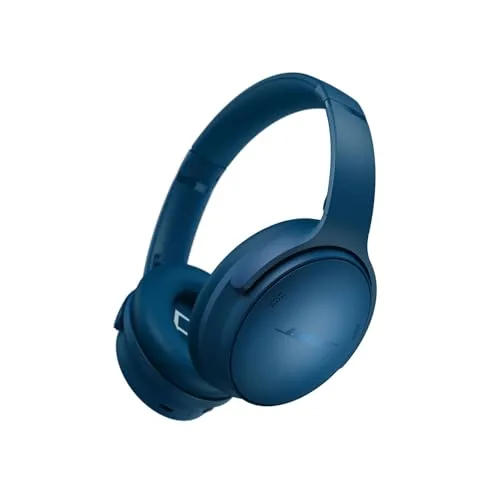
The physical design of a headphone’s ear cups has a more direct effect on sound than most buyers expect. Closed-back cups seal around the ear and trap air; open-back cups vent that air to the outside. That single structural difference changes how bass behaves, how wide the soundstage sounds, and whether the person next to you can hear what you’re listening to.
How Closed-Back Headphones Shape the Sound
In a closed-back design, the rigid outer shell reflects sound back toward the driver rather than letting it escape. The result is that low frequencies in particular accumulate more energy, which is why closed-back headphones tend to measure with elevated bass compared to open-back models in the same price range. This is not always the same as accurate bass. The reflected energy can blur transient detail, meaning a kick drum hit may sound weighty but slightly smeared rather than sharp. For listeners who want bass impact in casual or commuting listening, that trade-off is usually acceptable. Producers tracking vocals or instruments in a studio setting rely on closed-back headphones for a different reason: isolation. A closed-back cup typically provides 10 to 25 dB of passive attenuation depending on the pad material and clamp force. That stops microphone bleed when a performer is recording while monitoring through headphones. The sealed design also prevents your audio from leaking into the room, which matters in shared spaces. Isolation quality varies considerably by model, and if isolation is your primary concern rather than studio use, active noise cancellation layers on top of passive isolation to produce significantly more reduction (our noise cancelling headphone coverage shows how much attenuation the top ANC models actually deliver).
How Open-Back Headphones Sound Different
Open-back cups have a grille or perforated outer shell that lets air move freely in and out. Because there is no cavity for sound to bounce around in, the driver’s output disperses rather than reflecting. The practical effect is that bass is leaner and more controlled, high frequencies are more detailed, and the presentation sounds less confined. Many listeners describe open-back headphones as sounding like the audio is coming from around them rather than from inside their head, though the degree of this effect depends heavily on the specific tuning and driver design. That quality is called soundstage, and it matters most in contexts where spatial detail is important: mixing, mastering, extended critical listening sessions, or gaming where positional audio cues affect performance. The trade-off is reciprocal leakage. At moderate listening volumes, someone sitting a meter away can hear a clear, tinny version of your audio. Open-back headphones in quiet home or studio environments are practical; on public transport or in an open-plan office, they are not. They also provide no meaningful passive isolation, so ambient noise enters freely. This makes them poor choices for any use case where concentration depends on blocking out external sound.
Soundstage, Imaging, and Why the Design Causes These Differences
Soundstage and imaging are two distinct properties that are often conflated. Soundstage refers to the perceived width and depth of the sonic space. Imaging refers to how precisely individual sounds are placed within that space. Closed-back headphones can have good imaging but tend to have a narrower soundstage because the reflected energy creates a more congested midrange. Open-back headphones usually produce wider soundstage, and because the driver is not fighting reflections, imaging precision tends to be higher. The reason comes down to how the ear processes sound. In a sealed cup, some of the reflected energy reaches the ear at a slight delay compared to the direct signal from the driver. The brain interprets these micro-delays as coloration or a sense of constriction. With an open design, the vented cup avoids that secondary reflection path almost entirely. that headphone soundstage, even in the best open-back designs, does not reproduce the genuine three-dimensional localization that speakers in a room provide. The stereo signal is still being delivered to each ear independently, which constrains how realistic the spatial impression can be. Some amplifiers and DSP processing attempt to compensate for this, with mixed results.
Matching the Design to Your Actual Use Case
Choosing between the two designs is mostly a question of where and how you listen. Closed-back headphones suit commuting, shared workspaces, gym use, and any situation where environmental noise would otherwise disrupt listening. They also suit bass-forward genres where the added low-frequency energy from the sealed cup is a feature rather than a flaw. Open-back headphones suit home listening, audiophile-grade critical evaluation, long mixing sessions, and users who find the in-head localization of closed designs fatiguing over several hours. The vented design runs slightly cooler at the ears over long sessions, which is a minor but real comfort factor. Budget is another variable. Acoustic engineering for an open-back design is less forgiving: distortion and resonance problems that a closed cup can partially mask are immediately audible in an open design. This means genuinely good open-back headphones tend to cost more. At the budget end of the market, a closed-back headphone will usually sound more polished than an open-back at the same price. If your listening is split between focused home sessions and mobile use, two separate headphones often make more practical sense than trying to find one design that compromises between both needs. The wireless earbuds guide covers a complementary category that handles portability differently from over-ear designs entirely.
Closed-back headphones trade acoustic transparency for isolation and bass weight. Open-back headphones trade isolation for a more natural, less colored sound. Neither design is universally better. The right choice depends on your listening environment first, then your genre preferences and sensitivity to the in-head effect that affects most closed-back designs over long sessions. Understanding the acoustic mechanism behind each type makes that decision straightforward rather than a matter of reading specs on a product page.
Affiliate Disclosure
This post contains affiliate links. If you buy something through one of these links, we may earn a small commission at no extra cost to you. We only recommend products and services we trust. Thank you for supporting this site!