Noise cancellation is one of the most misunderstood features in consumer audio. The term gets applied to two very different technologies, and understanding which one a headphone uses tells you a lot about what it will and won’t block. This article breaks down the physics and engineering behind both approaches so you can interpret specs and marketing claims more accurately.
Passive Noise Isolation: Physical Blocking First
Before any electronics get involved, every headphone offers some degree of passive noise isolation. This is purely mechanical: the earcup or eartip physically blocks sound from reaching your ear by creating a seal around or inside the ear canal. Over-ear headphones with dense foam padding can attenuate mid and high frequencies by 15 to 30 decibels simply through physical mass and fit. In-ear monitors with silicone or foam tips achieve similar results in the ear canal, sometimes blocking 25 dB or more at frequencies above 1 kHz.
The limitation of passive isolation is well-defined. Low frequencies, typically anything below 200 Hz, have long wavelengths that pass through most materials with little attenuation. A bus engine rumbling at 80 Hz, a train on rails, or an airplane cabin’s structural drone all sit in this range. No amount of foam or silicone stops them effectively. This is exactly the frequency range where active noise cancellation steps in, which is why the two approaches are genuinely complementary rather than competing. Headphones that combine a tight passive seal with active cancellation perform noticeably better than those relying on only one method.
How Active Noise Cancellation Works
Active noise cancellation (ANC) uses microphones, a processor, and the headphone’s drivers to generate a sound wave that is the mathematical inverse of incoming noise. When two sound waves that are identical in amplitude but opposite in phase meet, they cancel each other out. This is called destructive interference, and it is the entire mechanism ANC is built on.
In practice, a feedforward microphone positioned on the outside of the earcup samples ambient sound before it reaches your ear. The onboard processor analyzes that signal and generates an anti-phase waveform, which the driver plays simultaneously with your audio. The result is that the ambient noise and its inverse largely cancel before your eardrum receives them. Most modern systems also include a feedback microphone inside the ear cup, positioned close to the ear. This secondary mic measures any residual noise that got through and adjusts the anti-phase signal in real time to compensate. This hybrid feedforward and feedback configuration is now standard in mid-range and premium headphones because it handles a broader frequency range more accurately than either mic position alone.
The processor speed matters enormously here. The system has to sample, compute, and play back the anti-phase signal faster than the original sound wave travels the few centimeters to your ear. This requires dedicated low-latency chips, which is a large part of why ANC adds cost to a headphone.
What ANC Handles Well and Where It Struggles
ANC is most effective against steady, low-frequency noise in the 20 Hz to 1,000 Hz range. Aircraft cabin pressure hum, HVAC systems, and highway road noise are ideal candidates because they are relatively predictable in frequency and amplitude. The processor can model them accurately and generate a stable anti-phase signal. In these environments, a well-tuned ANC system can reduce perceived noise by 20 to 30 dB, which is a substantial difference in listening comfort.
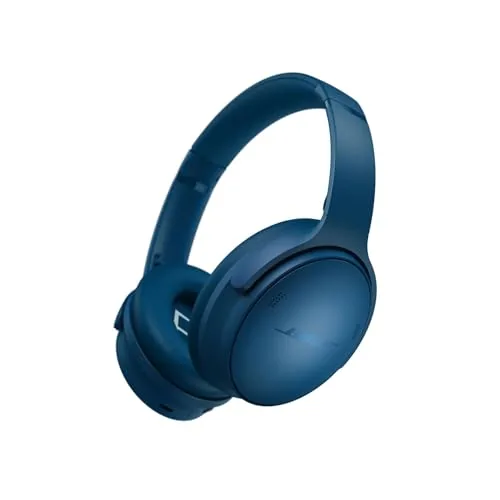
High-frequency and transient sounds are harder to cancel. A sharp consonant in someone’s speech, a keyboard click, or a door slamming all change faster than the ANC loop can respond. The processor does not have enough time to sample, compute, and counter the sound before it arrives at the ear. For these sounds, passive isolation does more useful work than the ANC circuit. This is why no headphone, regardless of price, cancels all noise. The headphones covered in this noise-cancelling comparison reflect the same ceiling across brands: ANC handles drones well and struggles with sharp transients.
Some systems also introduce a subtle hiss or pressure sensation when ANC is active. This is the anti-phase signal itself being audible or creating a psychoacoustic effect from the slight air pressure changes inside a sealed cup.
Transparency Mode and the Processing Behind It
Many headphones now include a transparency or ambient mode alongside ANC. Rather than canceling external sound, transparency mode uses the external microphones to pass ambient audio through the drivers with minimal latency, so the wearer can hear their surroundings without removing the headphones. Done well, this sounds natural. Done poorly, it introduces a slight reverb or tinny quality because the microphone and driver chain adds coloration that your unoccluded ear would not produce.
The engineering challenge in transparency mode is phase accuracy and latency. If the microphone signal is delayed even a few milliseconds before playing back through the driver, you hear a comb filtering effect, where certain frequencies cancel each other because the direct and processed sounds arrive slightly out of sync. Higher-end implementations handle this more cleanly, but the effect is rarely completely absent.
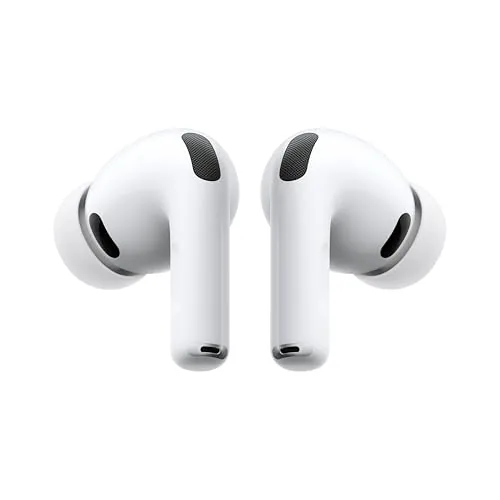
Wireless earbuds frequently implement both ANC and transparency in a compact form factor, which demands more efficient processing chips and tighter microphone placement than over-ear designs allow (the tradeoffs involved are detailed in this guide to choosing wireless earbuds). The smaller the housing, the less room there is to position microphones for optimal feedforward sampling, which generally keeps earbud ANC a step behind full-size over-ear headphones in raw cancellation depth.
The gap between good and mediocre noise cancellation comes down to microphone placement, processor speed, and how well passive isolation fills in where ANC falls short. Knowing this helps you read spec sheets more critically: a claimed ANC depth in decibels only tells part of the story if you do not also know the frequency range it applies to and whether the headphone has a decent passive seal behind it. With both pieces in place, ANC genuinely changes how much of a noisy environment reaches your ears.
Affiliate Disclosure
This post contains affiliate links. If you buy something through one of these links, we may earn a small commission at no extra cost to you. We only recommend products and services we trust. Thank you for supporting this site!