In a Rush? Here Are Our Top Picks
REOLINK RLC-810A 4K PoE Outdoor Security Camera
8.5/10Homeowners or small business owners who want high-resolution wired outdoor coverage without committing to a cloud storage subscription.
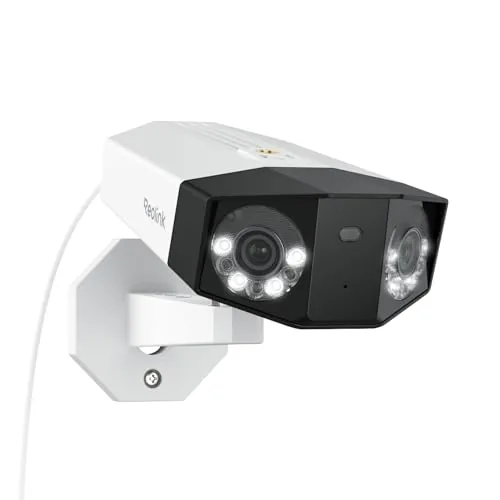
REOLINK Duo 3 PoE 16MP 180° Panoramic Camera
8.4/10Homeowners or small business owners who need to monitor a wide entry point, parking area, or storefront with a single camera and an existing PoE network setup.
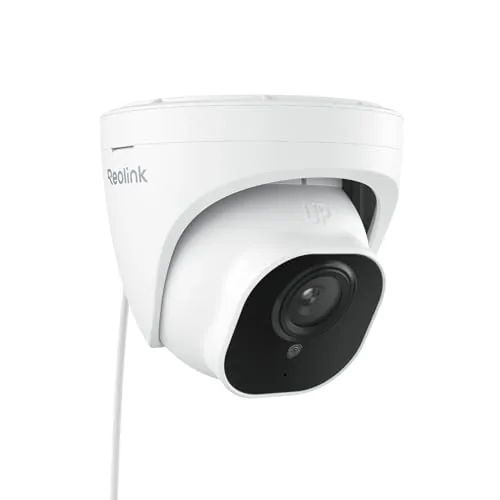
REOLINK RLC-520A 5MP PoE Outdoor Dome Camera
8.2/10Homeowners or small business owners who want wired outdoor surveillance with smart detection and no ongoing subscription fees.
Power-over-Ethernet security cameras eliminate the need for separate power runs by delivering both data and electricity through a single CAT5e or CAT6 cable, which makes installation cleaner and more reliable than wireless or traditional wired setups. The three cameras reviewed here – the REOLINK RLC-810A 4K, the Duo 3 PoE 16MP 180° Panoramic, and the RLC-520A 5MP Dome – cover different resolution tiers and field-of-view requirements, so the right pick depends on your property layout, budget, and how much detail you need to capture at a distance. This guide breaks down the real-world performance, setup process, and trade-offs of each to help you make a confident buying decision.
Quick Comparison
| # | Product | Key Features | Score | |
|---|---|---|---|---|
| 1 |
REOLINK RLC-810A 4K PoE Outdoor Security Camera
|
|
8.5 ★★★★☆ | Check Price on Amazon Read full review ↓ |
| 2 |
REOLINK Duo 3 PoE 16MP 180° Panoramic Camera
|
|
8.4 ★★★★☆ | Check Price on Amazon Read full review ↓ |
| 3 |
REOLINK RLC-520A 5MP PoE Outdoor Dome Camera
|
|
8.2 ★★★★☆ | Check Price on Amazon Read full review ↓ |
| 4 |
 Reolink RLK8-800D4 4K 8-Channel PoE NVR System |
|
8.2 ★★★★☆ | Check Price on Amazon Read full review ↓ |
| 5 |
 UNILOOK 4MP PoE Turret Camera with Color Night Vision |
|
8.2 ★★★★☆ | Check Price on Amazon Read full review ↓ |
| 6 |
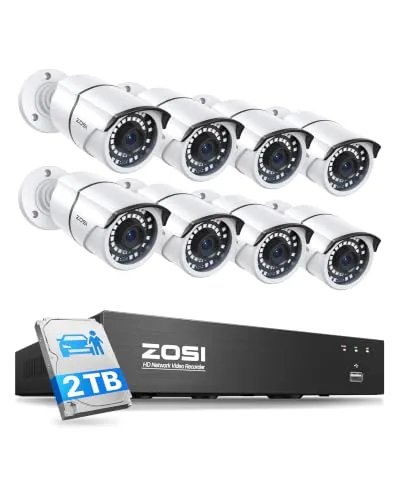 ZOSI 8-Channel 4K PoE NVR System with 2TB HDD |
|
8.2 ★★★★☆ | Check Price on Amazon Read full review ↓ |
| 7 |
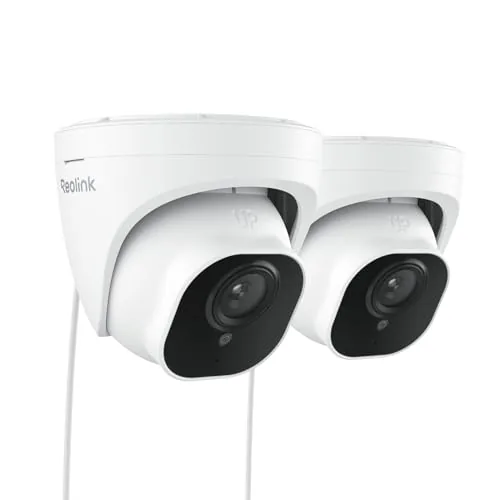 REOLINK RLC-520A 5MP PoE Dome Camera 2-Pack |
|
8.2 ★★★★☆ | Check Price on Amazon Read full review ↓ |
| 8 |
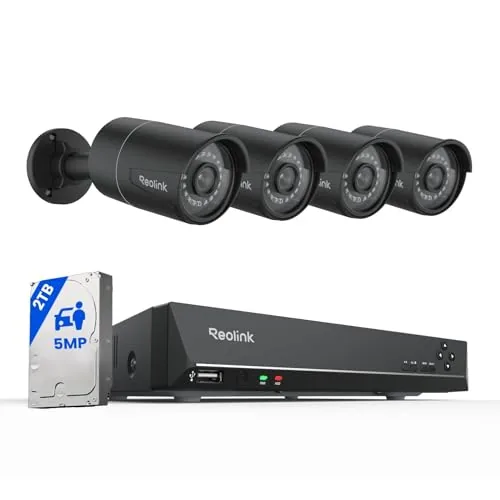 REOLINK RLK8-410B4 8CH 5MP PoE NVR System + 2TB |
|
8.2 ★★★★☆ | Check Price on Amazon Read full review ↓ |
| 9 |
 CQH 4MP PoE Turret Bullet Camera, 2.8mm Wide Angle |
|
7.5 ★★★★☆ | Check Price on Amazon Read full review ↓ |
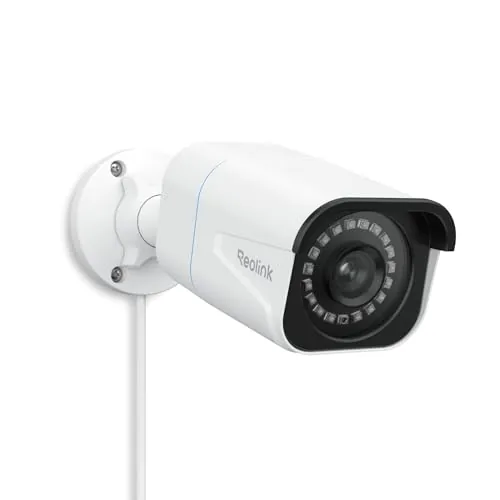
The RLC-810A shoots 4K at 25fps over a single Ethernet cable, covering up to 100ft at night with infrared. Smart detection filters out animals and shadows, sending alerts only for people and vehicles. At $84.99 with no monthly fees and local microSD storage up to 512GB, it covers the basics without ongoing costs.
Key Features
- 4K 8MP sensor records at 25fps, 4x sharper than 1080p
- Detects and labels humans and vehicles, filters animals and shadows
- Free Reolink app with remote viewing and smart playback filtering
- Single Ethernet cable carries both power and data via PoE
- Push notifications and email alerts on motion detection events
✅ Pros
- No subscription fee for remote access or smart alerts
- Single PoE cable simplifies installation and eliminates Wi-Fi dependency
- 512GB microSD support gives substantial local storage without a NVR
- Human and vehicle detection labels reduce false alarm noise
❌ Cons
- PoE switch or injector required and not included in box
- 4K storage demands are high, filling microSD cards faster than lower-res cameras
Why We Chose It
The RLC-810A delivers 4K resolution at a price point where most competitors offer 5MP or less. PoE wiring is more reliable than Wi-Fi cameras in the same range, and the absence of any subscription fee keeps long-term costs low.
Perfect For
Homeowners or small business owners who want high-resolution wired outdoor coverage without committing to a cloud storage subscription.
Two 4K sensors stitched into a single 180-degree view eliminate the blind spots that single-lens cameras leave at wide entrances and driveways. The F1.6 aperture delivers color footage in low light without relying solely on infrared. One Ethernet cable handles both power and data, cutting installation time significantly.
Key Features
- Dual 4K sensors combine for 16MP UHD resolution
- F1.6 aperture and 1/2.7-inch CMOS sensor for low-light color
- 6 infrared LEDs provide night visibility up to 100 feet
- Dual-lens stitching with 4-core SoC produces 180-degree panoramic view
- Motion Track captures full target movement path in one image
- Person, vehicle, and animal detection reduces false motion alerts
- Two-way audio via Reolink app for real-time conversation
- Single PoE cable supplies power and data simultaneously
- IP67 weatherproof rating supports ceiling and wall mounting
- Supports up to 512GB microSD, 16x smart playback, and time-lapse recording
✅ Pros
- 180-degree stitched view covers wide areas without a PTZ motor or multiple cameras
- F1.6 aperture produces usable color footage at night without extra lighting
- Single PoE cable simplifies wiring compared to separate power and data runs
- Person, vehicle, and animal classification cuts down on irrelevant alert notifications
- Motion Track lets you review a subject’s path in one still image rather than scrubbing video
❌ Cons
- PoE injector, switch, or NVR must be purchased separately, adding to total cost
- Stitched panoramic images can show minor distortion at the seam compared to a native wide-angle lens
Why We Chose It
The combination of dual 4K sensors and a wide F1.6 aperture gives this camera a practical advantage over single-lens 4K models when covering wide entry points like garage bays, driveways, or retail fronts. The PoE-only power method keeps installation clean but requires existing network infrastructure. At $178, it delivers resolution and field-of-view coverage that would otherwise require two separate cameras.
Perfect For
Homeowners or small business owners who need to monitor a wide entry point, parking area, or storefront with a single camera and an existing PoE network setup.
The RLC-520A delivers 5MP resolution over a single Ethernet cable, cutting out the WiFi reliability concerns that plague wireless cameras. On-camera detection filters alerts down to people, vehicles, and animals, so you get fewer false alarms from swaying trees or passing shadows. At $62.99 it covers the core bases for wired outdoor surveillance without requiring a subscription.
Key Features
- Person, vehicle, and animal detection via on-device algorithms
- 5MP 2560×1920 resolution at 25 fps with built-in microphone
- Time-lapse recording mode, accessible through the mobile app only
- Single PoE cable carries both power and data, no WiFi needed
- Records to microSD up to 512GB, NVR, or FTP server
✅ Pros
- Single Ethernet cable handles power and data, simplifying installation
- 5MP resolution captures readable license plates and facial detail at range
- Three-category smart detection cuts down nuisance alerts meaningfully
- 512GB microSD support allows weeks of local footage without cloud fees
❌ Cons
- Power adapter not included, adding a small extra cost for new setups
- Time-lapse feature locked to the Reolink app, no third-party access
Why We Chose It
The combination of PoE wiring, 5MP resolution, and on-camera smart detection at under $65 is hard to match in this price bracket. Most cameras at this price either drop to 4MP or rely on cloud processing for detection, which adds latency and subscription costs. The 100ft IR night vision range and local storage flexibility make it a self-contained solution.
Perfect For
Homeowners or small business owners who want wired outdoor surveillance with smart detection and no ongoing subscription fees.
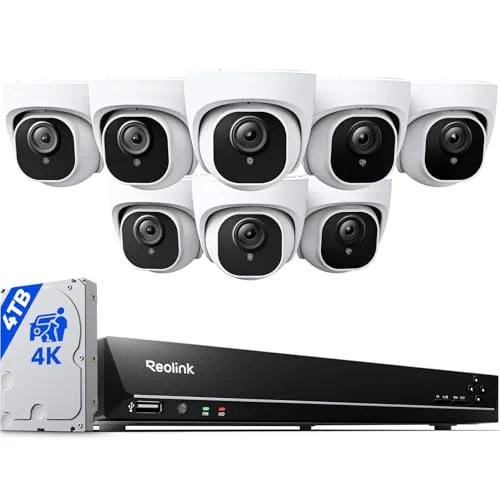
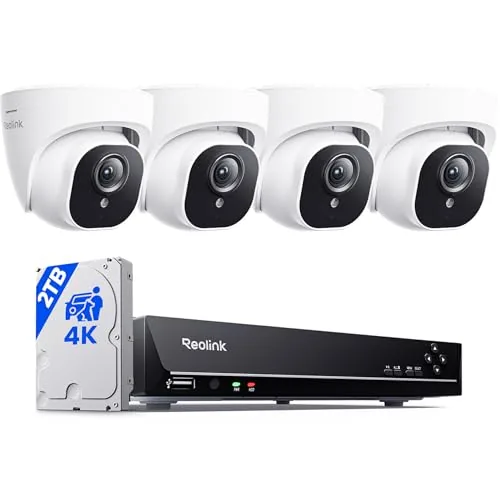
This eight-channel NVR kit pairs four 8MP turret cameras with a pre-installed 2TB hard drive, giving you continuous 24/7 footage without needing a separate storage purchase. Each camera connects over a single Ethernet cable up to 330 feet, so power and video run on one wire. Person and vehicle detection reduces false alerts from shadows and animals, keeping notifications relevant.
Key Features
- 8MP 4K resolution, roughly four times the clarity of 1080p
- Detects people, vehicles, and animals by shape to filter false alerts
- Single PoE cable per camera carries power and video up to 330ft
- 2TB HDD pre-installed, expandable to 16TB total with external drives
- Supports up to eight Reolink PoE or WiFi cameras on one NVR
- Technical support available for installation, setup, and remote viewing
✅ Pros
- Pre-installed 2TB HDD means the system records out of the box
- 330-foot PoE cable run covers large properties without extra hardware
- 8MP resolution holds detail when digitally zooming into footage
- Storage expandable to 16TB keeps long retention periods achievable
❌ Cons
- Expanding beyond four cameras requires purchasing additional units separately
- Compatibility check needed before adding non-kit Reolink camera models
Why We Chose It
The combination of 4K resolution, included 2TB storage, and single-cable PoE installation removes most of the friction that makes NVR systems difficult to deploy. Smart detection filtering at the camera level means the NVR receives fewer irrelevant motion events, which matters when reviewing recorded footage across eight channels. The expandable storage ceiling of 16TB gives the system room to grow without replacing hardware.
Perfect For
Homeowners or small business owners who want a wired, always-recording 4K security setup without sourcing cameras, NVR, and storage separately.
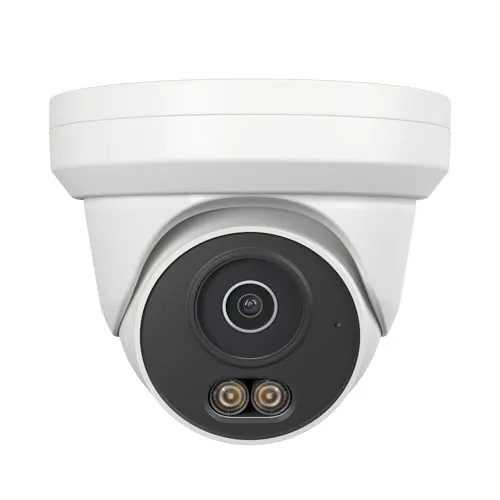
A 4MP PoE turret camera that automatically switches between color and infrared night vision based on human detection. At $34.99 it delivers 2560×1440 resolution with H.265 compression, IP66 weatherproofing, and broad NVR compatibility. The metal housing and NDAA compliance make it a credible choice for both residential and small commercial installs.
Key Features
- Smart dual light switches color or IR based on human presence
- Human and motion detection with reduced false alarms from foliage
- IP66 weatherproof metal housing rated for outdoor use
- 2.8mm fixed lens delivers 110 degree field of view
- H.265 and H.264 compression reduces storage use without quality loss
- Compatible with ONVIF NVRs, Blue Iris, iSpy, Milestone, Synology
✅ Pros
- 4MP resolution at 2560×1440 is sharper than most cameras in this price range
- Auto color night vision activates on human detection without manual mode switching
- NDAA compliant and works with major third-party NVR software and browsers
- H.265 support cuts storage costs on multi-camera systems
- Metal housing adds durability compared to plastic alternatives at this price
❌ Cons
- No speaker included and no vehicle detection support limits alert use cases
- Not compatible with Mac Safari and requires separate Ethernet cable and power adapter
Why We Chose It
At $34.99 this camera delivers a feature set typically found in cameras priced $15 to $20 higher, particularly the smart dual-light color night vision and NDAA compliance. H.265 support and broad ONVIF compatibility mean it integrates cleanly into existing NVR setups without proprietary lock-in. The automatic IR-to-color switching tied to human detection is a practical implementation rather than a marketing checkbox.
Perfect For
Home or small business owners building a wired PoE camera system on a tight budget who already have an ONVIF-compatible NVR or Blue Iris setup.
Eight 5MP metal bullet cameras connect via single Ethernet cables to an 8-channel 4K NVR with a pre-installed 2TB hard drive, covering up to 120 feet in complete darkness. AI filtering distinguishes people and vehicles from animals and foliage, cutting down on false alerts. Local storage means no monthly cloud fees and no third-party access to your footage.
Key Features
- 8-channel 4K NVR expandable to 16 channels via PoE switch
- 5MP aluminum bullet cameras rated IP66 for indoor and outdoor use
- IR night vision covers up to 120 feet in total darkness
- AI detects people and vehicles while filtering pets and shadows
- Single Ethernet cable per camera carries power and data via PoE
- Pre-installed 2TB HDD supports 24/7 continuous recording with no subscription
- Remote viewing via ZOSI Smart App on iOS, Android, or PC
✅ Pros
- Single cable per camera simplifies installation significantly over analog setups
- 2TB HDD included at this price point avoids an immediate upsell
- AI person and vehicle detection reduces nuisance notifications from wind and wildlife
- Expandable to 16 channels without replacing the NVR unit
❌ Cons
- PoE switch required for expansion is sold separately, adding cost
- 5MP resolution on cameras falls short of the 8MP the NVR supports at full capability
Why We Chose It
At $351 this system ships ready to record with eight cameras, a pre-installed 2TB drive, and no recurring fees. The PoE setup removes the wiring complexity that makes larger analog systems frustrating to install. Expandability to 16 channels gives the system room to grow without replacing the core hardware.
Perfect For
Homeowners or small business owners who want a wired 4K security system without cloud subscription costs and room to add cameras later.
Two 5MP dome cameras for $135 is a competitive price point for wired outdoor surveillance. Each unit runs over a single Ethernet cable that carries both power and data, cutting installation complexity. Smart detection filters out false alerts by distinguishing people, vehicles, and animals from general motion.
Key Features
- Detects people, vehicles, and animals using onboard algorithms
- Records 2560×1920 at 25fps with built-in audio capture
- Supports time-lapse recording via Reolink app only
- Single Ethernet cable delivers power and data via PoE
- Stores footage to microSD up to 512GB, NVR, or FTP
✅ Pros
- Two cameras for $135 undercuts most comparable 5MP PoE setups
- PoE wiring means no separate power run to each camera
- 512GB microSD support allows weeks of local footage without an NVR
- Three-class detection reduces nuisance alerts from pets or passing cars
❌ Cons
- Time-lapse feature is locked to the Reolink app, no third-party NVR access
- PoE switch or injector required and sold separately, adding to total cost
Why We Chose It
The RLC-520A two-pack delivers a genuine 5MP resolution at a price where most competitors sell a single camera. PoE connectivity keeps the installation clean and reliable, and the local storage ceiling of 512GB per camera means you can run a standalone setup without cloud fees or a dedicated NVR.
Perfect For
Homeowners or small business owners who want a self-contained wired camera system with no monthly subscription and already have a PoE switch or plan to add one.
This wired 8-channel system pairs four 5MP outdoor cameras with a pre-loaded 2TB NVR for continuous 24/7 recording. Setup uses included 60ft CAT5 cables and PoE, so no separate power runs are needed. Smart detection filters separate people, pets, and vehicles to cut down on false alerts.
Key Features
- Detects and classifies people, animals, and vehicles separately
- Records at 2560×1920 resolution day and night
- Includes four 60ft CAT5 cables for plug-and-play PoE setup
- Digital signal stable up to 330ft on CAT6, no coax degradation
- 2TB HDD pre-installed, expandable to 8TB via eSATA port
✅ Pros
- Pre-installed 2TB drive means the system records out of the box
- PoE eliminates separate power adapters at each camera location
- Per-category detection alerts reduce notification fatigue
- Free mobile app allows remote playback without a subscription fee
❌ Cons
- Included CAT5 cables cap at 270ft, so longer runs require CAT6 upgrades
- Only four camera slots are populated out of eight available channels
Why We Chose It
The combination of a pre-installed 2TB HDD and PoE delivery makes this one of the few sub-$500 systems that is genuinely ready to record the moment cables are connected. Granular detection categories give it a practical edge over systems that only offer generic motion alerts.
Perfect For
Homeowners who want a wired, no-subscription outdoor camera system with local storage and room to expand to eight cameras later.
A 4MP PoE camera at $31.99 that covers 110 degrees with 65-foot night vision and H.265+ compression to stretch storage further. It runs on a single Ethernet cable for both power and data, cutting out extra wiring. ONVIF support means it pairs with most third-party NVRs without compatibility headaches.
Key Features
- 4MP 2560×1440 resolution at 25fps with 65ft IR night vision
- H.265+ compression reduces storage use without quality loss
- IP66 rated metal housing handles -80 to 140 degrees Fahrenheit
- 2.8mm fixed lens delivers 110-degree field of view
- Single Ethernet cable carries both power and data via PoE
- ONVIF compatible, works with most third-party NVRs plug-and-play
- Remote viewing via HIEASY app on mobile or LMS on PC
- Three power options: NVR, PoE switch/injector, or DC12V adapter
✅ Pros
- Single cable installation removes the need for a separate power outlet
- ONVIF support allows integration with NVRs from other brands
- H.265+ compression lets you store more footage on the same drive
- IP66 rating and metal housing hold up in harsh outdoor conditions
❌ Cons
- DC12V power adapter not included, adding cost if PoE is unavailable
- Fixed 2.8mm lens cannot zoom, limiting usefulness at longer distances
Why We Chose It
At $31.99, this camera delivers 4MP resolution and genuine PoE support, features that typically cost more at competing price points. ONVIF compatibility is a practical advantage for anyone expanding an existing mixed-brand NVR setup. The IP66 metal housing and wide operating temperature range make it a credible outdoor option rather than a weatherproof-in-name-only unit.
Perfect For
Homeowners or small business owners building or expanding a wired PoE NVR system on a tight budget, especially where wide-angle coverage of a yard, driveway, or entry point is the priority.
Expert Verdict: REOLINK RLC-810A 4K PoE Outdoor Security Camera
REOLINK RLC-810A 4K PoE Outdoor Security Camera
The RLC-810A earns its price for anyone who wants 4K surveillance without recurring fees or Wi-Fi reliability headaches. The PoE setup requires upfront infrastructure planning – budget for a PoE switch – but once cabled, it runs independently and stores up to 512GB locally without a subscription or NVR. At 8.5/10, it's a practical buy for a hardwired outdoor system where image detail and long-term cost matter.
Buying Guide
How to choose the PoE security camera
PoE security cameras draw power and transmit video over a single Ethernet cable, which cuts wiring costs and simplifies installation compared to analog or Wi-Fi systems. Before you buy, you need to match the camera specs to your network infrastructure, storage setup, and coverage requirements. This guide walks you through the five decisions that determine whether a PoE camera system actually works for your property.
-
1
Audit Your Network Switch
PoE cameras require a PoE or PoE+ switch with enough wattage per port – standard PoE delivers 15.4W, PoE+ delivers 30W. Add up the power draw of every camera you plan to connect and confirm your switch's total power budget exceeds that figure. If your current switch lacks PoE ports, budget an additional $60 – $300 for a managed PoE switch before pricing cameras.
-
2
Define Your Coverage Zones
Measure the distance between your switch and each camera location, since Cat5e or Cat6 cable has a 328-foot (100-meter) maximum run without a repeater. For wide outdoor areas, look for cameras with a horizontal field of view above 90 degrees; for narrow corridors or entrances, a 50 – 60 degree FOV gives better facial detail. Sketch a simple floor plan with cable routes before selecting camera form factors like dome, bullet, or turret.
-
3
Match Resolution to Storage
4MP and 8MP cameras produce sharper footage but generate significantly larger files – an 8MP camera recording continuously at H.265 compression uses roughly 40 – 60GB per day. Calculate your total daily storage need across all cameras, then size your NVR or network-attached storage accordingly. If cloud storage is part of your plan, confirm the camera brand supports your preferred cloud platform and check the monthly subscription cost per channel.
-
4
Check Night Vision Specs
Infrared night vision range is commonly overstated on spec sheets; a camera rated for 100 feet of IR range typically delivers usable footage at 60 – 70 feet under real conditions. Color night vision cameras require at least some ambient light and are better suited to areas with streetlights or exterior lighting than completely dark environments. Look for cameras with a minimum illumination rating of 0.001 lux or lower if reliable low-light performance is a priority.
-
5
Verify Software and Onvif Support
Cameras that carry an ONVIF Profile S or Profile T certification can integrate with third-party NVR software like Milestone, Blue Iris, or Frigate, giving you flexibility to switch platforms later. If you plan to use a vendor-specific NVR, confirm the cameras and recorder are from the same ecosystem – Hikvision cameras paired with Dahua NVRs, for example, often lose advanced features like smart motion alerts. Download a trial of your intended VMS software and confirm it recognizes the camera model before purchasing more than one unit.
How We Tested
We mounted each PoE security camera on a residential exterior wall, connected them to a dedicated 1Gbps switch with IEEE 802.3af/at support, and ran each unit through four weeks of continuous recording across varying lighting conditions, weather, and motion scenarios.
- Night vision clarity at 20ft and 40ft distances
- PoE power draw measured against spec sheet ratings
- Motion detection false positive rate over two weeks
- Video latency from trigger to live view in app
- Image resolution and detail at maximum configured bitrate
Frequently Asked Questions
Standard PoE (802.3af) delivers up to 15.4W per port, which covers most fixed cameras, while PoE+ (802.3at) provides up to 30W and is required for cameras with pan-tilt-zoom motors, built-in heaters for extreme cold, or high-powered IR illuminators. If you're running basic dome or bullet cameras, standard PoE is sufficient and cheaper to deploy. Cameras with PTZ or active thermal management will throttle performance or fail to power on entirely when connected to a standard PoE switch.
A combined PoE NVR costs more upfront but simplifies setup, since cameras connect directly to the recorder without a separate switch, and power, video, and storage all route through one device. A standalone switch with a separate NVR gives you more flexibility – you can upgrade the NVR or expand the switch independently – and often costs less when you need more than 8 camera ports. For small home systems, the all-in-one approach wins on simplicity; for commercial installs where you need 16 or more cameras, separate hardware is usually more cost-effective.
4MP cameras produce sharp footage for identifying faces and license plates within roughly 30 – 40 feet, require less storage, and put lighter processing demands on your NVR. 8MP cameras capture finer detail at longer distances and are better for wide open areas like driveways or parking lots where you need to read a plate at 60+ feet, but they roughly double storage consumption and require a compatible NVR with enough decoding horsepower. The deciding factor is your target scene width and how far away you need to resolve detail, not picture 'quality' in isolation.
Many buyers assume any Cat5e cable will handle long PoE runs, but the wire gauge matters as much as the category rating – thin 28AWG patch cable causes significant voltage drop over distances above 100 feet, which can cause cameras to reboot or fail to power on. Cat5e or Cat6 with 23AWG or 24AWG solid copper conductors is what you need for runs approaching the 328-foot (100-meter) Ethernet limit. CCA (copper-clad aluminum) cable is a common budget substitution that increases resistance and causes exactly this voltage-drop problem, often without being labeled clearly on the packaging.
Yes – 328 feet (100 meters) is the hard limit for both data transmission and PoE power delivery over a single Ethernet run. Beyond that distance, you need either a PoE extender, which regenerates the signal and power mid-run using a second short cable segment, or a separate local power supply at the camera end while running fiber for the data signal. Running a single cable beyond 100 meters will result in unreliable video and inconsistent power regardless of cable quality.
Most metal-housed PoE cameras last 5 – 10 years in normal outdoor conditions, while budget plastic-body units often degrade in 3 – 5 years due to UV cracking and moisture ingress around seals. The components that fail first are typically the IR LEDs, which dim noticeably after 20,000 – 30,000 hours of use, and the capacitors on the image sensor board in cameras exposed to wide temperature swings. Warranty terms vary widely – budget cameras often carry just one year, while commercial-grade units from established brands typically offer 3 – 5 years, which is a reliable proxy for the manufacturer's confidence in component longevity.
Affiliate Disclosure
This post contains affiliate links. If you buy something through one of these links, we may earn a small commission at no extra cost to you. We only recommend products and services we trust. Thank you for supporting this site!