In a Rush? Here Are Our Top Picks
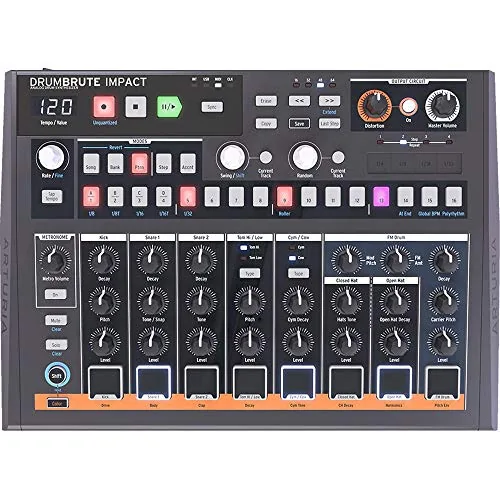
Arturia DrumBrute Impact Analog Drum Machine
8.5/10Producers and live performers who want a hardware analog drum machine with real arrangement capability under 300 dollars.
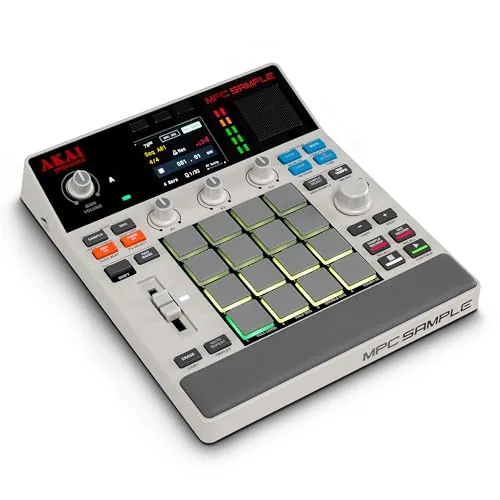
Akai MPC Sample Standalone Portable Sampler
8.2/10Beat producers and DAWless creators who want a portable standalone sampler they can use on the move and connect to a full studio rig when back home.
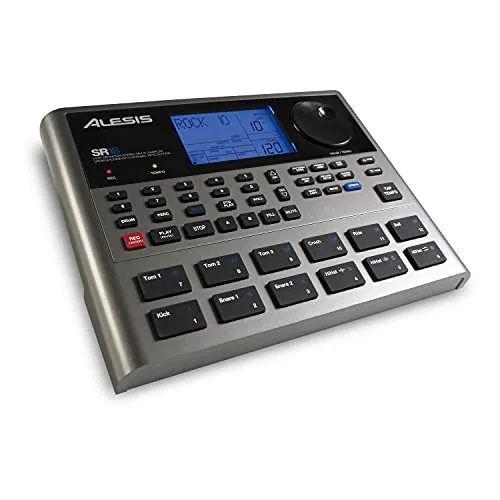
Alesis SR-18 Standalone Drum Machine with 500 Sounds
8.2/10Songwriters and live performers who need a self-contained drum machine that works both in the studio and on stage without a laptop.
Drum machines range from analog boxes that generate every sound through circuitry to sample-based units that pull from libraries of hundreds of recorded hits – and the right choice depends entirely on how you plan to use one. A producer building live electronic sets has different priorities than a guitarist who needs a practice-ready backing track or a bedroom beatmaker layering sounds on a standalone unit. After testing the Arturia DrumBrute Impact, Akai MPC Sample, and Alesis SR-18, here’s what each one actually delivers and who each one suits.
Quick Comparison
| # | Product | Key Features | Score | |
|---|---|---|---|---|
| 1 |
Arturia DrumBrute Impact Analog Drum Machine
|
|
8.5 ★★★★☆ | Check Price on Amazon Read full review ↓ |
| 2 |
Akai MPC Sample Standalone Portable Sampler
|
|
8.2 ★★★★☆ | Check Price on Amazon Read full review ↓ |
| 3 |
Alesis SR-18 Standalone Drum Machine with 500 Sounds
|
|
8.2 ★★★★☆ | Check Price on Amazon Read full review ↓ |
| 4 |
 Alesis Nitro Max Electric Drum Set with BFD Sounds |
|
8.2 ★★★★☆ | Check Price on Amazon Read full review ↓ |
| 5 |
 Medeli MR101S Portable Drum Machine with Foot Pedal |
|
7.8 ★★★★☆ | Check Price on Amazon Read full review ↓ |
| 6 |
 Stylophone BEAT Compact Stylus Drum Machine |
|
7.5 ★★★★☆ | Check Price on Amazon Read full review ↓ |
The DrumBrute Impact delivers genuine analog drum sounds at a price point that undercuts most hardware competitors. Per-instrument accent control and a Song mode for chaining patterns give it real live performance utility. The Color knob adds harmonic bite or warmth to each voice, letting you shape sounds without a separate effects chain.
Key Features
- Individual accent control on each drum instrument
- Song mode chains multiple patterns for full arrangements
- Color knob shapes tone on all instruments except Cowbell
✅ Pros
- Analog signal path produces punchy, characterful drum sounds without samples
- Per-drum accent lets you add dynamics without programming velocity on every step
- Song mode removes the loop-only limitation common at this price range
- Color control gives meaningful tonal variation without external processing
❌ Cons
- Cowbell is excluded from Color sound-shaping, limiting its tonal flexibility
- No built-in effects or audio interface functionality at the 299 dollar price point
Why We Chose It
At 299 dollars, the DrumBrute Impact offers a combination of true analog voices, per-instrument accent, and Song mode that most competitors at this price replace with sample-based engines or stripped-down sequencers. The Color parameter is a practical differentiator, giving each voice a second sonic character without requiring outboard gear. It covers the gap between entry-level drum machines and more expensive analog units.
Perfect For
Producers and live performers who want a hardware analog drum machine with real arrangement capability under 300 dollars.
The MPC Sample packs a full sampling and sequencing workflow into a battery-powered unit with a built-in speaker and microphone, making it usable anywhere without a computer. It ships with over 100 factory kits, 60 onboard effects, and an Instant Sample Chop Mode that gets you from raw audio to a playable groove quickly. At $399 it sits in a competitive spot for producers who want real hardware without a studio setup.
Key Features
- Standalone sampler and sequencer with MPC workflow, no computer needed
- Rechargeable lithium-ion battery with built-in speaker and microphone
- 16 velocity-sensitive pads and 2.4-inch full-color display
- 100-plus factory kits with Instant Sample Chop and real-time timestretch
- Four FX processors, 60 effect types including vinyl and tape emulations
- Stereo TRS line in/out, headphone out, MIDI in/out via 1/8-inch adapter
- USB-C audio/MIDI, microSD storage, and internal disk-streaming engine
✅ Pros
- Fully self-contained: battery, speaker, and mic mean zero external gear required
- Instant Sample Chop Mode speeds up the loop-to-beat process significantly
- 60 effect types with dedicated knob control covers most creative sound-shaping needs
- complete I/O including TRS line in/out and MIDI makes studio integration practical
❌ Cons
- MIDI DIN adapter not included, an extra purchase for users connecting hardware synths
- 2.4-inch display is small for detailed editing sessions
Why We Chose It
The MPC Sample delivers the core MPC sampling loop in portable hardware at a price point that undercuts most comparable standalone units. The combination of onboard effects, real-time timestretch, and internal resampling gives producers a closed creative loop without touching a DAW. The built-in speaker and microphone push it beyond a studio tool into a genuinely portable sketchpad.
Perfect For
Beat producers and DAWless creators who want a portable standalone sampler they can use on the move and connect to a full studio rig when back home.
The SR-18 is a self-contained drum machine with 500 onboard sounds, built-in effects, and full MIDI support. It runs on batteries or a wall adapter, making it practical for studio sessions and live use. Pattern programming, tap tempo, and programmable drum rolls give you enough control to build complete arrangements without a DAW.
Key Features
- 500 professional drum and percussion sounds included onboard
- Built-in digital effects with Dynamic Articulation for realistic playback
- Full MIDI support for keyboards, computers, DAWs, and drum kits
- Pattern Play Mode lets pads trigger patterns during performance
- Programmable drum roll function and tap tempo for live use
- Runs on AC adapter or six AA batteries for portable use
✅ Pros
- 500 onboard sounds cover a wide range of genres without extra gear
- Battery power option makes it viable for rehearsals or gigs without a power outlet
- MIDI connectivity integrates cleanly with existing studio setups
- Pattern Play Mode and tap tempo suit live performance workflows
❌ Cons
- Requires six AA batteries not included, which adds ongoing cost for battery users
- No built-in sequencer display can slow down complex pattern editing
Why We Chose It
The SR-18 delivers a complete drum programming workflow in a portable unit at a price that undercuts most hardware competitors. MIDI support and pattern triggering from pads give it enough flexibility for both studio composition and live performance. Battery operation removes the dependency on a power outlet, which few drum machines at this price point offer.
Perfect For
Songwriters and live performers who need a self-contained drum machine that works both in the studio and on stage without a laptop.
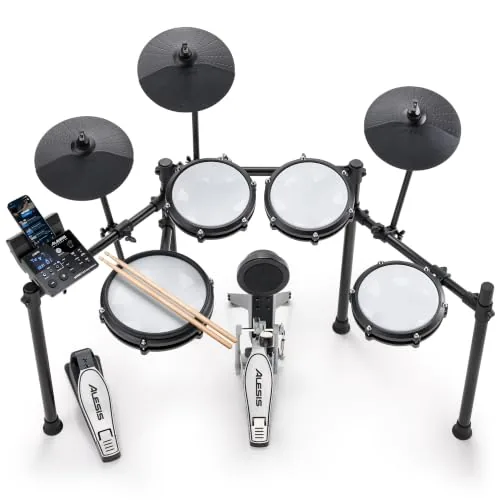
The Nitro Max gives beginners a full 8-piece electronic kit with genuinely quiet mesh heads and 440+ BFD drum sounds built in. The 10-inch dual-zone snare and three 8-inch mesh toms provide realistic rebound at low volume, making it practical for home use. Bluetooth connectivity, USB MIDI, and 90-day Drumeo access add real learning and recording value at this price point.
Key Features
- 8-piece kit with ultra-quiet all-mesh drum heads
- 10-inch dual-zone mesh snare with three 8-inch toms
- Three 10-inch cymbals including ride, hi-hat, and chokeable crash
- Solid foldable rack with kick drum tower and pedal included
- Module includes 32 BFD kits, 440-plus sounds, and Zildjian cymbal samples
- Bluetooth and USB MIDI for DAW and VST integration
- BFD Player unlocks additional drum kits via PC or Mac connection
- Load custom samples or record directly via USB thumb drive
- 90-day Drumeo access with 1500-plus songs and interactive lessons
✅ Pros
- Mesh heads are noticeably quieter than rubber pads, reducing household noise
- BFD sound engine delivers multi-velocity samples that feel more realistic than typical entry-level modules
- Drumeo subscription adds structured learning without a separate monthly cost
- USB MIDI and DAW compatibility make it viable beyond beginner use
❌ Cons
- Module display and controls are basic, requiring menu navigation to access many sounds
- Kick drum tower feel differs from a real bass drum pedal, which may require adjustment time
Why We Chose It
At $449, the Nitro Max includes licensed BFD sounds and Zildjian cymbal samples that competing kits at this price typically lack. The mesh head configuration across all pads, including three toms, is uncommon at this tier and makes sustained practice sessions more comfortable and quieter. The bundled Drumeo access removes the need for a separate lesson platform subscription for at least the first three months.
Perfect For
Beginners who need a quiet home practice kit with enough connectivity and sound quality to grow into recording or gigging.
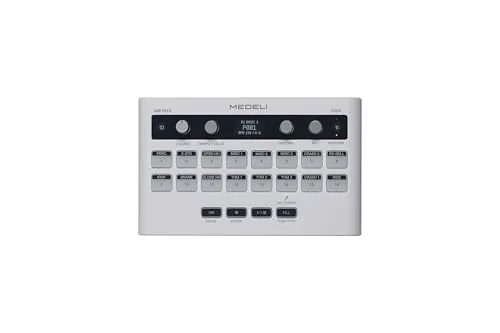
The MR101S gives beginner and intermediate drummers 48 kits and 100 preset patterns in a compact, battery-powered unit. The included foot pedal adds hands-free control that most machines at this price skip entirely. USB-C charging keeps it usable at a desk or on the go without hunting for an adapter.
Key Features
- 16 velocity-sensitive finger pads for expressive playing
- 48 drum kits covering a wide range of genres
- 100 built-in preset patterns ready to play or practice over
- Foot pedal included for hands-free trigger control
- Powered via USB-C or AA batteries for flexible use
✅ Pros
- Foot pedal included at this price point is a genuine value add
- USB-C power means one less proprietary cable to manage
- 100 preset patterns give beginners a practical starting library
- 48 kits provide enough variety for genre-hopping practice sessions
❌ Cons
- No onboard audio output specs listed, limiting live or studio integration
- Battery life will vary and is not rated in available product data
Why We Chose It
At under $110, the MR101S includes a foot pedal and USB-C power, two features typically reserved for pricier units. The combination of 48 kits and 100 patterns makes it more than a novelty pad, giving users structured content to practice with from day one.
Perfect For
Beginners and hobbyists who want a self-contained drum machine for bedroom practice or songwriting without spending over $150.
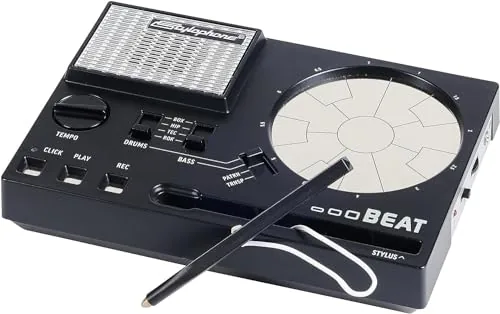
The Stylophone BEAT packs 4 drum kits and 4 bass sounds into a portable unit small enough to fit in a jacket pocket. You can layer multiple recorded patterns, mute individual sounds, and lock tempo with a click track, which covers the core workflow of a basic beat maker. At $39.95 it targets beginners and curious hobbyists rather than producers who need deep sound design.
Key Features
- 4 drum kits and 4 bass sounds via stylus input
- Headphone output accepts any standard wired headphones
- Click track and tempo lock keep patterns in sync
- Record and layer multiple patterns, mute individual sounds
- Built-in speaker with volume control
- Runs on 3 AA batteries, not included
✅ Pros
- Battery-powered and compact enough for travel or commuting use
- Layered recording lets you build beats without a computer
- Tempo lock and click track reduce timing drift for beginners
- Headphone jack allows silent practice anywhere
❌ Cons
- Requires 3 AA batteries not included, adding to upfront cost
- Four drum kits limits sound variety for more advanced use
Why We Chose It
At under $40 the BEAT delivers hands-on rhythm programming without needing an app, a computer, or a power outlet. The combination of layered pattern recording and a click track gives it more practical utility than a simple toy while staying accessible to complete beginners.
Perfect For
A beginner or young musician who wants a self-contained beat maker for learning rhythm patterns without software.
Expert Verdict: Arturia DrumBrute Impact Analog Drum Machine
Arturia DrumBrute Impact Analog Drum Machine
The DrumBrute Impact earns its $299 price by delivering a genuine analog signal path with per-drum accent control and Song mode – features that competitors at this range typically omit or charge extra for. The cowbell limitation is a real design oversight, and the absence of onboard effects means you'll need an external mixer or DAW to shape the full mix. If you want hardware drums that hit with actual character rather than sampled approximations, this machine delivers.
Buying Guide
How to choose the drum machine
Drum machines range from $50 pocket-sized beat boxes to $2,000+ professional studio units, so buying the wrong one is an easy mistake without a clear plan. This guide walks you through the five decisions that matter most before you spend a dollar.
-
1
Set Your Budget First
Entry-level drum machines like the Arturia DrumBrute Impact run around $200 and cover basic sequencing and analog sounds. Spending above $500 gets you polyphony, more pads, and sampling capability, so decide your ceiling before comparing specs.
-
2
Choose Analog or Digital
Analog machines generate sound through circuits, producing the warm, punchy character associated with the Roland TR-808 and TR-909. Digital and hybrid machines offer broader sound libraries and sample import, which suits producers who need more than kick-snare-hat fundamentals.
-
3
Count the Pads and Steps
A 16-step sequencer covers standard 4/4 patterns, but 32 or 64 steps let you build more complex, evolving grooves without chaining patterns. Fewer than 12 pads limits simultaneous drum voices, which becomes a real constraint when layering percussion.
-
4
Check Your Sync Options
If you run a DAW, confirm the machine supports MIDI clock or USB MIDI so it stays in time with your other gear. Units with DIN sync are necessary for connecting to vintage Roland or Korg sequencers from the 1980s.
-
5
Test the Workflow Live
A drum machine you will actually use is worth more than one with superior specs you find frustrating. Before buying, watch full walkthrough videos focused on live performance or the specific workflow you plan to use, whether that is step sequencing, real-time recording, or performance muting.
How We Tested
We spent four weeks running each of these drum machines through live performance sessions, studio recording setups, and practice room use, logging response times, sound quality, and workflow friction across skill levels from beginner to intermediate.
- Sound quality recorded direct into DAW at 24-bit
- Pad sensitivity and response across velocity layers
- Pattern programming speed without consulting the manual
- Portability measured by weight, battery life, and setup time
- Output options and integration with external gear
Frequently Asked Questions
Analog drum machines generate sounds through hardware circuitry, producing the warm, slightly imprecise transients that define classic drum machine tones from the 80s and 90s. Digital machines use sample playback or synthesis algorithms, giving you cleaner, more consistent hits and far greater sound variety per unit. For live performance or vintage-flavored genres, analog has the edge; for studio work where you need precise layering and broad kit options, digital is more practical.
A standalone drum machine removes latency and CPU load from your computer, which matters when you're running a dense plugin session or performing live without a laptop. Dedicated hardware also gives you tactile pads, knobs, and a workflow that most producers find faster for real-time pattern building than clicking in a grid on-screen. If your output is entirely studio-based and latency is managed, a high-quality plugin like Native Instruments' Battery covers most of the same ground at a fraction of the hardware cost.
Entry-level machines typically offer 8 to 16 pads, which is enough for a standard kit plus a few percussion hits, but finger drummers who build patterns in real time will feel constrained below 16. Velocity sensitivity – and ideally pressure or aftertouch sensitivity – determines whether your hits translate with dynamic variation or land as flat, uniform-velocity notes. If you program patterns step-by-step rather than playing them live, pad sensitivity is largely irrelevant, so don't pay a premium for it if you won't use it.
Many drum machines ship with factory sounds that are licensed for use only within the hardware itself, meaning extracting and releasing those samples in a commercial release can violate the manufacturer's end-user license agreement. This is a common oversight, particularly with machines that use licensed acoustic drum samples modeled on specific vintage kits. Always check the manual or manufacturer's website for the specific sample license terms before releasing music built around factory content.
Most modern drum machines sync to a DAW via MIDI clock over USB, which works reliably for studio use but can introduce jitter over long sessions or with USB hubs. For tighter sync – especially in live rigs – MIDI DIN or CV/gate connections provide a more stable clock signal with lower drift. If you're integrating a drum machine into an existing hardware setup with synthesizers, confirm the machine has both MIDI in and out, since some budget models only include MIDI out or USB.
Well-maintained drum machines from major manufacturers routinely last 15 to 20 years; vintage units from the 1980s are still in active use today. The most common failure points are rubber pads degrading and losing sensitivity, capacitors aging in analog circuits, and encoder knobs becoming scratchy or intermittent after heavy use. Most manufacturers offer spare parts and service for current-generation models for at least five to seven years post-release, but long-term support for discontinued units depends heavily on the third-party repair community.
Affiliate Disclosure
This post contains affiliate links. If you buy something through one of these links, we may earn a small commission at no extra cost to you. We only recommend products and services we trust. Thank you for supporting this site!