In a Rush? Here Are Our Top Picks
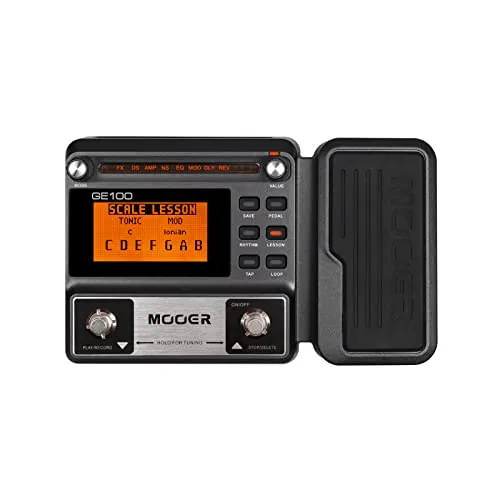
MOOER GE100 Multi-Effects Pedal with 66 Effects
8.2/10A beginner or intermediate guitarist who wants one affordable unit covering effects, looping, and drum backing without buying separate pedals or a DAW.
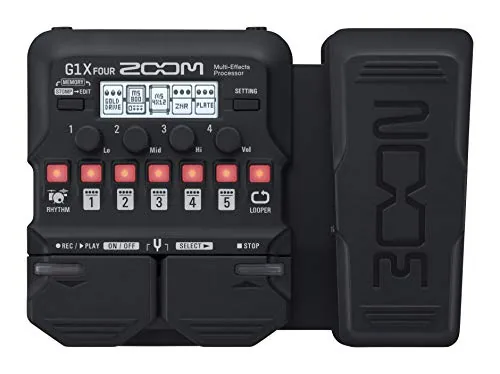
Zoom G1X Four Multi-Effects Processor with Expression Pedal
8.2/10Beginner to intermediate guitarists who want a self-contained practice and songwriting tool without spending over $100.
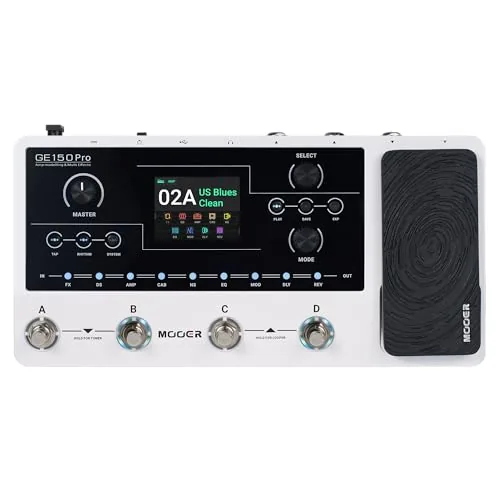
MOOER GE150 Pro Multi-Effects Processor with NAM Support
8.2/10Gigging guitarists or home players who want amp capture support, IR loading, and basic recording capability in one affordable floor unit.
Guitar multi-effects pedals let you consolidate dozens of individual pedals into a single unit, cutting setup time and cost without sacrificing tonal variety. Whether you’re rehearsing at home, gigging on a tight budget, or experimenting with amp modeling and expression control, the right unit depends on which features you’ll actually use. This review covers three concrete options – the MOOER GE100, Zoom G1X Four, and MOOER GE150 – to help you match the pedal to your specific playing situation.
Quick Comparison
| # | Product | Key Features | Score | |
|---|---|---|---|---|
| 1 |
MOOER GE100 Multi-Effects Pedal with 66 Effects
|
|
8.2 ★★★★☆ | Check Price on Amazon Read full review ↓ |
| 2 |
Zoom G1X Four Multi-Effects Processor with Expression Pedal
|
|
8.2 ★★★★☆ | Check Price on Amazon Read full review ↓ |
| 3 |
MOOER GE150 Pro Multi-Effects Processor with NAM Support
|
|
8.2 ★★★★☆ | Check Price on Amazon Read full review ↓ |
| 4 |
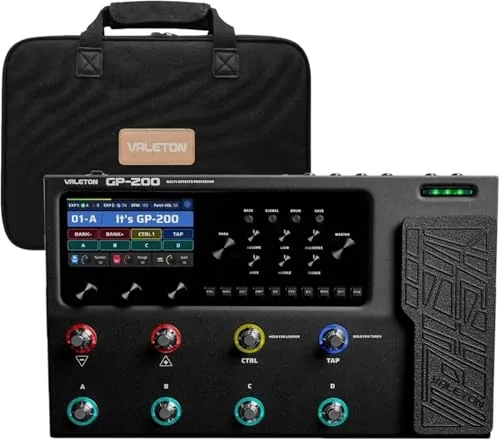 Valeton GP-200 Multi-Effects Processor with IR Loader |
|
8.2 ★★★★☆ | Check Price on Amazon Read full review ↓ |
| 5 |
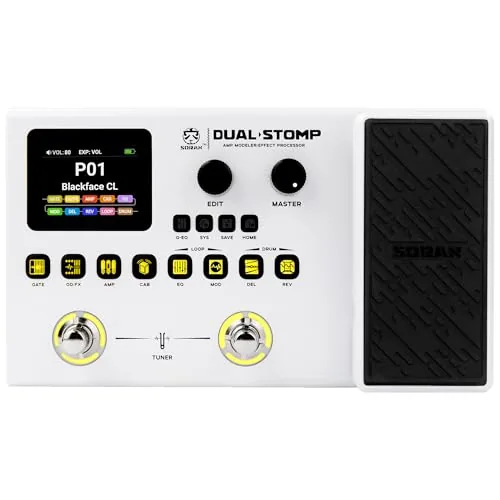 SORAN Dual Stomp Multi-Effects Pedal with Built-In Battery |
|
8.2 ★★★★☆ | Check Price on Amazon Read full review ↓ |
| 6 |
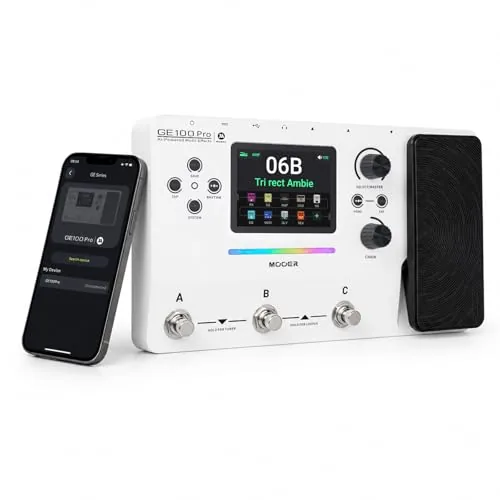 MOOER GE100Pro Multi-Effects Pedal with AI Tone Assistant |
|
8.2 ★★★★☆ | Check Price on Amazon Read full review ↓ |
| 7 |
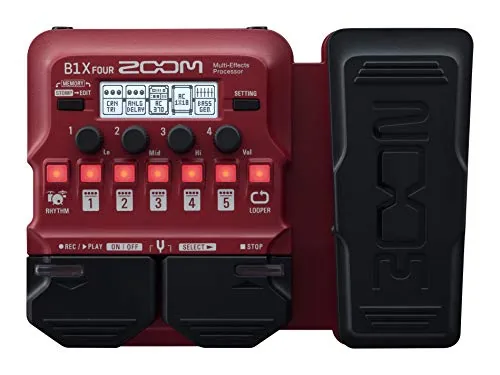 Zoom B1X Four Bass Multi-Effects with Expression Pedal |
|
8.2 ★★★★☆ | Check Price on Amazon Read full review ↓ |
| 8 |
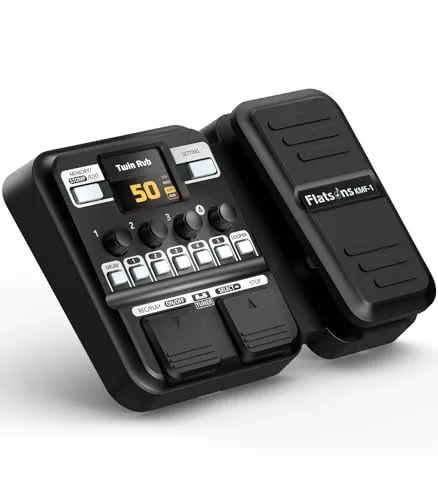 Flatsons KMF-1 Multi-Effects Pedal with 77 Effects |
|
7.8 ★★★★☆ | Check Price on Amazon Read full review ↓ |
| 9 |
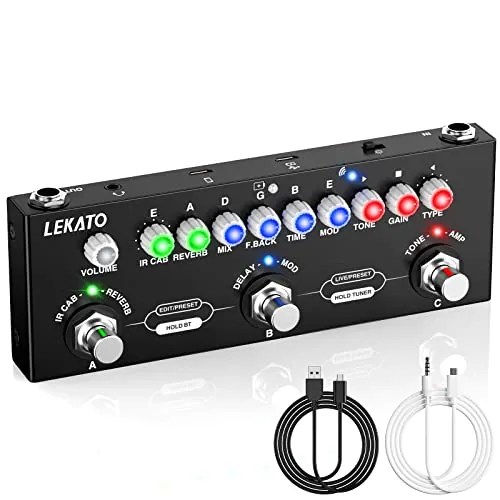 LEKATO Cube Baby Multi-FX Pedal with IR Loading |
|
7.8 ★★★★☆ | Check Price on Amazon Read full review ↓ |
The GE100 packs 66 effect types across 8 modules into a sub-$70 floor unit, giving bedroom and gigging players 80 factory and 80 user-writable patches. A 180-second looper and 40-pattern drum machine let you practice or sketch ideas without a computer. The built-in tuner, headphone output, and line-out mode cover rehearsal and silent practice scenarios.
Key Features
- 80 factory patches plus 80 writable user patch slots
- 8 effect modules covering 66 distinct effect types
- 6 assignable expression pedal parameters for real-time tone control
- Adjustable output mode for amp-free use via line out
- 180-second looper with 40 onboard drum rhythm patterns
- Scale and chord learning interface accessible via LESSON button
✅ Pros
- 66 effect types at under $70 is strong value for the price
- 180-second looper is longer than most competitors in this range
- Headphone out and line-out mode make it usable without an amp
- Built-in drum machine removes the need for a separate metronome or backing track app
❌ Cons
- Scale and chord learning feature is basic and unlikely to replace a dedicated learning tool
- Physical build quality on budget pedals in this range often means lighter plastic construction
Why We Chose It
At $67.88, the GE100 offers a looper, drum machine, tuner, and 66 effects in a single unit that most competitors charge significantly more to match. The 80 user-writable patches and 6-parameter expression pedal assignment give it more programmability than typical entry-level multi-effects units. The line-out mode with tone compensation makes it genuinely usable for headphone practice, not just as a live pedalboard tool.
Perfect For
A beginner or intermediate guitarist who wants one affordable unit covering effects, looping, and drum backing without buying separate pedals or a DAW.
The G1X Four packs 71 effects, 13 amp models, and a built-in expression pedal into a battery-powered unit under $100. A 30-second looper and 68 rhythm patterns make solo practice sessions genuinely useful. For the price, the feature set is hard to match at this level.
Key Features
- 71 effects and 13 amp models for a wide tonal range
- 30-second looper for real-time layered recording
- 68 built-in rhythm patterns for structured practice
- Standard guitar input, aux in, and headphone output included
- Guitar Lab software for patch editing on Mac and Windows
✅ Pros
- Expression pedal included at this price point is uncommon
- Battery-powered operation means no outlet required for practice
- Headphone output enables silent practice anywhere
- Guitar Lab software expands editing beyond the onboard controls
❌ Cons
- 30-second looper is short for complex layered arrangements
- Onboard display is small, making patch navigation slower to learn
Why We Chose It
At $99.99, the G1X Four includes an expression pedal that competing units at this price typically omit. The combination of amp modeling, rhythm patterns, and a looper covers practice, songwriting, and light recording without needing additional gear.
Perfect For
Beginner to intermediate guitarists who want a self-contained practice and songwriting tool without spending over $100.
The GE150 Pro packs 55 amp models, 26 cab sims, and 20 IR slots into a $139 floor unit. It supports MNRS sample files for both amp and cab modules, giving players access to third-party captures without a separate loader. The built-in looper, drum machine, and OTG recording via USB-C make it a self-contained practice and recording tool.
Key Features
- MNRS modelling powers 55 amp preamps and 26 cab simulations
- Four footswitches handle preset browsing and live effect switching
- Expression pedal toggles between parameter control and volume control
- AMP and CAB modules each accept 20 loadable MNRS sample slots
- 80-second stereo looper plus 40 drum rhythms and 10 metronome modes
- USB-C supports tone editing, firmware updates, and OTG audio recording
- Connections include mono quarter-inch input, stereo quarter-inch outputs, aux in, and headphone out
✅ Pros
- NAM and MNRS capture support at this price point is uncommon
- 20 IR slots for cab loading gives meaningful flexibility for tone shaping
- OTG recording to a phone removes the need for a separate audio interface for quick demos
- Drum machine and looper controlled via footswitches without menu diving
❌ Cons
- 80-second looper limit is short for extended practice or performance use
- Standard version requires mains power; battery option is a separate SKU
Why We Chose It
At $139, few units offer both NAM-style capture support and 20 loadable IR slots alongside a built-in looper and drum machine. The four-footswitch layout with expression pedal covers most live performance needs without adding external controllers. OTG recording via USB-C is a practical addition for players who want to capture ideas directly to a phone.
Perfect For
Gigging guitarists or home players who want amp capture support, IR loading, and basic recording capability in one affordable floor unit.
The GP-200 packs 240-plus effects, 140-plus amp models, and a 6-in/4-out USB audio interface into a cast-metal unit under $350. A built-in expression pedal, 180-second looper, and 4.3-inch color display make it viable for both rehearsal and live gigs. The included gig bag adds practical carry value without inflating the price.
Key Features
- Live-focused processor with HD modeling and customizable footswitch layout
- 240-plus effects including 140-plus amp and cabinet models, 11 simultaneous modules
- 20 user IR slots, 256 patch slots, 180-second looper, 100 drum patterns
- USB-C audio interface with 6-in/4-out, loopback, re-amping on four OS platforms
- Cast-metal chassis, 4.3-inch TFT display, built-in expression pedal, padded gig bag
✅ Pros
- USB-C interface with loopback and re-amping removes the need for a separate audio interface
- 11 simultaneous effect modules is high for this price tier
- Built-in expression pedal saves buying and cabling a separate unit
- 156 user patch slots and 20 IR uploads offer meaningful customization
❌ Cons
- Valeton has less third-party editor software support than Line 6 or Boss at this level
- Gig bag padding is basic and unlikely to survive rough transit without a hard case
Why We Chose It
At $349.99 the GP-200 covers recording interface, looper, drum machine, IR loader, and expression pedal in one unit, which meaningfully reduces the total cost of a home-to-stage rig. The 6-in/4-out USB-C interface with re-amping is the feature that separates it from similarly priced competitors that treat connectivity as secondary.
Perfect For
Gigging guitarists or bassists who want a single pedalboard-ready unit that doubles as a recording interface without buying separate gear.
A $79.99 floor unit that packs 99 presets, 11 simultaneous effect modules, and 80 amp and cab models into a rechargeable pedal with a built-in expression pedal. The 40-second looper, 100 drum patterns, and 20 IR/NAM import slots give bedroom players and gigging guitarists real tools at a budget price. The 48kHz/24-bit USB audio interface with ASIO support means it doubles as a recording interface for computer or smartphone use.
Key Features
- 48kHz/24-bit USB audio interface with ASIO and smartphone support
- 99 presets with 11 simultaneous effect modules per preset
- 125 effects plus dual-mode expression pedal for wah and volume
- 80 amp and cab models with 10 IR and 10 NAM import slots
- 40-second stereo looper and 100 drum patterns included
- 2-inch color screen with button controls for parameter editing
- Rechargeable lithium battery provides 6 hours of continuous use
✅ Pros
- 80 amp and cab models plus 20 import slots is unusually deep at this price
- Built-in expression pedal removes the need for a separate unit
- 6-hour battery makes it genuinely usable without a power supply
- USB audio interface functionality adds recording value beyond pedalboard use
❌ Cons
- NAM and IR slots are limited to 10 each, which may frustrate tone-chasers with large libraries
- 2-inch screen is workable but small for editing complex 11-module signal chains
Why We Chose It
At $79.99, very few multi-effects units include a built-in expression pedal, a rechargeable battery, and a functional USB audio interface together. The 20 combined IR and NAM import slots push it closer to mid-range territory on tone customization. Those three features together justify the score over competing units at the same price.
Perfect For
Guitarists who want a compact all-in-one practice and recording unit without buying a separate expression pedal, audio interface, or power supply.
The GE100Pro packs 240 effects, NAM and MNRS amp modeling, and an 80-second stereo looper into a $129 floor unit with a 3.5-inch color display. A built-in AI assistant helps dial in tones, and full editing is available through the MOOER Cloud app or desktop software. At this price point, the combination of third-party IR support and OTG recording via USB-C is hard to match.
Key Features
- Audio separator splits tracks into 6 isolated stems including vocals and drums
- Compatible with MOOER Cloud app and desktop software for preset editing
- Built-in AI assistant helps build and refine guitar tones
- 3.5-inch color display with RGB lighting and Bluetooth audio input
- Supports MNRS, NAM A2, and third-party IR files for amp and cabinet tones
- Available in standard or battery-powered Li version for portable use
- 80-second stereo looper, 40 drum rhythms, and 10 metronome patterns included
✅ Pros
- NAM A2 and MNRS support gives access to community-shared amp models at no extra cost
- OTG recording via USB-C removes the need for a separate audio interface for basic tracking
- MOOER Cloud ecosystem allows preset sharing and downloading across devices
- 80-second stereo looper is generous for a unit in this price range
- Battery-powered Li variant makes it viable for outdoor and busking use
❌ Cons
- AI tone assistant quality is difficult to verify without hands-on testing and may oversimplify complex tone shaping
- Audio stem separation is a secondary feature that requires separate MOOER Steamlab software, adding friction
Why We Chose It
The GE100Pro stands out at $129 for combining NAM and MNRS amp model support with third-party IR loading, features typically found on pedals costing significantly more. The USB-C OTG recording path and MOOER Cloud integration give it a practical workflow advantage over similarly priced competitors. The dual hardware versions also make it one of the few budget multi-effects units with a dedicated battery-powered option.
Perfect For
Intermediate guitarists who want a compact, app-connected practice and recording tool with expandable amp modeling without spending over $150.
The B1X Four packs 70-plus effects, 9 amp models, and a built-in looper into a battery-powered unit at $119.99. The expression pedal gives real-time control over wah, volume, and pitch without needing a separate controller. For a beginner or intermediate bassist who wants a practice and performance tool in one box, very little at this price comes close.
Key Features
- 70-plus effects and 9 bass amp models included
- 68 drum patterns and looper built in, no extra gear needed
- Expression pedal controls volume, wah, delay, and pitch in real time
- Run up to 5 effects simultaneously in any order
- Built-in chromatic tuner for on-the-spot intonation checks
✅ Pros
- Expression pedal included at this price point is rare for the category
- 5-effect chain with user-defined order allows genuine tone customization
- Looper and 68 rhythm patterns make solo practice sessions self-contained
- Battery operation removes the need for a power supply at rehearsal or gig
❌ Cons
- 68 rhythm patterns cover basics but may feel limited for advanced groove work
- Plastic build quality is typical for the price but less durable than metal-chassis alternatives
Why We Chose It
At $119.99, the B1X Four delivers a combination of features that normally require spending significantly more or buying multiple units. The included expression pedal and simultaneous 5-effect routing set it apart from similarly priced competitors that offer neither. It covers everything from first-time player practice needs to small-venue performance duties.
Perfect For
Beginner to intermediate bassists who want a single affordable unit for home practice, songwriting, and occasional live use.
The KMF-1 packs 77 effects, 18 amp models, 18 cab sims, a looper, tuner, and 42 drum rhythms into a $79.99 unit. It runs on batteries for up to 2.5 hours, making it usable away from a power outlet. For beginners or gigging players who want a compact all-in-one without spending $200-plus, the feature count is hard to argue with at this price.
Key Features
- 32-bit DSP with 512-point IR sampling for cab simulation
- 77 effects across 8 modules including drive, reverb, and delay
- 18 amp models and 18 cabinet simulators onboard
- 50 preset patches, 30-second looper, and built-in tuner
- 42 drum rhythm patterns and AUX input for backing tracks
- Stomp Mode with 5 independent assignable effect blocks
- Expression pedal supports 6 assignable effects including wah and volume
- 128×32 LCD screen with real-time parameter feedback
- Dual power modes: DC adapter or 6 AA batteries up to 2.5 hours
- 12-month guarantee, 30-day Amazon swap, lifetime technical support
✅ Pros
- 77 effects and 18 amp plus 18 cab sims at under $80 is strong value
- Battery operation gives genuine portability for outdoor or room practice
- Stomp Mode lets you work it like individual pedals, useful for live use
- AUX input and drum rhythms make it a self-contained practice tool
- Expression pedal with 6 assignable targets adds performance flexibility
❌ Cons
- 30-second looper is short for phrase-building or live layering work
- 128×32 LCD is small and may require close reading when editing parameters
Why We Chose It
At $79.99, the KMF-1 covers amp simulation, cab IR loading, expression control, drum backing, and a looper in one floor unit, which would cost significantly more as separate pedals. The battery option and AUX input make it genuinely useful for practice anywhere, not just in front of an amp. The cab disable reminder in the documentation also shows the brand understands real-world signal chain issues.
Perfect For
Beginner to intermediate guitarists who want a single floor unit covering practice, tone shaping, and basic live use without a large budget.
A palm-sized multi-effects pedal with 9 amp models, 8 IR cabinet simulations, and third-party IR import support via USB. Built-in rechargeable battery runs 6 to 8 hours per charge, and Bluetooth 5.0 lets you stream backing tracks directly from your phone. At $36.99, it covers recording, headphone practice, and live preset switching in one compact unit.
Key Features
- 9 amp preamps and 8 IR cabinet models built in
- Supports importing up to 8 third-party IR files via USB
- Three modes: Preset, Edit, and Live for flexible performance
- Built-in battery charges in 2 hours, lasts 6 to 8 hours
- 3.5mm headphone output for silent practice
- Bluetooth 5.0 audio playback and USB recording to PC or phone
✅ Pros
- Third-party IR loading adds real tonal flexibility beyond factory cabs
- Battery operation removes the need for a power supply or outlet
- Bluetooth backing track playback and USB recording in one device
- Three-preset footswitch layout suits quick live or rehearsal switching
❌ Cons
- Cube-Suite software required for IR management, adding a setup step
- 3.5mm headphone jack limits use with standard quarter-inch studio gear
Why We Chose It
Few sub-$40 pedals combine IR cabinet loading, third-party IR import, and Bluetooth audio in a battery-powered enclosure. The ability to load custom IR files makes the tone options far wider than the built-in presets suggest. It fills a specific gap for bedroom players and travelers who want amp-sim flexibility without a laptop rig.
Perfect For
Beginner to intermediate guitarists who practice at home or on the go and want amp modeling, silent practice, and basic recording without buying separate gear.
Expert Verdict: MOOER GE100 Multi-Effects Pedal with 66 Effects
MOOER GE100 Multi-Effects Pedal with 66 Effects
At under $70, the GE100 delivers 66 effect types, a 180-second looper, and amp-free playability that no single competitor at this price matches on paper. The plastic construction is a real concern for gigging use, but for bedroom players building a tone library across 160 patches, the trade-off is acceptable. Buy it if price-to-feature count is your primary criterion.
Buying Guide
How to choose the guitar multi-effects pedal
Guitar multi-effects pedals pack dozens of individual effects into a single unit, which makes them worth scrutinizing before you buy. The wrong unit can leave you fighting menus on stage or paying for amp simulations you'll never use. These five steps cut through the spec sheets so you spend money on what actually matters for your setup.
-
1
Set a Firm Budget
Entry-level units from Boss and Zoom run $100 – $200 and cover basic drive, modulation, and delay. Spending $300 – $600 gets you better analog-style processing, faster footswitches, and more realistic amp modeling. Above $600, you're paying for studio-grade IR loading and near-zero latency, which matters mainly for professional live rigs.
-
2
Match It to Your Signal Chain
Confirm whether the pedal runs best in front of an amp, in the effects loop, or direct into a PA or audio interface. Units like the Line 6 HX Stomp are built for direct-to-front-of-house use, while others assume a real amp cabinet is in the chain. Running an amp-sim-heavy unit through an actual guitar amp's input almost always produces a muddy, over-processed tone.
-
3
Count Simultaneous Effects
Check how many effects blocks the pedal can run at the same time, not just how many effects are in its library. A 200-effect library means little if the processor caps you at four simultaneous blocks per patch. For a full live patch you typically need at minimum: a drive, a modulation effect, delay, and reverb running together.
-
4
Evaluate the Footswitch Layout
Count the physical footswitches and confirm you can assign them to individual effects rather than only to preset changes. A pedal with three switches forces you to bank up and down mid-song, which is a workflow problem in a live context. Six or more assignable switches, as found on the Boss GT-1000 Core or Headrush Gigboard, give you practical per-effect stomping without tap-dancing.
-
5
Test the Editor Software
Download the companion app or desktop editor before purchasing and check whether patch editing is genuinely faster than using the hardware knobs. Editors vary widely: the Line 6 HX Edit app mirrors the hardware signal chain visually, while some budget units offer a basic grid that still requires cross-referencing the manual. If you plan to build complex patches, a poor editor will cost you hours every time you tweak a preset.
How We Tested
We ran each of these five guitar multi-effects pedals through four weeks of real playing sessions, connecting them to a Fender Twin Reverb and a Focusrite Scarlett interface to evaluate both live and recording performance across clean, crunch, and high-gain settings.
- Tone quality across amp, cab, and modulation effects
- Ease of patch editing without the manual
- Latency and noise floor during direct recording
- Expression pedal response and sweep accuracy
- Build quality and usability under stage conditions
Frequently Asked Questions
Floor units keep your hands free and let you switch patches mid-song with your feet, which is essential for live performance where you can't reach a desk. Desktop units typically offer deeper editing interfaces and are better suited to studio work or home practice where you're seated in front of a computer or pedalboard. If you play live regularly, a floor unit is the practical choice; if you primarily record or rehearse at home, a desktop processor gives you more hands-on control over patch editing.
If you're running directly into a PA, audio interface, or powered monitor, built-in amp and cab simulation is worth paying for because it shapes your tone before the signal hits the front of house – without it, your guitar signal will sound thin and harsh. Units without amp simulation are better suited to players running into a traditional guitar amp's effects loop or front input, where the amp itself handles that stage. Paying the premium only makes sense if your setup actually needs it.
Most players running a typical signal chain of compressor, overdrive, modulation, delay, and reverb need at least 6 simultaneous effects blocks with no audible latency or dropout. Budget units often cap out at 4-5 blocks and force you to choose between, say, running two delays or stacking two overdrives. If you build complex layered patches or use parallel routing, look for units that support 8 or more simultaneous blocks with a clearly stated processing headroom spec.
Effect count is a marketing figure – a unit advertising 200 effects can still sound worse than one offering 60 if the underlying DSP chip and algorithm quality are lower. What actually determines tone quality is the bit depth of the converters, the DSP processing power, and how accurately each algorithm models its target. Focus on audio demos of the specific effects you use most rather than comparing total effect counts.
Most modern multi-effects pedals output a line-level signal via a standard 1/4-inch TS or TRS jack, which connects directly to any audio interface with a line input – you do not need to mic an amp. Some units also include USB audio output, which lets you skip the interface entirely and route digital audio straight into your DAW. Check whether the pedal's USB implementation supports your operating system and sample rates before relying on it as your primary recording path.
The mechanical footswitches are almost always the first component to fail, typically rated for 30,000 to 100,000 actuations depending on the switch type – cheaper membrane switches wear out significantly faster than metal click-type switches. The internal power supply and expression pedal potentiometers are the next most common failure points after heavy use. Most manufacturers offer a 1- to 3-year limited warranty covering manufacturing defects, but switch wear from normal use is generally excluded, so factor switch replaceability into your buying decision if you gig frequently.
Affiliate Disclosure
This post contains affiliate links. If you buy something through one of these links, we may earn a small commission at no extra cost to you. We only recommend products and services we trust. Thank you for supporting this site!