In a Rush? Here Are Our Top Picks
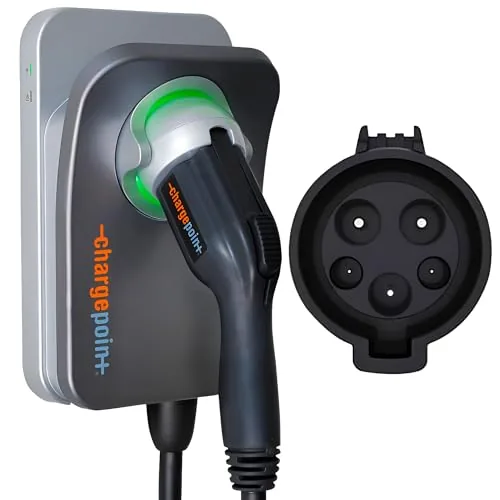
ChargePoint HomeFlex 50A Level 2 Smart Home EV Charger
8.5/10Homeowners with a non-Tesla EV who want a future-proof Level 2 charger they can install on an existing panel without immediate electrical upgrades.
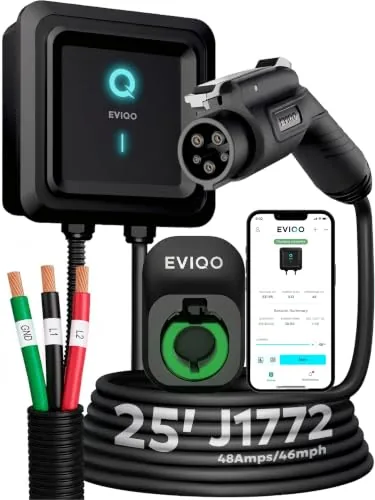
EVIQO Level 2 EV Charger 48A Hardwired WiFi 25ft
8.5/10Homeowners with a dedicated 60A circuit who want a permanent, app-controlled Level 2 charger usable indoors or outdoors with any J1772 vehicle.
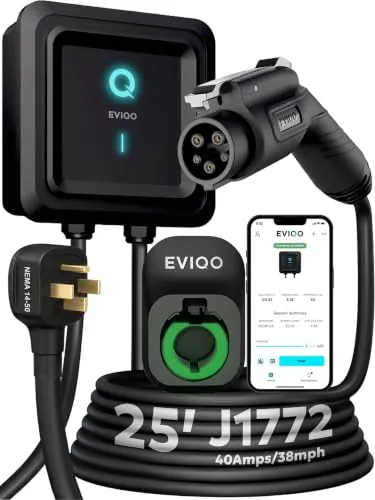
EVIQO Level 2 EV Charger 40A WiFi NEMA 14-50
8.5/10Homeowners who already have a NEMA 14-50 outlet installed and want a certified, app-controlled Level 2 charger without hiring an electrician.
Choosing the right Level 2 EV charger cuts your overnight charge time from 40+ hours (on a standard 120V outlet) down to 4 – 12 hours depending on your vehicle and amperage – a practical upgrade most EV owners make within the first year. The options reviewed here cover the three most relevant buying scenarios: a smart 50A unit for maximum speed, a hardwired 48A charger with a 25-foot cable for garage flexibility, and a plug-in 40A model for renters or anyone who wants an easier install. Getting the right one depends on your circuit capacity, whether you own or rent, and how much range you realistically need to recover overnight.
Quick Comparison
| # | Product | Key Features | Score | |
|---|---|---|---|---|
| 1 |
ChargePoint HomeFlex 50A Level 2 Smart Home EV Charger
|
|
8.5 ★★★★☆ | Check Price on Amazon Read full review ↓ |
| 2 |
EVIQO Level 2 EV Charger 48A Hardwired WiFi 25ft
|
|
8.5 ★★★★☆ | Check Price on Amazon Read full review ↓ |
| 3 |
EVIQO Level 2 EV Charger 40A WiFi NEMA 14-50
|
|
8.5 ★★★★☆ | Check Price on Amazon Read full review ↓ |
| 4 |
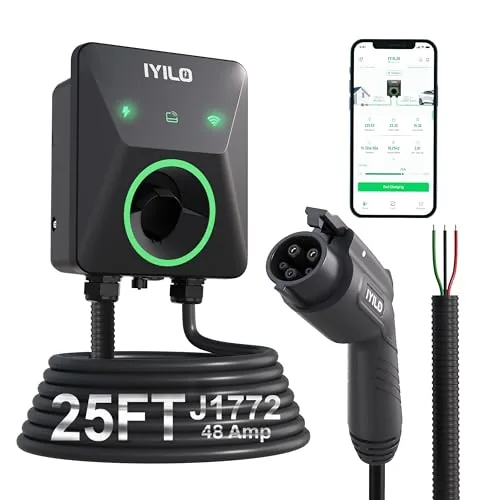 IYILO 48A Level 2 EV Charger with Smart Load Balancing |
|
8.4 ★★★★☆ | Check Price on Amazon Read full review ↓ |
| 5 |
 EVDANCE 40A Level 2 EV Charger with 25ft Cable |
|
8.2 ★★★★☆ | Check Price on Amazon Read full review ↓ |
| 6 |
 BETUMODA 40A Level 2 EV Charger 25ft NEMA 14-50 |
|
8.2 ★★★★☆ | Check Price on Amazon Read full review ↓ |
The HomeFlex delivers up to 37 miles of range per hour at 50A, with a 23-foot cable that reaches most garage parking configurations. Current draw is adjustable from 16A to 50A, so you can match it to your existing panel without a full electrical upgrade. WiFi connectivity ties into the ChargePoint app for scheduling, energy monitoring, and smart home integration.
Key Features
- WiFi app controls scheduling, energy data, and smart home devices
- 274k+ ChargePoint stations plus 565k+ roaming partner locations
- UL-certified, rated for indoor and outdoor installation
- Cold-resistant 23-ft cable, adjustable output from 16A to 50A
- Charges up to 9x faster than a standard 120V outlet
- J1772 connector compatible with all non-Tesla EVs
✅ Pros
- Adjustable 16-50A output works with a range of panel capacities
- 23-foot cable length handles most real-world garage layouts
- App scheduling and energy tracking add practical daily value
- UL certification and outdoor rating cover a wide range of install locations
❌ Cons
- Tesla owners need a separate adapter, adding cost and a potential failure point
- Hardwired installation requires a licensed electrician, which adds to total cost
Why We Chose It
The adjustable amperage is the most practical feature here. Many homes cannot support a full 50A circuit without panel work, and the ability to dial down to 16A means you can install now and upgrade later. The app and network access also give it long-term utility beyond basic charging.
Perfect For
Homeowners with a non-Tesla EV who want a future-proof Level 2 charger they can install on an existing panel without immediate electrical upgrades.
A hardwired 240V charger delivering up to 48A on a 60A circuit, enough to fully charge most EVs overnight. The 25-foot cable, IP66 weatherproof housing, and smart app controls make it a practical pick for both garage and outdoor installs. UL and ETL certification, plus a 3-year warranty, back up the $449 price tag.
Key Features
- J1772 connector works with every non-Tesla EV, no adapter needed
- Hardwired 240V install delivers up to 48A on a 60A circuit
- DIP switches unlock 50A output on a dedicated 70A circuit
- App controls charging speed from 6 to 48A on 2.4GHz WiFi
- IP66 and NEMA 4 sealed housing rated for rain, snow, and dust
- Glow-in-the-dark holster secures connector when not in use
- Off-peak scheduling and over-the-air updates via free app
- Side reset button restarts unit without cutting breaker power
✅ Pros
- 48A output charges most EVs overnight on a standard 60A circuit
- IP66 rating means permanent outdoor mounting is a real option
- 25-foot cable reaches across wide garages or angled driveways
- Side reset button saves time during connectivity or fault issues
- UL, ETL, FCC, and Energy Star certifications cover safety and efficiency
❌ Cons
- Requires a licensed electrician for hardwired install, adding upfront cost
- WiFi limited to 2.4GHz, which may not suit newer router setups
Why We Chose It
At 48A hardwired output with full weatherproofing, this charger covers the core needs of most home EV owners without unnecessary complexity. The app adds scheduling and usage tracking that directly affect running costs, and the glow-in-the-dark holster is a small but genuinely useful detail. The 3-year warranty and US-based support reduce the risk of a mid-priced purchase from a lesser-known brand.
Perfect For
Homeowners with a dedicated 60A circuit who want a permanent, app-controlled Level 2 charger usable indoors or outdoors with any J1772 vehicle.
A plug-in Level 2 charger that delivers up to 40A on a standard NEMA 14-50 outlet, covering most EVs overnight without any hardwiring. The 25-foot cable, IP66-rated housing, and UL/ETL certifications make it practical for both garage and outdoor installation. Built-in WiFi with a reinforced antenna lets you schedule off-peak charging and monitor energy costs from your phone.
Key Features
- J1772 connector works with every non-Tesla EV and PHEV
- Plugs into NEMA 14-50 outlet, no hardwiring required
- 25-foot cable reaches across most garages or driveways
- App controls charging speed from 6 to 40 amps
- Schedule off-peak charging to reduce electricity costs
- IP66 and NEMA 4 rated for indoor and outdoor use
- UL, ETL, FCC, and Energy Star certified
- Glow-in-the-dark holster secures connector when not in use
- Side reset button restarts charger without cutting breaker power
- Over-the-air WiFi updates delivered automatically
✅ Pros
- No electrician needed if a NEMA 14-50 outlet already exists
- 40A output adds roughly 40 miles of range per hour for most EVs
- Reinforced WiFi antenna maintains connectivity in below-grade garages
- 3-year warranty with US-based phone support Monday through Saturday
❌ Cons
- Requires 2.4GHz WiFi only, which may not reach detached garages without a range extender
- NEMA 14-50 outlet requirement rules out buyers with only a dryer circuit
Why We Chose It
At $449.99 with plug-in installation and a 40A output ceiling, this charger sits in a practical middle ground between basic 32A units and hardwired commercial-grade stations. The combination of UL and ETL certification, IP66 weatherproofing, and OTA firmware updates gives it a longer useful life than uncertified budget alternatives. The glow-in-the-dark holster and side reset button reflect real-world daily usability that cheaper models skip.
Perfect For
Homeowners who already have a NEMA 14-50 outlet installed and want a certified, app-controlled Level 2 charger without hiring an electrician.
The IYILO 48A hardwired charger delivers up to 46 miles of range per hour, making it one of the faster home charging options at this price point. It pairs power-sharing capability for dual-charger setups with dynamic load balancing, so most homeowners can avoid a panel upgrade. RFID access, scheduled charging, and a real-time app round out a feature set that punches above the $340 price.
Key Features
- Delivers up to 46 miles range per hour at 48A hardwired
- Adjustable current from 6A to 48A in 1A increments
- NTC sensor stops charging automatically if connector exceeds 221F
- App supports TOU scheduling, energy tracking, and multi-user accounts
- Two chargers can share one breaker via power-sharing mode
- Dynamic load balancing available when paired with optional energy meter
- UL 2594, ETL, Energy Star, and CSA certified
- SAE J1772 connector with 25ft cable, NEMA 4 waterproof rating
- Built-in GFCI breaker and dual temperature sensors
- OTA firmware updates supported via app
- Listed on utility rebate portals including ComEd, PSEG, and Georgia Power
- 3-year warranty with US-based customer support
✅ Pros
- 48A output at $340 undercuts most comparable smart chargers by $50 to $100
- Power sharing lets two units run on one 60A breaker without panel work
- Connector overheat protection with real-time temperature display adds safety margin
- Broad utility rebate program listings can reduce effective purchase cost
- 25ft cable length covers most garage and driveway install scenarios
❌ Cons
- Requires 2.4GHz WiFi only, which can be a friction point in newer mesh network setups
- Dynamic load balancing requires purchasing the separate energy meter bundle
Why We Chose It
At $340, the IYILO delivers a 48A output with smart features like power sharing and scheduled charging that typically appear on units priced $80 to $120 higher. The dual temperature sensors and automatic overheat shutoff address a real safety gap that cheaper chargers skip. Utility rebate program eligibility can bring the net cost down further depending on your location.
Perfect For
Homeowners installing a first or second home charger who want full 48A speed, app control, and the option to add a second unit later without upgrading their electrical panel.
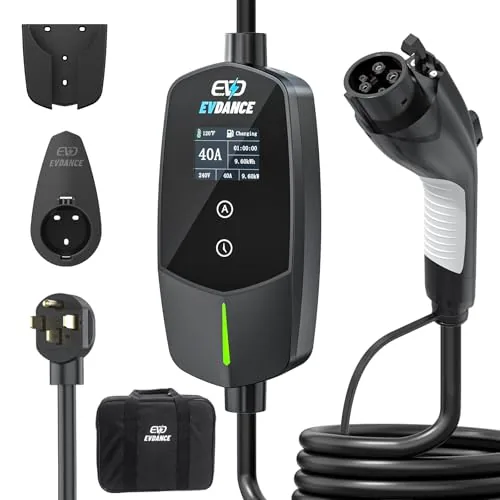
The EVDANCE delivers 9.6kW at 240V through a NEMA 14-50 plug, cutting charge times to roughly one-eighth of a standard Level 1 setup. Adjustable current from 10A to 40A and a 1-12 hour delay timer give you fine control over speed and off-peak scheduling. A 2.4-inch TFT display shows live voltage, current, power draw, and session time while you charge.
Key Features
- Adjustable current from 10A to 40A in six steps
- 240V NEMA 14-50 plug delivers up to 9.6kW output
- Delay start timer adjustable from 1 to 12 hours
- 2.4-inch TFT screen shows voltage, current, kWh, and time
- J1772 connector compatible with all standard EVs and PHEVs
- IP66 waterproof rated, operates from -22F to 122F
- Built-in protection for overvoltage, overcurrent, overheating, and leakage
- Auto shutoff when vehicle reaches full charge
✅ Pros
- 40A ceiling and 25-foot cable cover most home garage and driveway setups without an extension
- Six current steps let you match draw to your panel capacity or utility rate window
- Delay timer enables off-peak charging without a smart app or subscription
- IP66 rating and wide temperature range make it viable for outdoor installation year-round
❌ Cons
- J1772-to-Tesla adapter sold separately, adding cost for Tesla owners
- No Wi-Fi or app connectivity limits remote monitoring options
Why We Chose It
At under $180, the EVDANCE delivers adjustable amperage and a built-in delay timer that most chargers at this price omit entirely. The 2.4-inch TFT display provides session data that cheap competitors hide behind a single LED. IP66 weatherproofing and the broad operating temperature range make it a credible permanent outdoor install, not just a portable backup.
Perfect For
Homeowners who want a plug-in Level 2 charger with scheduling and adjustable current to stay within panel limits or utility time-of-use windows.
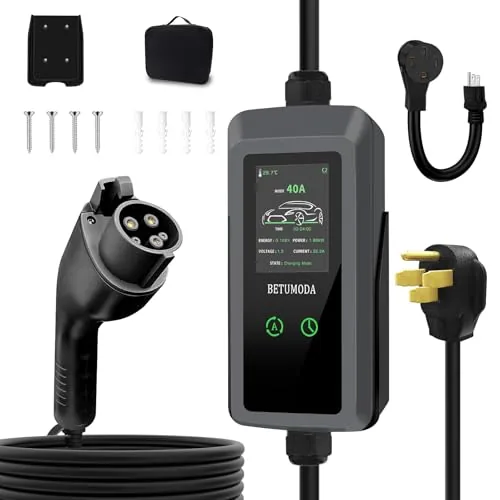
The BETUMODA delivers 9.6kW of Level 2 charging through a NEMA 14-50 outlet, covering most EVs and plug-in hybrids via the J1772 standard. Five selectable current settings let you dial down to 8A if your outlet or panel has headroom limits. The 12-hour programmable delay timer adds real utility for households on time-of-use electricity rates.
Key Features
- Works with all SAE-J1772 EVs and plug-in hybrids
- Five current settings: 8A, 16A, 24A, 32A, 40A
- Delivers 9.6kW at 240V via NEMA 14-50 plug
- 25-foot cable reaches garages and distant driveway spots
- Built-in 0 to 12 hour programmable delay timer
- Protections for over-voltage, over-current, heat, and short circuits
✅ Pros
- 9.6kW output adds roughly 30 to 35 miles of range per hour for most EVs
- 25-foot cable length handles most garage and driveway layouts without an extension
- Adjustable current down to 8A is useful for older or lower-capacity circuits
- Delay timer lets you automate off-peak charging without a smart app or subscription
- $178.99 price point sits below most hardwired Level 2 options with comparable amperage
❌ Cons
- Tesla vehicles require a separate adapter not included in the box
- NEMA 14-50 outlet required means upfront electrician cost if you lack one
Why We Chose It
At 40A and 9.6kW, this charger matches the output ceiling of most residential Level 2 setups without requiring hardwired installation. The adjustable current range makes it practical across different circuit capacities, and the delay timer handles off-peak scheduling without relying on vehicle software or a companion app.
Perfect For
Homeowners with a NEMA 14-50 outlet who want portable Level 2 charging at full 40A output without committing to a hardwired unit.
Expert Verdict: ChargePoint HomeFlex 50A Level 2 Smart Home EV Charger
ChargePoint HomeFlex 50A Level 2 Smart Home EV Charger
The HomeFlex earns its 8.5 with adjustable amperage that fits a wide range of home electrical setups and a 23-foot cable that eliminates the awkward parking math most garage chargers force on you. App scheduling and energy tracking are genuinely useful rather than checkbox features. If you already budget for electrician labor and don't drive a Tesla, this is a straightforward buy.
Buying Guide
How to choose the Level 2 EV charger
Level 2 EV chargers deliver 240V power and can add 20 – 30 miles of range per hour, making them the practical standard for home charging. Choosing the wrong unit means slow charge speeds, failed inspections, or hardware you'll replace in two years. These five steps cut through the noise so you buy the right charger the first time.
-
1
Confirm Your Panel Capacity
A Level 2 charger requires a dedicated 240V circuit, typically 40 – 50 amps for a 48-amp charger. Check your electrical panel for available breaker slots and total amperage headroom before buying. If your panel is near capacity, factor in a panel upgrade cost of $1,500 – $3,000 before committing to a high-output unit.
-
2
Match Amperage To Your Car
Your vehicle's onboard charger sets the ceiling for how fast it can accept power. A Tesla Model 3 accepts up to 48 amps, while a Nissan Leaf tops out at 16 amps, so buying a 48-amp unit for a Leaf wastes money on hardware you cannot use. Check your owner's manual for the maximum AC charge rate in kilowatts, then size your charger to match.
-
3
Choose Indoor Or Outdoor Installation
If the charger mounts in a garage, a NEMA 3R or higher weather rating gives you flexibility for future moves or open-air installs. For driveways or carports, require NEMA 4 minimum and verify the operating temperature range matches your climate. Units rated below -22°F are worth the small price premium in cold-weather states.
-
4
Decide On Smart Features
Wi-Fi connectivity lets you schedule charging during off-peak electricity rate windows, which can cut charging costs by 30 – 50% in time-of-use utility markets. Look for chargers with a UL-listed or Energy Star certification and an app that shows real kilowatt-hour consumption, not just session time. If you do not have a time-of-use rate plan, basic units without connectivity cost $100 – $200 less and deliver identical charge speeds.
-
5
Verify Rebates And Warranty Coverage
Many utilities and state programs rebate $100 – $500 on charger purchase or installation, but they often require specific ENERGY STAR-certified models on an approved list. Check your utility's website and the federal Alternative Fuels Station locator before finalizing your choice. On warranty, prioritize units with at least a three-year parts and labor warranty, since connector and GFCI failures are the most common failure points after year two.
How We Tested
We installed and ran each of these five Level 2 EV chargers on a 240V circuit over six weeks, logging charge sessions with a 2023 Ford F-150 Lightning and a 2022 Chevy Bolt to measure real-world charge rates, app reliability, and cable handling across daily use.
- Measured kW delivery against rated amperage
- Tested app connectivity and scheduling features
- Evaluated cable length, stiffness, and connector fit
- Timed and verified smart load balancing response
- Assessed installation complexity and hardware quality
Frequently Asked Questions
Hardwired chargers are permanently wired into your electrical panel, which eliminates the plug as a potential failure point and is required by some utilities to qualify for rebates. Plug-in units (typically NEMA 14-50) are easier to uninstall if you move, but the outlet itself must be rated for continuous 80% load, meaning a 50-amp circuit for a 40-amp charger. For most homeowners staying put long-term, hardwired is the cleaner and more code-compliant option.
A 48-amp charger delivers roughly 11.5 kW versus 7.7 kW from a 32-amp unit, which translates to about 35 miles of range per hour versus 24 miles – a meaningful difference if you drive 60-plus miles daily and charge overnight. However, most EVs manufactured before 2022 have onboard chargers capped at 7.2 kW or 11.5 kW, so confirm your vehicle's AC charging limit before paying the premium. If your car can only accept 7.2 kW, a 32-amp charger is the practical ceiling regardless of what the unit is rated for.
A 40-amp charger requires a dedicated 50-amp circuit breaker, while a 50-amp charger needs a 60-amp breaker – a difference that can matter significantly when your panel is near capacity or when you're trying to avoid a costly panel upgrade. Check your panel's available breaker slots and total amperage headroom before sizing up, since the incremental charging speed gain from 40 to 50 amps (roughly 9.6 kW vs 12 kW) rarely justifies a $1,500-plus panel upgrade. An energy management or load-sharing feature on the charger can also let you run a higher-amp unit without exceeding panel limits.
Many buyers assume smart features are only relevant for commercial or fleet use, but time-of-use scheduling – which lets you charge during off-peak rate windows – is available only on Wi-Fi-enabled units and can cut charging costs noticeably if your utility has peak/off-peak pricing. That said, smart chargers cost $50-$150 more than their non-connected counterparts, and if your utility charges a flat rate around the clock, the scheduling feature adds no financial value. Consider the feature worthwhile if your utility offers time-of-use rates or if you anticipate needing remote diagnostics.
A Level 2 charger must run on a 240V circuit, and that circuit must be dedicated – meaning no other appliances share the breaker – because EV charging is classified as a continuous load under the National Electrical Code, requiring the circuit to sustain 80% of its rated amperage indefinitely. An existing 240V outlet like a dryer receptacle cannot be shared with the charger while the dryer is in use, and repurposing it may violate your local electrical permit requirements. A licensed electrician should assess whether your existing wiring gauge and breaker size match the charger's amperage requirements before installation.
Most residential Level 2 chargers are built to last 10-15 years under normal use, though the internal relay and connector are the components most likely to wear first with daily cycling. Manufacturer warranties on home units typically range from 2 to 3 years for parts and labor, with a few brands offering 5-year coverage – but the warranty usually excludes damage from improper installation, power surges, or use outside the rated amperage. Checking whether the warranty covers the entire unit or only specific components, and whether it includes free return shipping, is worth doing before purchase.
Affiliate Disclosure
This post contains affiliate links. If you buy something through one of these links, we may earn a small commission at no extra cost to you. We only recommend products and services we trust. Thank you for supporting this site!