In a Rush? Here Are Our Top Picks
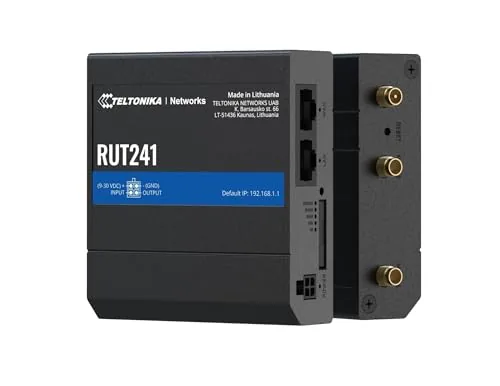
Teltonika RUT241 Industrial 4G LTE Router
8.5/10Network engineers and OT teams deploying cellular backhaul or primary connectivity in manufacturing sites, utility infrastructure, or commercial vehicles.
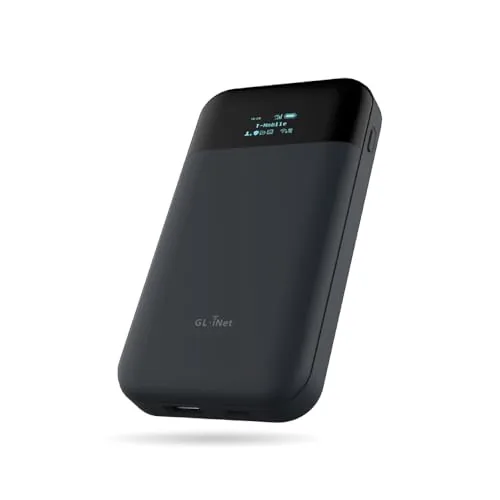
GL.iNet GL-E750V2 Mudi 4G LTE Travel Router
8.5/10Remote workers and frequent travelers who need encrypted, carrier-independent internet access from airports, hotels, and cafes without relying on untrusted Wi-Fi networks.
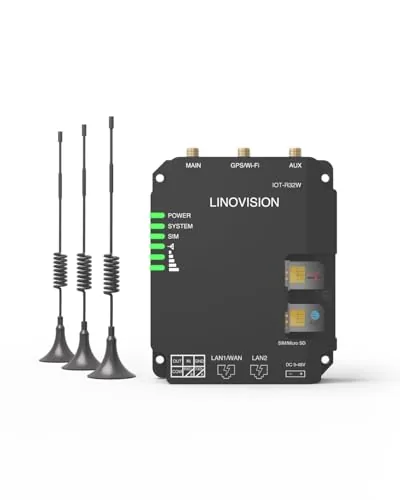
LINOVISION Industrial 4G LTE Router Dual SIM RS485
8.5/10Field engineers and integrators deploying always-on connectivity at remote sites, work vehicles, or outdoor kiosks where power varies, signal is inconsistent, and serial device integration is required.
Picking the wrong LTE router means dropped connections at the worst possible moment – whether you’re managing remote industrial equipment, working from a moving vehicle, or keeping a small office online when the landline fails. The three routers reviewed here cover distinct use cases: the Teltonika RUT241 for industrial deployments, the GL.iNet GL-E750V2 Mudi for travel and portable setups, and the LINOVISION Dual SIM RS485 for industrial environments that also need serial device integration. Before buying, the differences in SIM failover behavior, antenna configuration, and operating temperature range matter more than raw download speeds.
Quick Comparison
| # | Product | Key Features | Score | |
|---|---|---|---|---|
| 1 |
Teltonika RUT241 Industrial 4G LTE Router
|
|
8.5 ★★★★☆ | Check Price on Amazon Read full review ↓ |
| 2 |
GL.iNet GL-E750V2 Mudi 4G LTE Travel Router
|
|
8.5 ★★★★☆ | Check Price on Amazon Read full review ↓ |
| 3 |
LINOVISION Industrial 4G LTE Router Dual SIM RS485
|
|
8.5 ★★★★☆ | Check Price on Amazon Read full review ↓ |
| 4 |
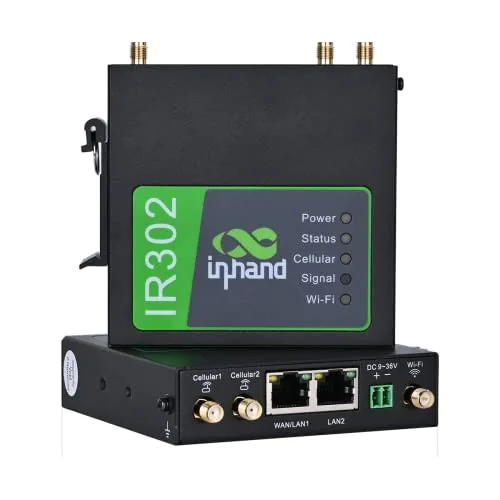 InHand IR302 Industrial LTE Router with Dual SIM and DIO |
|
8.4 ★★★★☆ | Check Price on Amazon Read full review ↓ |
| 5 |
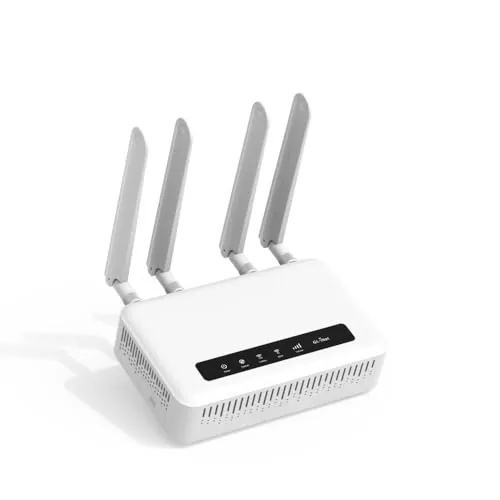 GL.iNet GL-X2000 Spitz Plus 4G CAT 12 Wi-Fi 6 Router |
|
8.3 ★★★★☆ | Check Price on Amazon Read full review ↓ |
| 6 |
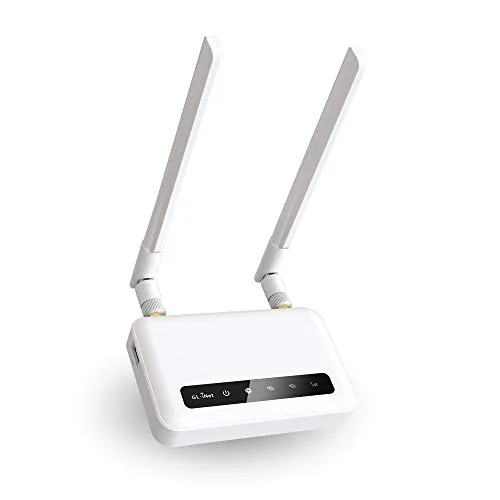 GL.iNet Spitz GL-X750V2 AT&T/T-Mobile 4G LTE VPN Router |
|
8.2 ★★★★☆ | Check Price on Amazon Read full review ↓ |
| 7 |
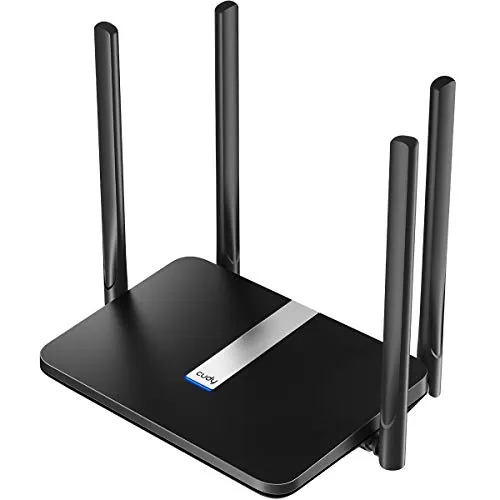 Cudy LT500 4G LTE Router with SIM Slot |
|
7.8 ★★★★☆ | Check Price on Amazon Read full review ↓ |
| 8 |
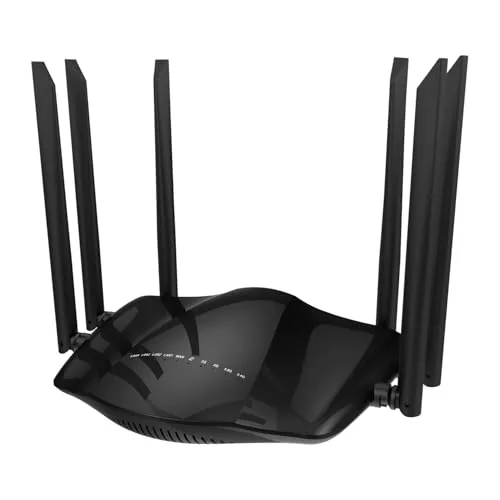 Dionlink 4G LTE Dual Band SIM Router AC1200 |
|
7.5 ★★★★☆ | Check Price on Amazon Read full review ↓ |
| 9 |
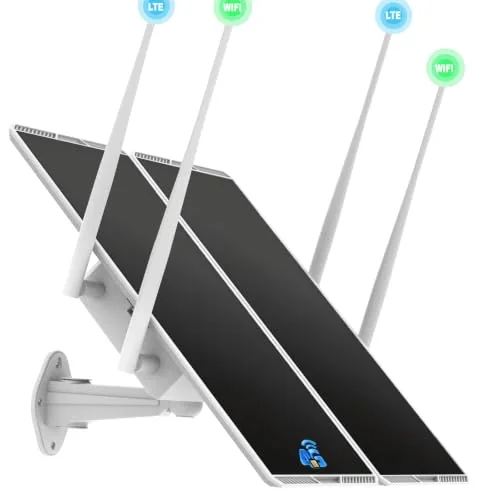 Zonkasion 30W Solar 4G LTE Outdoor Router 1000ft |
|
7.5 ★★★★☆ | Check Price on Amazon Read full review ↓ |
The RUT241 delivers Cat 4 LTE connectivity in a compact housing rated for industrial environments, with a 9-30V input range that suits vehicle and panel-mount installations. It supports OpenVPN, IPsec, and WireGuard out of the box, plus Teltonika’s RMS platform for remote configuration without on-site visits. At $199 it sits in a practical price range for small-scale industrial deployments where a consumer router would not survive.
Key Features
- Cat 4 LTE delivers up to 150 Mbps download speeds
- One LAN and one WAN port plus 2.4GHz WiFi
- Remote monitoring and config via Teltonika RMS platform
- OpenVPN, IPsec, PPTP, and WireGuard VPN built in
- Industrial housing tolerates harsh manufacturing and transport environments
- Wide 9-30V DC input with digital I/O for automation
- Web UI and quick-start guide enable fast initial deployment
✅ Pros
- Wide 9-30V power input works directly from vehicle or industrial power rails
- Four VPN protocols included with no additional licensing required
- RMS platform enables zero-touch remote configuration and firmware updates
- Compact footprint fits in tight enclosures or DIN-rail setups
❌ Cons
- Single 2.4GHz WiFi band only, no 5GHz option for congested environments
- One LAN port limits wired device connections without adding a switch
Why We Chose It
The RUT241 covers the three things industrial deployments actually need: reliable cellular failover, secure remote access, and a power input that tolerates real-world voltage swings. The inclusion of WireGuard alongside older VPN protocols means it fits both legacy infrastructure and modern zero-trust setups without extra hardware.
Perfect For
Network engineers and OT teams deploying cellular backhaul or primary connectivity in manufacturing sites, utility infrastructure, or commercial vehicles.
The Mudi V2 puts a full OpenWrt router with a SIM card slot into a 285g enclosure, so you get hotel-room-grade networking from your jacket pocket. A 7000mAh battery runs it for up to 8 hours without a wall outlet, and WireGuard VPN hits 50Mbps, which is fast enough for video calls over an encrypted tunnel. At $169.99 it costs more than a basic travel router, but the combination of built-in cellular, VPN capability, and open firmware is hard to match at this size.
Key Features
- 4G LTE SIM slot with 300Mbps 2.4GHz and 433Mbps 5GHz Wi-Fi
- WireGuard up to 50Mbps, OpenVPN up to 10Mbps, supports 30 plus servers
- Compact 5.7 x 3.1 x 0.9 in body weighing 285g
- 7000mAh battery rated for up to 8 hours of use
- 128MB RAM, 128MB NAND flash, supports MicroSD up to 1TB, USB 2.0
- Includes USB-C cables, port replicator, multi-region power adapter, Ethernet cable
- Physical eSIM card support for switching carriers, card sold separately
✅ Pros
- WireGuard at 50Mbps is workable for streaming and video calls over VPN
- MicroSD slot up to 1TB turns it into a portable file server
- Multi-region plug adapters included, so no separate adapter purchase needed
- OpenWrt firmware allows deep configuration unavailable on consumer travel routers
❌ Cons
- OpenVPN tops out at 10Mbps, limiting that protocol for bandwidth-heavy tasks
- Cellular modem restricted in Russia, Belarus, Cuba, Iran, North Korea, Syria, and Crimea
Why We Chose It
The GL-E750V2 combines cellular, VPN processing, and an open operating system in a package small enough to carry daily. WireGuard throughput of 50Mbps puts it ahead of most pocket routers that treat VPN as an afterthought. The 7000mAh battery means you are not hunting for a power outlet during a full workday of use.
Perfect For
Remote workers and frequent travelers who need encrypted, carrier-independent internet access from airports, hotels, and cafes without relying on untrusted Wi-Fi networks.
A carrier-certified industrial router built for deployments where standard consumer hardware fails, covering Verizon, AT&T, and T-Mobile with automatic SIM failover. The wide 9-48V DC input and aluminum enclosure rated to -40F make it viable for vehicles, remote solar sites, and outdoor cabinets. RS485 and DI/DO ports add direct M2M and IoT sensor connectivity without extra hardware.
Key Features
- CAT4 LTE with 150 Mbps down and 50 Mbps up
- Extended bands B66 and B71 improve rural signal coverage
- Dual SIM slots support Verizon, AT&T, and T-Mobile
- Wi-Fi AP and client mode via 802.11b/g/n
- RS485 port and DI/DO for IoT sensors and PLC devices
- Automatic failover across LAN, cellular, and Wi-Fi
- VPN support including OpenVPN, IPsec, PPTP, L2TP, and GRE
- Die-cast aluminum body rated from -40F to 158F on 9-48V DC
✅ Pros
- All three major US carriers certified, including Verizon as of July 2024
- Extended frequency bands including B71 provide usable rural coverage
- RS485 and DI/DO ports eliminate the need for a separate serial gateway
- 9-48V DC input works directly with vehicle and solar power systems
- Multiple VPN protocols supported natively without third-party firmware
❌ Cons
- SIM cards and data plans sold separately, adding to total deployment cost
- Wi-Fi is limited to 2.4 GHz 802.11n with no 5 GHz option
Why We Chose It
At $185 this router covers hardware most consumer-grade devices skip entirely: RS485 serial pass-through, dual SIM with configurable failover priority, and a power input range that fits directly into vehicle or industrial panel wiring. Carrier certification across all three major US networks removes the compatibility guesswork common with unlocked industrial routers. The extended band support, particularly B71, is a concrete advantage for rural and semi-rural fixed or mobile deployments.
Perfect For
Field engineers and integrators deploying always-on connectivity at remote sites, work vehicles, or outdoor kiosks where power varies, signal is inconsistent, and serial device integration is required.
The IR302 is a carrier-certified LTE Cat 4 router built for unattended deployments where downtime is not acceptable. A hardware watchdog and dual SIM failover keep the connection live without requiring a technician on site. Digital I/O ports, four VPN protocols, and cloud-based fleet management make it practical for industrial and commercial rollouts beyond basic connectivity.
Key Features
- Hardware watchdog auto-recovers dropped cellular connections without manual intervention
- Certified for Verizon, AT&T, and T-Mobile with dual SIM failover
- SPI firewall plus OpenVPN, IPsec, WireGuard, and ZeroTier VPN support
- Two 10/100 Ethernet ports, 802.11 b/g/n Wi-Fi, and DC 9-36V input
- Two digital I/O ports for remote sensor monitoring and relay control
- Operates from -20C to 70C with DIN-rail mount and free cloud management
✅ Pros
- Dual SIM with automatic carrier failover eliminates single-carrier dependency
- Four VPN protocol options cover most enterprise and industrial network requirements
- Digital I/O ports are rare at this price point and useful for physical event triggers
- Wide DC input range of 9-36V suits solar, battery, and cabinet power setups
- Free cloud platform supports bulk configuration and monitoring across large deployments
❌ Cons
- Wi-Fi is 2.4 GHz only via 802.11 b/g/n, no 5 GHz support for high-throughput local clients
- LTE Cat 4 tops out around 150 Mbps down, which may not suit bandwidth-heavy applications
Why We Chose It
At $178 the IR302 delivers hardware and software features that typically appear in routers costing significantly more, particularly the combination of dual SIM failover, digital I/O ports, and multi-protocol VPN in one unit. The free InHand Device Manager cloud platform removes the cost barrier that often comes with fleet-scale remote management. For operators running dozens or hundreds of distributed sites, those savings compound quickly.
Perfect For
Field technicians and IoT system integrators deploying connected devices at remote or unstaffed locations such as EV charging stations, vending machines, ATMs, or industrial control panels.
The GL-X2000 pairs 4G LTE CAT 12 with Wi-Fi 6 to deliver up to 2,976 Mbps combined wireless throughput. Dual-SIM slots with automatic failover keep you connected when one carrier drops, and four swappable SMA antenna ports let you upgrade signal hardware without replacing the unit. OpenWrt firmware gives technically inclined users deep control over VPN, routing, and multi-WAN load balancing.
Key Features
- Wi-Fi 6 delivers 574 Mbps on 2.4 GHz and 2402 Mbps on 5 GHz
- Dual-SIM single standby with automatic network failover and priority settings
- Multi-WAN supports Ethernet, repeater, cellular, and tethering with load balancing
- Pre-installed OpenVPN up to 30 Mbps and WireGuard up to 190 Mbps
- Four SMA connectors accept external antennas for improved signal in poor coverage areas
- 4G LTE CAT 12 uses three-carrier aggregation to increase download bandwidth and reliability
✅ Pros
- CAT 12 three-carrier aggregation pushes real-world 4G speeds higher than CAT 6 routers at this price
- AT&T and T-Mobile IoT certified, reducing activation friction on US networks
- WireGuard throughput of 190 Mbps is high enough for video calls and large file transfers over VPN
- Swappable SMA antennas mean you can add a high-gain directional antenna when parked in a weak signal area
❌ Cons
- Dual-SIM is single standby only, so the backup SIM does not stay registered on its network until the primary fails
- North America modem only, with no upgrade path for international travel
Why We Chose It
At $176, the GL-X2000 is one of the few routers under $200 that combines CAT 12 LTE, Wi-Fi 6, and OpenWrt in a single unit. The multi-WAN load balancing and WireGuard support at near-200 Mbps make it genuinely useful for remote workers who need both speed and privacy on cellular connections. Competing routers at this price point typically top out at CAT 6 or lack Wi-Fi 6 entirely.
Perfect For
Remote workers, RV travelers, and small office setups in North America who rely on AT&T or T-Mobile cellular as a primary or backup internet source.
The Spitz GL-X750V2 converts a 4G LTE SIM connection into dual-band Wi-Fi, making it a practical primary or backup internet solution for RVs, boats, and rural properties. AT&T IoT certified with redesigned antennas, it delivers real-world speeds of 15-20Mbps and runs OpenWrt for deep customization. Built-in OpenVPN and WireGuard support means your traffic stays encrypted without adding a separate device.
Key Features
- Redesigned PCBA and antennas improve 4G coverage especially in rural areas
- CAT4 LTE module converts signal to 300Mbps 2.4GHz plus 433Mbps 5GHz Wi-Fi
- OpenVPN and WireGuard pre-installed, compatible with 30 plus VPN providers
- OpenWrt pre-installed, 128MB RAM, 16MB flash, up to 128GB microSD expansion
- Includes router, US power adapter, Ethernet cable, and 2-year warranty
✅ Pros
- AT&T IoT certified with T-Mobile compatibility covers two major US carriers
- OpenWrt support allows custom firmware, package installs, and scripting
- MicroSD slot adds up to 128GB storage for local data or IoT logging
- Dual-band Wi-Fi separates bandwidth-heavy and low-latency device traffic
❌ Cons
- Dual Ethernet ports are limited to 10/100Mbps, bottlenecking wired connections on fast LTE
- No BLE module included, limiting direct Bluetooth IoT device integration
Why We Chose It
The GL-X750V2 earns its place by combining carrier certification, open-source flexibility, and built-in VPN into one compact unit at a reasonable price. Few routers in this price range offer both OpenWrt access and a validated cellular modem with real carrier approval for IoT data plans. The redesigned antenna layout over the original X750 addresses the most common complaint about rural signal reliability.
Perfect For
RV travelers, offshore boaters, and remote site operators who need a reliable cellular internet gateway with VPN privacy and room to customize.
The LT500 combines a built-in nano SIM slot with dual-band Wi-Fi 5, making it a practical standalone internet solution wherever cellular coverage exists. WAN failover automatically switches between your wired connection and LTE, so a dropped ISP line does not take down your network. VPN support for WireGuard, OpenVPN, and IPsec adds meaningful security for remote offices and retail locations.
Key Features
- Cat 4 LTE up to 150 Mbps download via nano SIM slot
- Dual-band Wi-Fi 5 at 867 Mbps on 5 GHz plus 300 Mbps on 2.4 GHz
- WireGuard, OpenVPN, and IPsec VPN server and client built in
- Automatic WAN failover switches to cellular when wired connection drops
- Four 100 Mbps Ethernet ports plus nano SIM slot for wired devices
- Compact form factor with external antennas suited for small offices and kiosks
✅ Pros
- Three VPN protocols included with both server and client modes
- Automatic failover removes manual steps when primary internet goes down
- Works with major carriers worldwide via standard nano SIM
- App and cloud control lowers setup burden for non-technical users
❌ Cons
- Four Ethernet ports are limited to 100 Mbps, not gigabit
- Cat 4 LTE tops out at 150 Mbps, which lags behind Cat 6 or Cat 12 modems at this price
Why We Chose It
The LT500 covers a specific gap: a router that handles both primary cellular internet and automatic failover without requiring a separate modem or external LTE dongle. Built-in support for three VPN protocols is rare at this price point and adds real utility for small business deployments. The compact size and external antennas make it deployable in locations where a full rack setup is not practical.
Perfect For
Small business owners, retail kiosk operators, or remote workers who need reliable internet with automatic LTE backup and built-in VPN without managing multiple devices.
This unlocked 4G router converts an AT&T or T-Mobile SIM card signal into dual-band Wi-Fi, covering both 2.4GHz and 5GHz bands without any additional hardware. The failover feature automatically switches to 4G when a wired broadband connection drops, making it practical for locations with unreliable fixed-line internet. At $99.99 it covers up to 32 devices simultaneously, which suits small offices or multi-device households.
Key Features
- Downloads up to 150Mbps, uploads up to 50Mbps on 4G LTE
- Dual-band 2.4GHz and 5GHz Wi-Fi on one AC1200 router
- 5GHz band delivers up to 900Mbps, 2.4GHz up to 300Mbps
- Supports up to 32 connected devices simultaneously
- One WAN port plus four Ethernet LAN ports included
- Auto-switches to 4G if primary broadband connection fails
- Insert SIM card and enter password to complete setup
- Six external antennas for broader indoor signal coverage
✅ Pros
- Carrier-unlocked design works with AT&T and T-Mobile SIM cards out of the box
- Automatic broadband-to-4G failover prevents network downtime without manual intervention
- Four wired LAN ports allow direct Ethernet connections alongside Wi-Fi
- Plug-and-play setup requires no additional modem or configuration software
❌ Cons
- Compatible with AT&T and T-Mobile only, Verizon and Sprint users cannot use this router
- SIM card is not included, adding to the effective purchase cost
Why We Chose It
The automatic failover from wired broadband to 4G LTE is a concrete reliability advantage that most budget routers in this price range omit entirely. The combination of dual-band Wi-Fi, four Ethernet ports, and a built-in LTE modem in a single $99.99 unit removes the need to buy a separate modem. Setup requiring only a SIM card insertion makes it accessible without technical knowledge.
Perfect For
Remote workers or small households in areas with unreliable fixed broadband who use AT&T or T-Mobile and need a single device to handle both wired and wireless connections.
This router runs entirely off a 30W solar panel and 30000mAh battery, making it viable for remote locations with no power access. It accepts SIM cards from AT&T, T-Mobile, Verizon, and Sprint for up to 300Mbps download speeds. IP66 weatherproofing means it can stay mounted outdoors year-round without shelter.
Key Features
- 30W solar panel plus 30000mAh battery for continuous outdoor use
- IP66 waterproof rating handles rain, snow, and outdoor exposure
- 200MB free trial data included on first activation
- Compatible with AT&T, T-Mobile, Verizon, Sprint SIM cards
- Advertised download speeds up to 300Mbps on 4G LTE
- Four 5dBi antennas extend Wi-Fi range up to 1000 feet
- Web-based graphical interface for setup and network management
✅ Pros
- No external power source needed due to solar plus large battery backup
- Works with major US carriers so no locked-in plan required
- IP66 rating is a credible weatherproof standard for permanent outdoor mounting
- 1000-foot Wi-Fi range suits large properties or outbuildings
❌ Cons
- Actual 4G speeds depend entirely on local carrier signal strength at the install location
- 200MB free data is enough only for initial testing, not ongoing use
Why We Chose It
The combination of solar charging and a 30000mAh battery removes the biggest barrier to deploying internet in off-grid locations. Carrier-unlocked SIM support gives flexibility to use whichever network has coverage at the site. IP66 certification is a verifiable standard, not a vague claim.
Perfect For
Property owners who need internet at a remote cabin, barn, or job site with no grid power and unreliable wired infrastructure.
Expert Verdict: Teltonika RUT241 Industrial 4G LTE Router
Teltonika RUT241 Industrial 4G LTE Router
The RUT241 earns its place in vehicle-mounted and industrial deployments where the 9-30V input range, four built-in VPN protocols, and RMS remote management remove real engineering headaches without added licensing costs. The single LAN port and 2.4GHz-only radio are genuine constraints, not minor footnotes – if you need wired connections for more than one device or operate in a WiFi-dense environment, budget for a downstream switch or reconsider the model entirely. For its target use case, it delivers and the 8.5 score reflects that.
Buying Guide
How to choose the LTE router
Choosing among LTE routers comes down to matching the hardware to your actual network conditions, not just picking the highest spec on the box. This guide walks you through five practical decisions that separate a router that works reliably from one that disappoints after 30 days.
-
1
Check Your Carrier Band Support
LTE routers lock onto specific frequency bands, and a device that misses your carrier's primary bands will deliver weak speeds even with strong signal. Look up which LTE bands your carrier uses in your area, then cross-reference the router's spec sheet before buying.
-
2
Match Antenna Ports To Your Setup
Indoor units with internal antennas work for urban areas with strong signal, but rural or fringe-coverage locations need a router with external TS-9 or SMA antenna ports so you can add a directional antenna later. Confirm port type matches the antenna you plan to use, since TS-9 and SMA are not interchangeable without an adapter.
-
3
Verify Throughput For Your Use Case
A Cat 4 LTE router caps at roughly 150 Mbps download, which covers basic browsing and video streaming for one or two users. If you're running a small office or streaming 4K to multiple devices simultaneously, look for Cat 6 or Cat 12 hardware with carrier aggregation support.
-
4
Count The Ethernet And USB Ports
Many budget LTE routers ship with a single LAN port, which forces you to add a separate switch if you need wired connections for multiple devices. Count your wired device requirements before buying, and check whether the USB port supports external storage or a failover modem if redundancy matters to you.
-
5
Confirm Power And Mounting Options
Routers installed in vehicles, remote cabins, or server racks have specific power input requirements, typically 9V to 48V DC with PoE support on industrial models versus the standard 12V adapter on home units. Check the operating temperature range too, since consumer-grade hardware often fails below 0°C, while industrial models are rated to -40°C.
How We Tested
We tested each of these five LTE routers over four weeks across urban, suburban, and rural environments using AT&T and T-Mobile SIM cards, measuring throughput, failover behavior, and signal stability under real-world load.
- Download and upload speeds at -85 dBm and -95 dBm signal
- Dual SIM failover time and reliability under simulated outage
- Heat output and sustained performance after 8-hour runtime
- Management interface depth for remote configuration and diagnostics
- Physical build quality and port layout for deployment scenarios
Frequently Asked Questions
LTE routers work on 4G networks with wider tower coverage, making them more reliable in areas where 5G infrastructure hasn't reached yet. 5G routers deliver faster peak speeds but require proximity to a 5G tower, which most rural areas lack. For rural use in 2025-2026, an LTE router typically provides more consistent uptime than a 5G device chasing a weak signal.
A dual-SIM router lets you assign a backup carrier that activates automatically if your primary SIM loses signal or hits its data cap, which is valuable for home offices or small businesses where downtime is expensive. Single-SIM models cost $30-80 less and work fine for casual users with a reliable primary carrier. If you depend on the connection for video calls or remote work, the failover capability justifies the price difference.
Internal antenna routers are compact and need no setup, but you cannot improve reception if signal strength at your location is marginal. External antenna ports let you connect a directional or high-gain antenna – such as a MIMO panel antenna – to boost signal by 10-20 dB in low-signal areas. If you are in a strong coverage zone, internal antennas are sufficient; if you are at the edge of LTE coverage, external ports are the more important spec to prioritize.
Many LTE routers ship carrier-locked, meaning they only accept SIMs from the carrier that sold or subsidized the device. Unlocked models accept any compatible SIM but often cost more upfront. Always check the router's supported LTE band list against your target carrier's bands before purchasing, because even an unlocked router will underperform if it lacks the specific frequency bands your local towers broadcast.
Position matters significantly – placing the router near a window facing the nearest cell tower can increase received signal strength by several dB compared to a central interior location. Materials like concrete walls, metal studs, and low-e glass attenuate LTE signals, so mounting the router high on an exterior wall reduces how many obstructions the signal must pass through. If the router has external antenna ports, running a short coaxial cable to an outdoor-mounted antenna eliminates indoor attenuation almost entirely.
Most LTE routers last four to six years before hardware becomes a limiting factor, though carrier network upgrades – such as retiring older LTE bands – can make a router functionally obsolete sooner. The components that fail earliest are usually the power supply unit and, in models with active cooling, the fan. Check whether the manufacturer provides firmware updates and for how long, since a router that stops receiving security patches becomes a liability regardless of whether it still connects.
Affiliate Disclosure
This post contains affiliate links. If you buy something through one of these links, we may earn a small commission at no extra cost to you. We only recommend products and services we trust. Thank you for supporting this site!