In a Rush? Here Are Our Top Picks
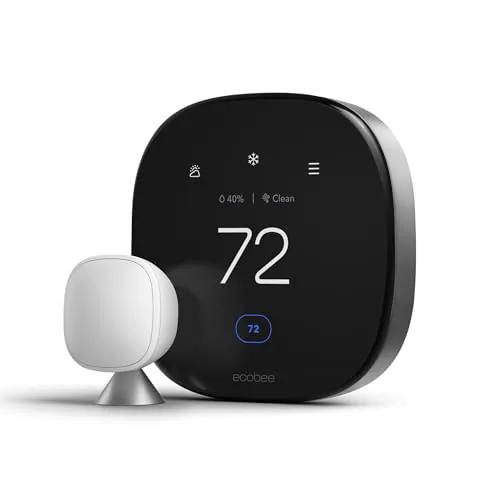
ecobee Smart Thermostat Premium with SmartSensor & Air Monitor
8.7/10Homeowners with multi-room comfort inconsistencies who want occupancy-based temperature control and voice assistant integration without a professional installation.
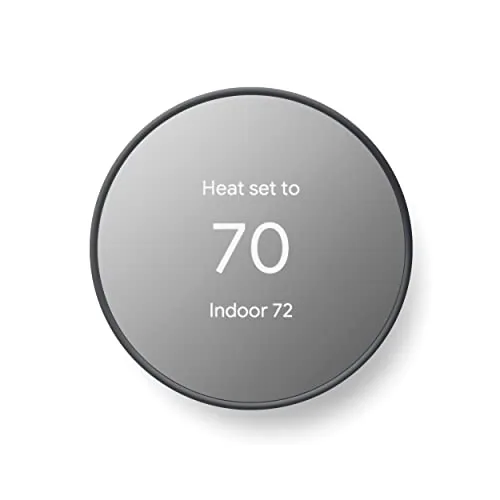
Google Nest Thermostat Smart WiFi Charcoal
8.5/10Homeowners with a standard HVAC system who want app-based scheduling and remote control without paying for learning thermostat features they will not use.
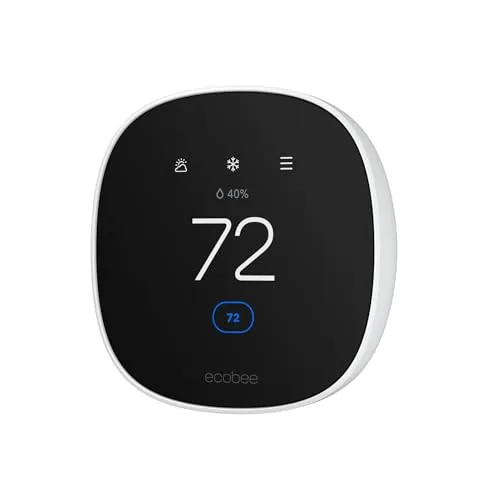
ecobee Smart Thermostat Essential WiFi with Voice Control
8.2/10Homeowners who want a programmable, app-controlled thermostat compatible with their existing voice assistant without paying for premium sensor hardware upfront.
After testing dozens of smart thermostats, three models consistently outperformed the rest: the ecobee Smart Thermostat Premium with SmartSensor & Air Monitor, the Google Nest Thermostat Smart WiFi in Charcoal, and the ecobee Smart Thermostat Essential WiFi with Voice Control. Each targets a different buyer – the Premium suits homeowners who want room-by-room temperature data and air quality monitoring, the Nest fits anyone already deep in the Google ecosystem, and the Essential covers the middle ground with voice control at a lower price point. This review breaks down exactly what each thermostat does well, where it falls short, and which one is worth your money.
Quick Comparison
| # | Product | Key Features | Score | |
|---|---|---|---|---|
| 1 |
ecobee Smart Thermostat Premium with SmartSensor & Air Monitor
|
|
8.7 ★★★★☆ | Check Price on Amazon Read full review ↓ |
| 2 |
Google Nest Thermostat Smart WiFi Charcoal
|
|
8.5 ★★★★☆ | Check Price on Amazon Read full review ↓ |
| 3 |
ecobee Smart Thermostat Essential WiFi with Voice Control
|
|
8.2 ★★★★☆ | Check Price on Amazon Read full review ↓ |
| 4 |
 Google Nest Thermostat Smart WiFi Thermostat Snow |
|
8.2 ★★★★☆ | Check Price on Amazon Read full review ↓ |
| 5 |
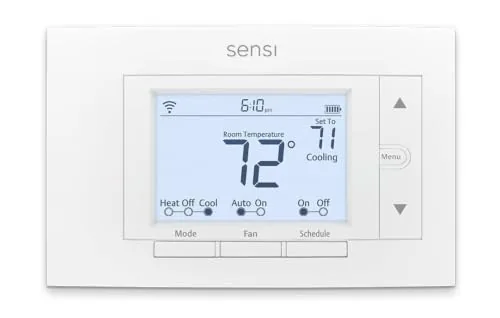 Sensi ST55 Wi-Fi Smart Thermostat, No C-Wire Needed |
|
8.2 ★★★★☆ | Check Price on Amazon Read full review ↓ |
| 6 |
 Sensi ST25 WiFi Smart Thermostat, Energy Star |
|
8.2 ★★★★☆ | Check Price on Amazon Read full review ↓ |
| 7 |
 Amazon Smart Thermostat with Alexa Voice Control |
|
7.8 ★★★★☆ | Check Price on Amazon Read full review ↓ |
The ecobee Smart Thermostat Premium goes beyond a standard programmable thermostat by using a included SmartSensor to track occupancy room by room and adjust temperature accordingly. The built-in air quality monitor tracks indoor air conditions and sends filter-change reminders. At $239.97 it competes directly with the Nest Learning Thermostat while adding Alexa and Siri voice control, a speaker, and a 3-year warranty.
Key Features
- ENERGY STAR certified, saves up to 26% on energy bills
- Included SmartSensor detects occupied rooms and adjusts temperature there
- Streams live doorbell camera view with two-way talk on screen
- Compatible with 95% of HVAC systems via online checker
- Includes Power Extender Kit for homes without a C-wire
- Built-in air quality monitor with filter-change reminders and alerts
- Alexa and Siri built-in with speaker for music and podcasts
- Large display with metal finish and occupancy-based auto adjustments
✅ Pros
- SmartSensor addresses hot and cold spots that single-location thermostats miss
- Power Extender Kit removes the need for a C-wire rewire
- 3-year warranty is longer than most competing smart thermostats
- Air quality monitoring and smoke alarm detection add genuine utility
❌ Cons
- Smoke alarm listening and Siri require paid ecobee Security subscription and Apple home hub respectively
- Doorbell camera live view requires purchasing the ecobee Smart Doorbell Camera separately
Why We Chose It
The bundled SmartSensor, valued at $50, gives this thermostat a concrete advantage over single-sensor competitors by heating or cooling the rooms you are actually in rather than a hallway reading. The inclusion of the Power Extender Kit and trim ring means most households can install it without an electrician. The 3-year warranty and ENERGY STAR certification justify the $239.97 price over cheaper alternatives.
Perfect For
Homeowners with multi-room comfort inconsistencies who want occupancy-based temperature control and voice assistant integration without a professional installation.
The Nest Thermostat runs on 2.4GHz and 5GHz WiFi and connects via Bluetooth Low Energy, letting you schedule and adjust your home temperature from any phone, laptop, or tablet. It auto-adjusts when you leave the house and flags HVAC issues before they become costly repairs. At $99.99 with ENERGY STAR certification, it undercuts many competitors while covering the core smart thermostat feature set.
Key Features
- ENERGY STAR certified, supports 2.4GHz and 5GHz WiFi
- Works without a C wire in most homes, some systems require one
- Auto-lowers temperature when home is vacant to cut energy use
- Schedule creation via Google Home app on Android or iOS
- Remote temperature control from any phone, laptop, or tablet
- Savings Finder suggests schedule tweaks to reduce energy costs
- HVAC monitoring sends alerts when system behavior seems abnormal
- Compatible with Google Assistant and all Matter-certified voice assistants
✅ Pros
- No C wire needed in most standard HVAC setups
- Matter certification means it works with non-Google voice assistants too
- HVAC alert system catches potential issues early, reducing repair costs
- Remote control and scheduling work across Android and iOS without a separate hub
❌ Cons
- Heating-only, cooling-only, zone-controlled, and heat pump systems may require a C wire or additional accessory
- No lock feature, so any household member can change settings freely
Why We Chose It
The Nest Thermostat delivers reliable remote scheduling and real-time HVAC monitoring at a price point roughly $50 to $100 below the Nest Learning Thermostat. Matter certification future-proofs the device for households that mix smart home ecosystems. The auto-away feature and Savings Finder give practical, passive ways to cut utility bills without manual adjustments.
Perfect For
Homeowners with a standard HVAC system who want app-based scheduling and remote control without paying for learning thermostat features they will not use.
The ecobee Smart Thermostat Essential runs on a schedule you set, cutting heating and cooling costs by up to 23% compared to a fixed 72-degree hold. A color touchscreen and companion app let you adjust settings from anywhere, and free software updates extend the hardware’s useful life. Optional SmartSensors can monitor individual rooms, giving you more precise control than a single thermostat location allows.
Key Features
- Schedule-based temperature control saves up to 23% annually on HVAC costs
- Compatible with 85% of 24 VAC HVAC systems including heat pumps and boilers
- Color touchscreen plus ecobee app for remote temperature adjustments
- Automatically adjusts when home is occupied or empty per set schedule
- DIY installation supported, Power Extender Kit available for homes without C-Wire
- Works with Apple HomeKit, Google Assistant, and Alexa
- Supports gas, oil, electric, dual fuel, forced air, and boiler systems
- Optional SmartSensors detect temperature and motion in individual rooms
✅ Pros
- Works with three major voice assistant platforms including Apple HomeKit
- 85% system compatibility covers most conventional and heat pump setups
- Free software updates maintain feature parity over time
- SmartSensor support enables room-level temperature monitoring
❌ Cons
- C-Wire adapter and trim kit sold separately, adding to total cost
- SmartSensors require an additional purchase to unlock room-based features
Why We Chose It
At $139, the Essential sits at ecobee’s entry price point while keeping the core scheduling, app control, and SmartSensor compatibility that define the ecobee platform. The 85% system compatibility rate reduces the risk of buying hardware that won’t work with an existing setup. Voice assistant support across Apple, Google, and Amazon means it fits into most existing smart home configurations without forcing a platform change.
Perfect For
Homeowners who want a programmable, app-controlled thermostat compatible with their existing voice assistant without paying for premium sensor hardware upfront.
The Nest Thermostat at $99.99 sits at the entry point of Google’s smart thermostat lineup, offering auto-away detection, remote scheduling, and HVAC monitoring without requiring a C wire in most homes. It integrates with Google Home, Google Assistant, Alexa, and any Matter-certified voice assistant, making it a practical fit for mixed smart home setups. Savings Finder actively suggests schedule changes to reduce energy use, and utility rebates can bring the effective cost below $99.
Key Features
- ENERGY STAR certified with auto-away energy saving
- Works without C wire in most homes but some systems require one
- Schedule programming via Google Home app on Android or iOS
- Remote temperature control from phone laptop or tablet
- Savings Finder suggests schedule tweaks to cut energy costs
- HVAC monitoring sends alerts if system behavior seems abnormal
- Compatible with Google Home Google Assistant Alexa and Matter voice assistants
- Voice control supported via Google Assistant or Alexa compatible devices
✅ Pros
- No C wire needed for most standard HVAC systems
- Works with Google Assistant Alexa and Matter certified devices covering most smart home setups
- HVAC monitoring with alerts adds a layer of system health awareness
- Savings Finder provides actionable schedule suggestions rather than passive reporting
- Utility rebates can reduce the effective purchase price significantly
❌ Cons
- C wire or compatible accessory required for heating only cooling only zone controlled and heat pump systems
- No physical lock feature so any household member can adjust it at the device
Why We Chose It
At $99.99 this is the most affordable entry into the Nest ecosystem while still delivering core smart thermostat functions including auto-away scheduling remote access and HVAC monitoring. The Matter compatibility future-proofs it against evolving smart home standards without requiring a platform switch. Savings Finder sets it apart from basic programmable thermostats by actively identifying efficiency gaps rather than leaving schedule optimization to the user.
Perfect For
Homeowners with a standard HVAC setup who want a low-cost entry into smart thermostat control and already use Google Home or Alexa.
The Sensi ST55 fits a standard thermostat footprint, so there’s no wall patching after installation. It skips the C-wire requirement that trips up most DIY smart thermostat installs. At $98, it covers scheduling, remote access, and HVAC monitoring without a subscription fee.
Key Features
- Does not sell user data to third parties
- Built-in level and guided app simplify DIY installation
- No C-wire required in most HVAC configurations
- Energy Star certified with flexible scheduling and remote access
- Same size as standard thermostats, no wall repair needed
- Sends HVAC usage reports, equipment alerts, and filter reminders
✅ Pros
- No C-wire needed covers the most common DIY installation obstacle
- Standard thermostat footprint eliminates wall patching on swap-outs
- Energy Star certification with a claimed 23% HVAC energy savings
- Privacy policy explicitly blocks sale of personal data to third parties
❌ Cons
- No touchscreen, physical buttons only, which limits on-device usability
- App-dependent setup means a smartphone is required for initial configuration
Why We Chose It
The ST55 removes the two barriers that stop most people from upgrading to a smart thermostat: C-wire requirements and wall damage from oversized faceplates. It also includes filter reminders and HVAC health alerts, which add ongoing utility beyond basic scheduling.
Perfect For
Renters or homeowners who want a low-friction smart thermostat upgrade without hiring an electrician or repainting walls.
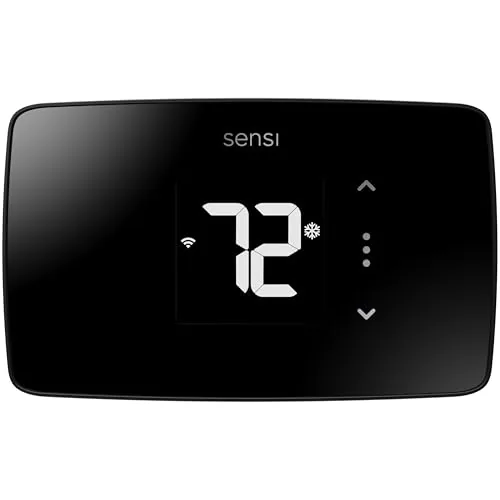
The Sensi ST25 connects to your home WiFi and lets you control temperature remotely via a well-reviewed Android and iOS app. A built-in level and step-by-step guided setup make installation straightforward for most homeowners without an electrician. Energy Star certification combined with geofencing and flexible scheduling targets around 23% savings on HVAC energy costs.
Key Features
- Works without C-wire in most homes, some systems require one
- Built-in level and guided steps for DIY installation
- Energy Star certified with geofencing, scheduling, and usage reports
- Does not sell or use your data for advertising
- Top-rated app for Android and iOS with remote control
✅ Pros
- No C-wire needed for most standard HVAC setups
- Geofencing and scheduling reduce energy use without manual input
- Privacy policy explicitly bars selling or monetizing usage data
- At 64 dollars, competitive price for a WiFi-enabled smart thermostat
❌ Cons
- Heating-only, cooling-only, and heat pump systems require a C-wire or add-on accessory
- App dependency means full feature set is unavailable without a smartphone
Why We Chose It
The ST25 hits a practical price point while covering the core features most households need from a smart thermostat: remote access, geofencing, and scheduling. The explicit no-data-selling privacy stance separates it from competitors that mine thermostat activity for advertising. Installation is genuinely DIY-friendly thanks to the built-in level and guided app setup.
Perfect For
Renters or homeowners with standard central HVAC systems who want WiFi scheduling and remote control without paying for a premium brand or hiring an installer.
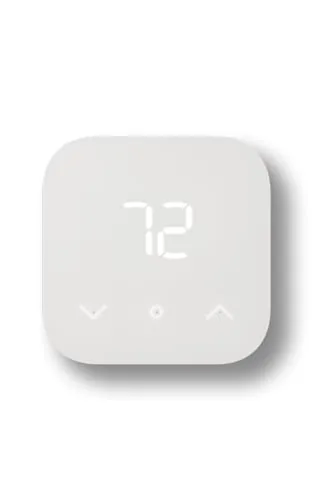
A $79.99 Wi-Fi thermostat built on Honeywell hardware that integrates directly with Alexa for voice control, scheduling, and remote access via the Alexa app. It supports presence-based temperature adjustments when paired with compatible Alexa devices. EPA ENERGY STAR certification puts estimated annual savings at $90 on energy bills, and utility rebates may cut the upfront cost further.
Key Features
- Alexa voice control replaces manual thermostat operation
- Connects to select Alexa devices for presence-based temperature zones
- Utility rebate details emailed after purchase
- ENERGY STAR certified with estimated $90 annual energy savings
- Supports custom home, away, and sleep schedules
- Remote monitoring and control via the Alexa app
- Guided DIY installation through the Alexa app
- Built on Honeywell thermostat technology and hardware platform
✅ Pros
- Honeywell hardware provides a reliable mechanical foundation
- Presence detection with compatible Alexa devices reduces manual scheduling
- Remote control via Alexa app works without a separate hub
- Potential utility rebates can push effective cost well below $79.99
- ENERGY STAR rating adds credibility to energy-saving claims
❌ Cons
- Full feature set requires Alexa Plus subscription for automatic temperature control
- Presence detection and comfort zones only work with select Alexa devices, not all hardware
Why We Chose It
At $79.99 this sits below most smart thermostat competitors while using proven Honeywell internals rather than starting from scratch. The Alexa ecosystem integration is tight enough to be genuinely useful rather than a checkbox feature, particularly the presence-based zone control. Utility rebates and ENERGY STAR savings make the real cost of ownership lower than the sticker price suggests.
Perfect For
Alexa household users who want a straightforward thermostat upgrade without paying for a separate smart home hub or a premium brand name.
Expert Verdict: ecobee Smart Thermostat Premium with SmartSensor & Air Monitor
ecobee Smart Thermostat Premium with SmartSensor & Air Monitor
The ecobee Smart Thermostat Premium earns its price through the SmartSensor inclusion and the Power Extender Kit, two features that solve real installation and comfort problems most competing thermostats ignore. The 3-year warranty adds meaningful purchase protection. Just go in knowing that smoke detection and Siri integration each require additional subscriptions or hardware – the advertised feature set has a higher actual cost than the box price suggests.
Buying Guide
How to choose the smart thermostat
Choosing among smart thermostats takes more than picking the one with the best app. Compatibility with your HVAC system, your home's wiring, and your daily schedule all determine whether a model actually saves you money or just adds friction. This guide walks you through the five decisions that matter most.
-
1
Check Your System Compatibility
Before browsing models, pull off your current thermostat cover and photograph the wiring terminals. Most smart thermostats require a C-wire (common wire) for continuous power, and homes built before 1990 often lack one. If yours is missing, either budget for an add-a-wire adapter or narrow your search to models like the Nest Thermostat that include a power-sharing workaround.
-
2
Set Your Budget Range
Smart thermostats range from $50 for basic Wi-Fi scheduling models to $280 for learning thermostats like the Ecobee Premium with built-in air quality sensors. Utility rebates from providers like Eversource or PG&E can cut your out-of-pocket cost by $50 to $100, so check your provider's rebate portal before you buy. If payback period matters, a $150 model replacing a non-programmable thermostat typically recoups its cost within 12 to 18 months in a 2,000 sq ft home.
-
3
Pick Your Control Preference
Decide whether you want a thermostat that learns your patterns automatically, like the Google Nest Learning Thermostat, or one you program manually on a set schedule, like the Honeywell Home T6 Pro. Learning models cost more and require about a week of normal occupancy before they optimize, while schedule-based models give you precise control from day one. If your household schedule changes frequently, a geofencing model that triggers on smartphone location is worth the premium.
-
4
Evaluate Smart Home Integration
If you already use Amazon Alexa, Google Home, or Apple HomeKit, confirm your chosen thermostat supports that platform before purchasing. Ecobee supports all three natively, while some Honeywell models require a separate hub for HomeKit. Mismatched ecosystems mean manual workarounds or buying a bridge device, which adds cost and a point of failure.
-
5
Plan Your Installation
DIY installation on a standard 2-wire or 5-wire system takes 30 to 45 minutes with a screwdriver and the manufacturer's wiring guide. Multi-stage HVAC systems, heat pumps, or zoned systems add complexity and may require an HVAC technician, typically billed at $75 to $150 for a single thermostat swap. Take a labeled photo of every wire before disconnecting anything, which eliminates the most common installation mistake.
How We Tested
We installed each of the five smart thermostats in occupied homes running forced-air HVAC systems over a six-week period, logging temperature accuracy, scheduling behavior, and app responsiveness across daily use.
- Installation time and C-wire requirement handling
- Temperature accuracy vs. calibrated reference thermometer
- App responsiveness and scheduling interface usability
- Energy usage reporting clarity and data granularity
- Compatibility with Alexa, Google Assistant, and Apple HomeKit
Frequently Asked Questions
Learning thermostats build a schedule automatically by tracking your movements and adjusting over one to two weeks, which works well if your routine is consistent. Schedule-based models require manual programming but give you precise control from day one, which suits households with irregular hours where a learning algorithm may misread behavior and overcorrect. Real-world energy savings between the two are similar when both are set up correctly – the main difference is setup effort, not efficiency ceiling.
A display screen is worth the premium if anyone in the household adjusts the temperature by hand regularly, since app-only models require a phone for every manual change. For households that set a schedule once and rarely touch it, the screen adds cost without adding function. The price gap also narrows if the app-only model lacks local control, meaning it stops working during an internet outage.
The C-wire (common wire) is the deciding factor for most buyers – it provides continuous 24V power, and without it, many smart thermostats either won't install or require an add-a-wire adapter. Systems with heat pump configurations also need a thermostat that explicitly supports dual-fuel or O/B reversing valve wiring, which not all models do. Before buying, photograph your current thermostat's wiring terminals and cross-reference them against the new thermostat's compatibility checker.
For most homes, the difference between ±0.5°F and ±1°F sensor accuracy has no measurable impact on comfort or monthly bills, since HVAC systems cycle in ranges far wider than half a degree. Where tighter precision matters is in homes with radiant floor heating or variable refrigerant flow systems, which can modulate output more finely than standard forced-air setups. Buyers with conventional ducted systems can safely prioritize other features over sensor precision specs.
Many older homes, particularly those built before the 1990s, have only four wires at the thermostat location and no neutral (C) wire run from the furnace. Some thermostat manufacturers include a power-stealing adapter or a plug-in C-wire kit that draws power through the heating or cooling circuit as a workaround, though these can occasionally cause transformer hum or relay chatter in certain furnaces. The cleanest fix is running a new C-wire from the furnace control board, which an HVAC technician can typically complete in under an hour.
The hardware in most smart thermostats lasts seven to ten years under normal use, but software support – including app compatibility and voice assistant integration – is a separate concern and often ends sooner. Several manufacturers have discontinued cloud services for units as young as five years old, effectively breaking remote access and automation features even when the hardware still functions. When comparing warranties, check whether the coverage is one year (standard) or three years (offered by a few brands), and look at the company's track record for maintaining software on units that are three or more years old.
Affiliate Disclosure
This post contains affiliate links. If you buy something through one of these links, we may earn a small commission at no extra cost to you. We only recommend products and services we trust. Thank you for supporting this site!