In a Rush? Here Are Our Top Picks
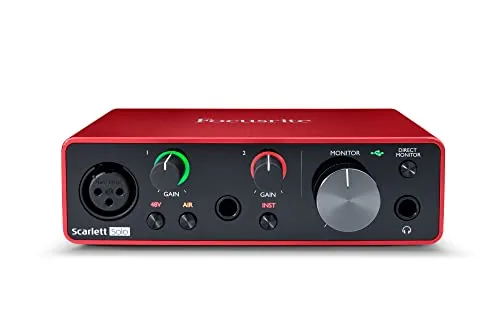
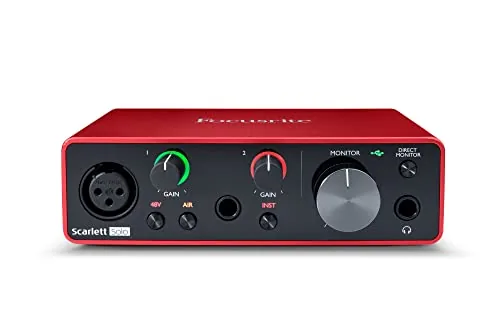
Focusrite Scarlett Solo 3rd Gen USB-C Audio Interface
8.7/10Solo musicians, podcasters, or first-time home studio builders who need one mic and one instrument input without spending more than $150.
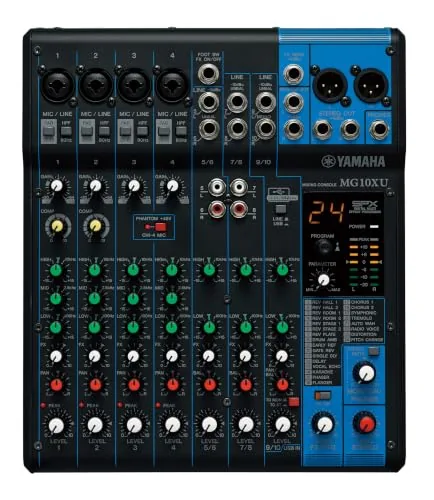
Yamaha MG10XU 10-Channel USB Mixer with SPX Effects
8.5/10Small venue performers, podcasters, or home studio producers who need up to 10 inputs and want to record directly to a computer without buying a separate audio interface.
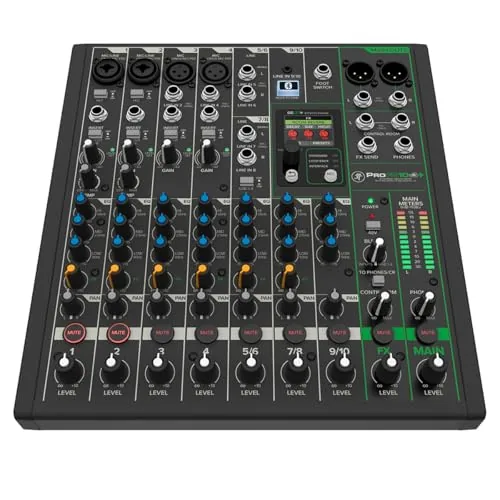
Mackie ProFX10v3+ 10-Channel Mixer with Bluetooth + USB
8.4/10Small bands, podcasters, or streamers who need a single mixer that records, streams, and plays back Bluetooth audio without a separate audio interface.
Choosing the right audio mixer depends on what you’re actually plugging in – a solo podcaster running one mic and a guitar has very different needs than a band routing ten channels for a live set or a home producer who needs built-in effects and Bluetooth connectivity. The three mixers tested here – the Focusrite Scarlett Solo 3rd Gen, Yamaha MG10XU, and Mackie ProFX10v3+ – cover that range at different price points and capability levels. This review breaks down exactly what each one does well, where it falls short, and which setup each one is built for.
Quick Comparison
| # | Product | Key Features | Score | |
|---|---|---|---|---|
| 1 |
Focusrite Scarlett Solo 3rd Gen USB-C Audio Interface
|
|
8.7 ★★★★☆ | Check Price on Amazon Read full review ↓ |
| 2 |
Yamaha MG10XU 10-Channel USB Mixer with SPX Effects
|
|
8.5 ★★★★☆ | Check Price on Amazon Read full review ↓ |
| 3 |
Mackie ProFX10v3+ 10-Channel Mixer with Bluetooth + USB
|
|
8.4 ★★★★☆ | Check Price on Amazon Read full review ↓ |
| 4 |
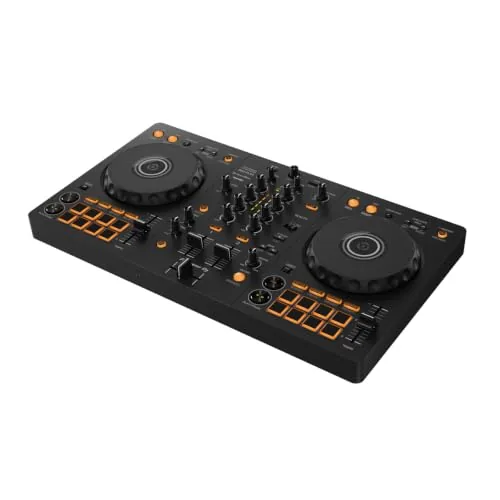 Pioneer DJ DDJ-FLX4 2-Channel Controller with Smart Fader |
|
8.2 ★★★★☆ | Check Price on Amazon Read full review ↓ |
| 5 |
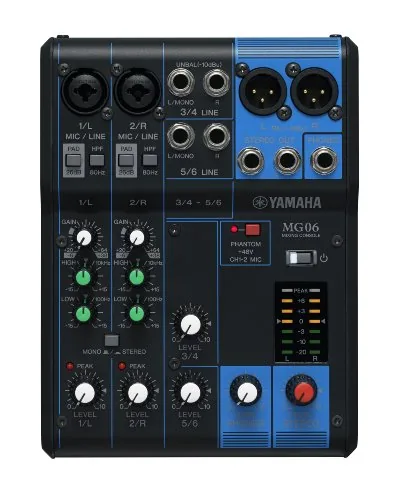 Yamaha MG06 6-Channel Compact Mixer with D-PRE Preamps |
|
8.2 ★★★★☆ | Check Price on Amazon Read full review ↓ |
| 6 |
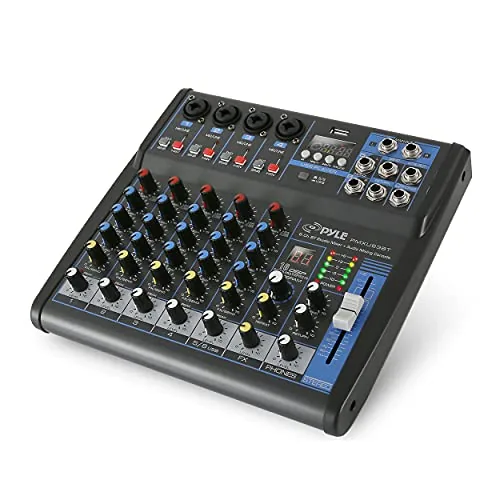 Pyle PMXU63BT 6-Channel Bluetooth DJ Mixer |
|
7.5 ★★★★☆ | Check Price on Amazon Read full review ↓ |
| 7 |
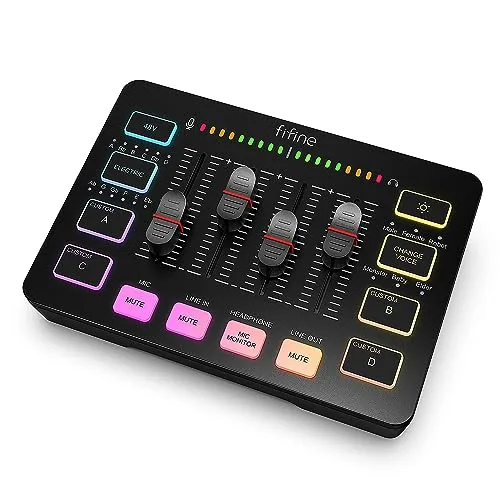 FIFINE SC3 Gaming Audio Mixer with XLR Preamp |
|
7.2 ★★★★☆ | Check Price on Amazon Read full review ↓ |
| 8 |
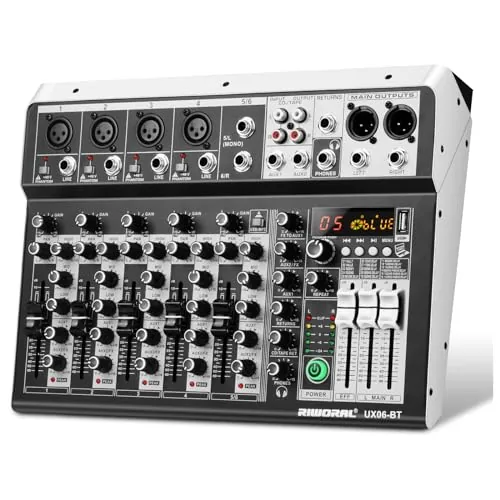 Riworal 6-Channel Mixer with Bluetooth and 48V Phantom |
|
6.5 ★★★☆☆ | Check Price on Amazon Read full review ↓ |
The Scarlett Solo delivers 24-bit/192kHz recording in a compact one-mic, one-instrument format that suits home studios and podcasters on a budget. Gain Halos give you a visible clipping warning before distortion hits, which removes a lot of guesswork during live takes. At $119.99 with a three-year warranty and four bundled DAWs, the value-to-performance ratio is hard to match at this price point.
Key Features
- High-gain preamp with switchable Air mode for acoustic clarity
- One XLR mic input and one Hi-Z instrument input with Gain Halos
- Records and monitors at up to 24-bit/192kHz resolution
- Two balanced outputs and headphone jack for low-noise playback
- Includes Pro Tools Intro, Ableton Live Lite, Cubase LE, and Hitmaker Expansion
- Compatible with macOS, Windows, and iPadOS via USB-C
- Three-year manufacturer warranty covering hardware defects
✅ Pros
- 56dB gain range handles dynamic mics like the SM7B without a preamp boost
- Air mode adds presence to acoustic guitars and vocals at the flip of a switch
- Gain Halos show green to red clipping feedback directly on the hardware
- Four DAW licenses included reduce day-one software cost significantly
❌ Cons
- Only one mic preamp, so recording two simultaneous sources requires a second interface
- Bus-powered via USB-C only, which can cause issues with some older USB hubs
Why We Chose It
The Scarlett Solo 3rd Gen holds its position as the entry-level benchmark because it pairs clean preamp performance with practical hardware feedback in a sub-$120 package. The Air mode is a genuine differentiator at this price, adding top-end shimmer without post-processing. The three-year warranty and bundled software reduce the total cost of getting a functional recording setup running from day one.
Perfect For
Solo musicians, podcasters, or first-time home studio builders who need one mic and one instrument input without spending more than $150.
The MG10XU gives you 10 channels, built-in USB audio interface, and onboard SPX effects in a metal chassis small enough for a desktop studio. Class A discrete preamps handle vocals and instruments without adding harshness. One-knob compressors on select channels let you shape dynamics quickly without diving into menus.
Key Features
- 10-channel mixer with USB I/O and SPX digital effects
- Class A discrete D-PRE amps with inverted Darlington circuit
- 3-band EQ and high-pass filters on input channels
- 1-knob compressors on select channels for fast dynamic control
- Powder-coated metal chassis, EIN -128 dBu, residual noise -102 dBu
✅ Pros
- Class A D-PRE preamps deliver clean, low-noise gain at this price point
- USB interface eliminates need for a separate audio interface for basic recording
- 1-knob compressors make dynamic control accessible without technical knowledge
- Compact at 9.6 x 11.6 inches, fits on crowded desks or small stages
❌ Cons
- SPX effects engine offers limited depth compared to standalone effects units
- No motorized faders or recall, so live settings must be documented manually
Why We Chose It
The MG10XU combines a clean analog signal path with a built-in USB interface and effects, removing the need to buy separate gear for small recording or live setups. The Class A preamps and -128 dBu noise floor are measurably better than what most mixers in this price range offer. The metal chassis holds up to regular transport in a way plastic-bodied competitors do not.
Perfect For
Small venue performers, podcasters, or home studio producers who need up to 10 inputs and want to record directly to a computer without buying a separate audio interface.
The ProFX10v3+ handles mic, instrument, phone, and computer inputs across 10 channels, making it a single-desk solution for live streaming, recording, and mixing. Bluetooth playback and multi-mode USB recording remove the need for extra interfaces or adapters. Onyx preamps on every mic channel deliver clean gain without noise artifacts at moderate to high input levels.
Key Features
- Compatible out of the box with mics, instruments, phones, and computers
- Stream, record, and mix simultaneously from one unit
- Bluetooth playback and multi-mode USB recording built in
- GigFX+ engine includes 24 effects with tap tempo control
- Onyx preamps on all mic channels across 10 total inputs
✅ Pros
- Onyx preamps on every mic channel reduce noise at the input stage
- Bluetooth plus USB recording eliminates the need for a separate audio interface
- 24 onboard effects with tap tempo cover most live and studio needs
- 10 channels accommodate a full small-band or podcast panel setup
❌ Cons
- At 329 dollars, competing interfaces offer more DAW integration for studio-only users
- No motorized faders or recall means manual resets between sessions
Why We Chose It
The ProFX10v3+ covers a specific gap where a single piece of gear needs to handle live sound, streaming, and USB recording without patching in additional hardware. The combination of Onyx preamps, Bluetooth input, and multi-mode USB recording is uncommon at this price point. It suits users who move between band rehearsal and home recording on the same unit.
Perfect For
Small bands, podcasters, or streamers who need a single mixer that records, streams, and plays back Bluetooth audio without a separate audio interface.
The DDJ-FLX4 is a 2-channel, 2-deck controller designed for beginners who want a layout that mirrors professional Pioneer gear. Smart Fader handles BPM, volume, and bass matching automatically, so your first blends sound clean before you have technical skills. At $329 it connects to streaming services and works over USB or Bluetooth with an onboard sound card.
Key Features
- Layout mirrors professional Pioneer DJ hardware for faster learning
- Smart Fader auto-matches BPM, volume, and bass across one fader
- 16 performance pads covering Hot Cues, Beat Jump, Pad FX, and Sampler
- Streams from Apple Music, Tidal, and Beatport with mic input for livestreaming
- USB and Bluetooth connectivity to PC, Mac, iPhone, iPad, and Android
✅ Pros
- Smart Fader removes the BPM-matching barrier for complete beginners
- Built-in sound card means no separate audio interface required
- Streaming service integration avoids the need to manage a local music library
- Mic input lets you record or livestream without additional hardware
- Pro-style layout means muscle memory transfers if you upgrade later
❌ Cons
- Only 2 channels limits more complex multi-deck mixing as skills advance
- Bluetooth audio introduces latency that can be noticeable when monitoring headphones
Why We Chose It
The DDJ-FLX4 stands out at this price because Smart Fader genuinely lowers the skill floor without hiding controls you will need to learn later. The streaming integration and onboard sound card reduce setup cost and complexity for someone buying their first controller. The layout mirrors higher-end Pioneer hardware, so time spent here is not wasted when upgrading.
Perfect For
A complete beginner who wants to start mixing immediately from streaming services without buying additional audio gear.
The MG06 is a no-frills analog mixer built for small setups where audio quality matters more than channel count. D-PRE preamps deliver cleaner signal than most mixers at this price, and the per-channel compressors reduce the need for external gear. At under $150, it covers lectures, rehearsals, and small live performances without a complicated setup.
Key Features
- 6-channel analog mixer with no USB audio interface
- Discrete Class A D-PRE preamps with inverted Darlington circuit
- 3-band EQ and high-pass filters on input channels
- 1-knob compressors per channel for quick dynamics control
- Powder-coated metal chassis for impact resistance
✅ Pros
- D-PRE preamps outperform typical budget mixer preamps in noise floor and headroom
- 1-knob compressors simplify live dynamics without extra hardware
- Metal chassis holds up to regular transport and stage use
- High-pass filters help cut low-end rumble on vocals and instruments
❌ Cons
- No USB output limits recording options to hardware with physical inputs
- 6 channels restricts use to small rigs only
Why We Chose It
The MG06 earns its place at this price because the D-PRE preamps are a genuine step above what most sub-$200 mixers offer, and the built-in compressors add practical value for live use. The metal build means it can travel to gigs without babying. For buyers who do not need USB and are working with 2 to 4 sources, it covers the job cleanly.
Perfect For
Podcasters, lecturers, or small-venue performers who need a reliable analog mixer with quality preamps and do not require USB recording.
A compact 6-channel mixer at $74.99 that covers Bluetooth streaming, USB playback, and 48V phantom power in one unit. The 16-bit DSP effects and 3-band EQ on every channel give you mixing control that typically costs more at this price point. Built into a steel chassis with sealed knobs, it holds up to regular gig and studio use.
Key Features
- USB, flash drive, and PC input with play/pause controls
- Bluetooth streaming from phone or tablet, no cable needed
- XLR and 1/4 inch inputs with 48V phantom power per channel
- 3-band EQ and LED peak indicators on all channels
- Steel chassis with sealed rotary knobs for dust resistance
- 100V to 240V power supply for worldwide compatibility
✅ Pros
- 48V phantom power supports condenser mics without an external supply
- Bluetooth plus USB input reduces cable clutter at small gigs
- 3-band EQ on every channel gives per-channel tone shaping
- Sealed knobs extend the mixer’s lifespan in dusty live environments
- Wide voltage range means no power adapter swap when traveling abroad
❌ Cons
- 16-bit DSP effects are entry-level and may not satisfy experienced engineers
- Six channels limits expandability if your setup grows quickly
Why We Chose It
At $74.99, few mixers include phantom power, Bluetooth, and a built-in MP3 player together. The sealed steel build is a practical detail that competitors at this price often skip. It covers the core needs of a small live rig or home studio without requiring add-on gear.
Perfect For
A beginner DJ, podcaster, or karaoke host who needs a single compact unit to handle mics, phones, and a laptop without spending over $100.
The SC3 puts XLR microphone input, 48V phantom power, and four independent channel faders into a sub-$55 USB mixer aimed at streamers and podcasters. Four soundboard buttons let you trigger custom clips on the fly, and six voice-changing modes add variety without requiring third-party software. It connects via USB-C and works plug-and-play on Windows and Mac.
Key Features
- Single XLR input with built-in 48V phantom power for condenser mics
- Four independent channel faders for mic, line in, headphones, and line out
- Front-panel mute and monitor buttons for quick live access
- Four programmable soundboard buttons plus six voice-changing modes
- Controllable RGB lighting with flowing or static color rotation
- USB-C plug-and-play on Windows and Mac, no drivers needed
- Two inputs and two outputs plus a dedicated headset jack
✅ Pros
- 48V phantom power removes the need for a separate preamp at this price point
- Physical per-channel faders give hands-on control that software mixers cannot replicate
- Front-facing mute and monitor buttons are reachable mid-stream without hunting around the unit
- Soundboard and voice-changer features are built in, no additional software required
❌ Cons
- Only one XLR input, so it cannot handle two-mic podcast setups
- XLR cable is not included, adding a few dollars to the real out-of-pocket cost
Why We Chose It
At $52.99 the SC3 delivers hardware most mixers in this range leave out, specifically a functional XLR preamp with phantom power and physical channel faders rather than single-knob volume controls. The built-in soundboard and voice changer mean a solo streamer can run the full setup without any extra software tabs open. It is a practical first step up from a USB microphone without jumping to a $150 plus audio interface.
Perfect For
Solo streamers or podcasters ready to move from a USB mic to an XLR condenser and wanting physical channel control under $60.
A budget-friendly 6-channel analog mixer with built-in Bluetooth streaming, 48V phantom power for condenser mics, and 16 onboard DSP reverb effects. At $62.59 it targets home karaoke setups, small streaming rigs, and bedroom recording sessions. The USB port doubles as a flash drive player, removing the need for a laptop during playback.
Key Features
- 6-channel analog mixer with Bluetooth, DSP reverb, 3-band EQ, and USB playback
- Four XLR inputs plus two 6.35mm stereo jack inputs for multiple sources
- 48V phantom power switchable per channel for condenser microphone support
- Bluetooth streaming from smartphones and tablets plus USB flash drive playback
- 16 DSP reverb and delay effects with independent faders per channel and master output
- Package includes power supply and manual only, no cables or microphones included
✅ Pros
- 48V phantom power on all four XLR channels covers most condenser mic needs
- Built-in Bluetooth removes the need for a separate audio source device
- 16 DSP effects give beginners reverb and delay without external hardware
- USB flash drive playback is practical for karaoke and solo performance setups
❌ Cons
- Brand warning in product listing admits any operation error can cause no audio output, signaling a steep learning curve for beginners
- No audio interface driver support means it cannot record directly to a computer via USB
Why We Chose It
At $62.59 this mixer packs Bluetooth, 48V phantom power, and 16 DSP effects into a compact unit that most comparable mixers at this price omit at least one of. The USB flash drive playback feature makes it genuinely self-contained for karaoke or small live sets. The trade-off is build quality and support documentation typical of budget-tier hardware.
Perfect For
A beginner streamer, home karaoke host, or small venue performer who needs basic mixing and mic support without spending over $100.
Expert Verdict: Focusrite Scarlett Solo 3rd Gen USB-C Audio Interface
Focusrite Scarlett Solo 3rd Gen USB-C Audio Interface
The Scarlett Solo 3rd Gen earns its place as the default recommendation for solo home recordists: 56dB of clean gain handles demanding dynamic mics, Air mode is a genuine workflow shortcut for acoustic sessions, and 24-bit/192kHz conversion holds up against interfaces costing twice as much. The single preamp is a hard ceiling, not a minor inconvenience, so if your sessions regularly involve more than one mic source, this unit will frustrate you before long.
Buying Guide
How to choose the audio mixer
Choosing the right audio mixer comes down to matching the unit's channel count, connectivity, and built-in processing to your specific setup – whether that's a home studio, live venue, or podcast desk. This guide walks you through the five decisions that matter most before you spend a dollar on audio mixers.
-
1
Count Your Input Sources
Tally every microphone, instrument, and playback device you need to run simultaneously, then add two to four channels as a buffer for future gear. A 12-channel mixer covers most home studios and small live acts; a 32-channel unit is the starting point for mid-size venues with full bands and multiple monitor mixes.
-
2
Choose Analog or Digital
Analog mixers have fixed signal paths, lower latency, and a straightforward learning curve, making them reliable for live sound with minimal setup time. Digital mixers offer onboard effects, scene recall, and remote control via tablet, which pays off when you're running the same show repeatedly or mixing from the stage.
-
3
Check DAW Compatibility
If you plan to record directly to a computer, confirm the mixer has a USB or Thunderbolt audio interface built in and that it's class-compliant with your operating system. Some mixers send only a stereo mix to the DAW; multitrack recording requires a unit that transmits each channel as a separate audio stream.
-
4
Evaluate Preamp Quality
The preamp determines how cleanly a low-output microphone – like a ribbon or dynamic – converts to a usable signal, so check the gain range (typically 50 – 60 dB is sufficient) and the equivalent input noise (EIN) rating, where lower dBu values mean a quieter floor. Budget mixers often cut costs here, which shows up as hiss on condenser mics in quiet recording environments.
-
5
Compare Routing and Bus Options
A mixer with at least two aux sends lets you create an independent headphone mix for performers while sending a separate mix to the main outputs. Four or more aux buses give you flexibility for effects returns, monitor wedges, and broadcast feeds without compromising the front-of-house mix.
How We Tested
We ran each of the five audio mixers through four weeks of hands-on use across home recording, live sound reinforcement, and DJ performance scenarios, measuring gain headroom, signal-to-noise ratio, latency, and build quality under repeated daily handling.
- Preamp gain range and noise floor at unity
- USB audio driver stability across Windows and macOS
- Channel count versus physical footprint trade-off
- Onboard EQ and effects accuracy at mid-range settings
- Fader and knob resistance under repeated use
Frequently Asked Questions
Analog mixers route signal through physical circuitry, which keeps latency at near-zero and makes them straightforward to operate under pressure – a real advantage for live venues and touring. Digital mixers add onboard effects, scene recall, and remote control via tablet, which saves setup time when you run the same show repeatedly. For a one-off live event with a simple channel count, analog is harder to break; for a recurring event or complex monitor mixes, digital pays back the learning curve quickly.
A USB audio interface mixer adds direct multitrack recording to a DAW without a separate interface, which removes a piece of gear and eliminates an extra conversion stage. The price gap is typically $100 – $300 depending on channel count, and that premium makes sense if you record rehearsals or stream live sessions regularly. If you only mix live sound and never record, the USB functionality goes unused and a standard analog mixer is the better value.
Channel count is the spec that most often forces an early upgrade – a 12-channel mixer feels adequate until you add a keyboard, a second monitor send, or a room mic. A practical rule is to count every source you currently use, then add at least four channels of headroom for future expansion. Buying exactly the channel count you need today almost always means buying a second mixer within 18 months.
Many buyers assume aux send count directly equals the number of monitor mixes they can run independently, which is only true if those sends are pre-fader. Post-fader aux sends change level whenever the main fader moves, making them unsuitable for stage monitors. Before purchasing, confirm how many of the aux sends are switchable to pre-fader, since a mixer with six auxes but only two pre-fader options gives you far less monitor flexibility than the spec sheet implies.
Most rack-mount mixers follow the standard 19-inch EIA rack width, but the rack unit (U) height and depth vary significantly – a 16-channel rack mixer may run 6U tall and 18 inches deep, which won't fit a shallow 4U road case. Always check the published depth against your rack's internal clearance, accounting for cable bend radius at the rear connectors. Some mixers also require side-mount ears sold separately, so confirm whether rack hardware is included before purchasing.
A well-built analog mixer used in a controlled environment regularly lasts 15 – 20 years; digital mixers have shorter practical lifespans closer to 8 – 12 years because firmware support and replacement touchscreens or DSP chips become unavailable. The components that fail earliest are channel faders and rotary potentiometers, which develop noise and dropout after heavy use – these are usually serviceable for $5 – $15 per channel if you can source the correct taper and resistance value. Most manufacturers offer a one- to three-year warranty on parts and labor, but physical damage from drops or liquid ingress is almost universally excluded.
Affiliate Disclosure
This post contains affiliate links. If you buy something through one of these links, we may earn a small commission at no extra cost to you. We only recommend products and services we trust. Thank you for supporting this site!