In a Rush? Here Are Our Top Picks
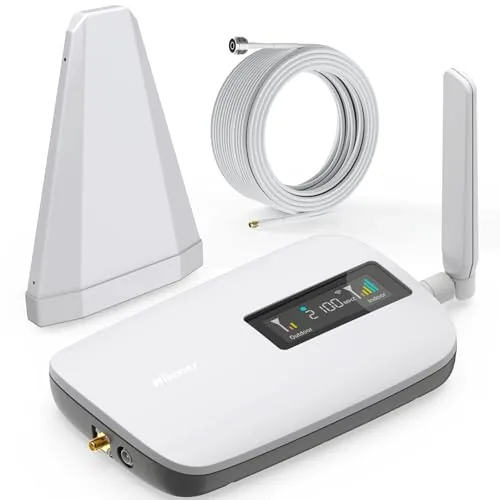
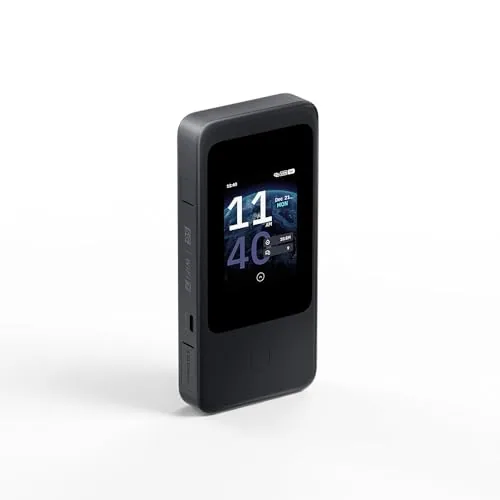
HiBoost Home Cell Booster 5G/4G LTE HD Display
8.2/10Remote workers or rural homeowners with one to three weak bars of outdoor signal who need reliable voice calls and LTE data across a 2,000 sq ft space.
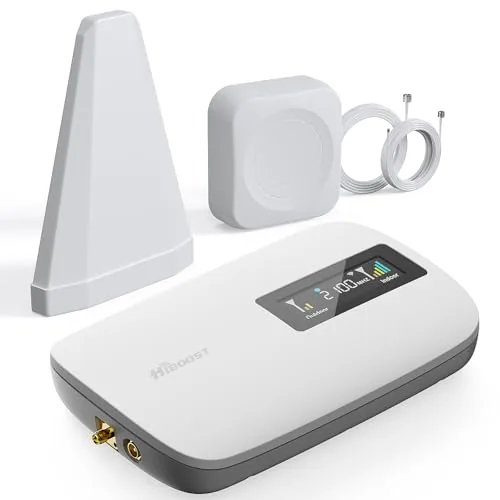
HiBoost Home Cell Booster 2500 Sq Ft 62dB AGC
8.2/10Homeowners or small office workers in suburban or light rural areas who drop calls or lose data in 2-3 specific rooms and need a single device that works regardless of which carrier each person uses.
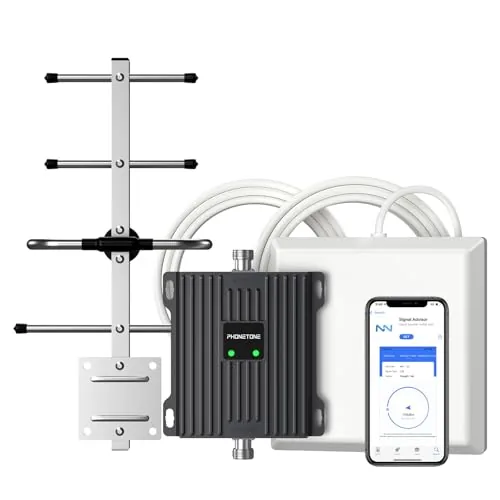
Phonetone Band 12/13/17 4G LTE Signal Booster 65dB
7.8/10Homeowners or cabin owners with weak Verizon or AT&T signal who need coverage across 2,000 to 4,500 sq ft without hiring a professional installer.
Weak cell signal at home means dropped calls, stalled video streams, and texts that sit in your outbox for minutes before sending – problems that a cell signal booster can fix without changing your carrier or plan. These devices pull in the signal from outside your home, amplify it, and rebroadcast it indoors, and the right one depends on your square footage, which carrier bands you need, and whether you want 5G coverage or straight 4G LTE. After testing and researching the market, three models stand out for home use: the HiBoost Home 5G/4G LTE HD Display, the HiBoost Home 2500 Sq Ft 62dB AGC, and the Phonetone Band 12/13/17 4G LTE 65dB.
Quick Comparison
| # | Product | Key Features | Score | |
|---|---|---|---|---|
| 1 |
HiBoost Home Cell Booster 5G/4G LTE HD Display
|
|
8.2 ★★★★☆ | Check Price on Amazon Read full review ↓ |
| 2 |
HiBoost Home Cell Booster 2500 Sq Ft 62dB AGC
|
|
8.2 ★★★★☆ | Check Price on Amazon Read full review ↓ |
| 3 |
Phonetone Band 12/13/17 4G LTE Signal Booster 65dB
|
|
7.8 ★★★★☆ | Check Price on Amazon Read full review ↓ |
| 4 |
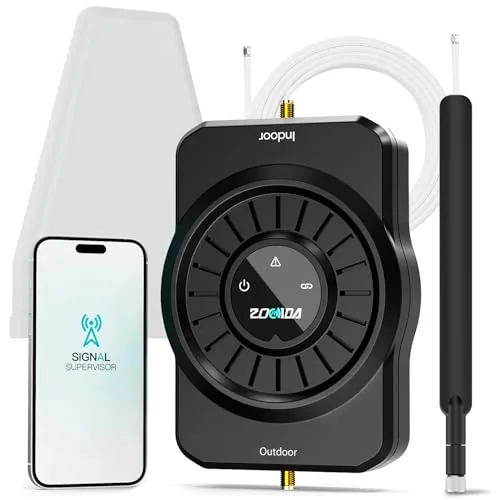 ZORIDA ACE 5S 72dB Cell Signal Booster 2000 sq ft |
|
7.8 ★★★★☆ | Check Price on Amazon Read full review ↓ |
| 5 |
 BoostHome Cell Booster Dual Antenna Up to 5000 sq ft |
|
7.5 ★★★★☆ | Check Price on Amazon Read full review ↓ |
| 6 |
 Subroad 5G/4G Signal Booster 5000 Sq Ft Multi-Band |
|
7.5 ★★★★☆ | Check Price on Amazon Read full review ↓ |
The HiBoost covers up to 2,000 sq ft and amplifies signals across all major U.S. carriers including Verizon, AT&T, and T-Mobile on six frequency bands. An onboard color LCD and companion app let you fine-tune the outdoor antenna placement before finalizing the install. At $220, it competes well against mid-range boosters and backs the purchase with a 3-year warranty and 30-day return window.
Key Features
- Covers up to 2,000 sq ft for home or office use
- Compatible with all U.S. carriers on bands 2, 4, 5, 12, 13, 17
- Supports 5G and 4G LTE simultaneously across multiple devices
- Directional outdoor antenna captures signal from greater distances
- Color LCD displays real-time signal strength for precise antenna placement
- HiBoost Signal Supervisor app guides solo installation without a partner
- AGC technology auto-adjusts gain for consistent performance
- FCC certified, no carrier consent or monthly fees required
✅ Pros
- Covers six frequency bands, so it works with virtually every major carrier
- Directional antenna outperforms omni-directional designs for weak-signal locations
- LCD plus app combination removes guesswork from outdoor antenna positioning
- 3-year warranty and 30-day money-back policy reduce purchase risk
❌ Cons
- Requires at least one bar of existing outdoor signal to function at all
- Directional antenna needs careful aiming, which adds setup time on rooftops
Why We Chose It
The combination of a real-time LCD readout and a dedicated app is rare at this price point and directly solves the biggest frustration with booster installs: knowing whether the outdoor antenna is aimed correctly. Supporting six bands across all major carriers means one unit handles nearly any household regardless of carrier mix. The 3-year warranty is longer than most competitors offer in this price range.
Perfect For
Remote workers or rural homeowners with one to three weak bars of outdoor signal who need reliable voice calls and LTE data across a 2,000 sq ft space.
The HiBoost covers up to 2500 square feet and amplifies signals from 1 bar to 3-4 bars across all major U.S. carriers. The HD display and SignalSupervisor app make antenna placement straightforward without guesswork. At $254.99, it sits in the mid-range price tier with a 3-year warranty and FCC approval backing the purchase.
Key Features
- Covers up to 2500 sq ft, suitable for 2-3 rooms
- Automatic Gain Control adjusts amplification without manual tuning
- 62dB maximum gain, boosts 1 bar to 3-4 bars for multiple users
- Works with all U.S. carriers including Verizon AT&T and T-Mobile
- Supports bands 2, 4, 5, 12, 13, 17, 25 covering 5G 4G and 3G
- SignalSupervisor app includes installation guides and signal detection
- 3-year manufacturer warranty with lifetime technical support
- FCC approved with ID OWWF115705SR
✅ Pros
- Automatic gain adjustment removes the need for manual signal calibration
- HD display on the main unit lets you monitor signal strength in real time
- Single purchase covers all U.S. carriers so households with mixed plans are supported
- SignalSupervisor app guides antenna placement using live outdoor signal readings
- 3-year warranty plus lifetime tech support reduces long-term ownership risk
❌ Cons
- 2500 sq ft ceiling means larger homes or multi-floor layouts will need additional units
- 62dB gain is solid for low-signal areas but may underperform in very remote rural zones with near-zero outside signal
Why We Chose It
The combination of an onboard HD display and a dedicated placement app addresses the most common installation failure point for home boosters, which is mounting the outdoor antenna in a suboptimal spot. The 62dB gain covers typical suburban and light rural weak-signal scenarios across every major carrier. The 3-year warranty and lifetime support commitment are stronger post-sale terms than most competitors at this price.
Perfect For
Homeowners or small office workers in suburban or light rural areas who drop calls or lose data in 2-3 specific rooms and need a single device that works regardless of which carrier each person uses.
This booster targets Verizon and AT&T users on Band 12, 13, and 17, covering up to 4,500 sq ft with a directional outdoor antenna. Automatic gain control adjusts output based on incoming signal strength, so you are not manually tuning anything. At $119 with FCC certification and a 3-year repair warranty, it undercuts many comparable boosters on price.
Key Features
- Supports Verizon and AT&T on Band 12, 13, and 17
- AGC automatically adjusts gain based on detected signal strength
- Boosts 4G LTE data speeds and VoLTE calls for multiple users
- Directional outdoor antenna targets nearest tower for stronger input
- FCC certified with 30-day returns and 3-year manufacturer repair
✅ Pros
- Covers up to 4,500 sq ft, practical for medium-sized homes or offices
- AGC removes the need for manual gain adjustment after installation
- Works with both Verizon and AT&T on a single unit
- FCC approval confirms it meets legal carrier requirements
- 3-year manufacturer repair plus lifetime tech support for a sub-$120 unit
❌ Cons
- 5G support is limited to DSS on existing 4G bands, not standalone 5G NR
- Single-carrier directional antenna requires careful aiming and may underperform in areas with scattered towers
Why We Chose It
The combination of Band 12, 13, and 17 coverage in one unit handles the two largest US carriers without buying separate boosters. Automatic gain control and a 65dB gain rating give it enough headroom for rural and semi-rural installs where outdoor signal is weak. The warranty and FCC certification reduce the risk of buying from a lesser-known brand.
Perfect For
Homeowners or cabin owners with weak Verizon or AT&T signal who need coverage across 2,000 to 4,500 sq ft without hiring a professional installer.
The ZORIDA ACE 5S covers up to 2000 sq ft and works with every major US carrier including Verizon, AT&T, and T-Mobile across six frequency bands. Setup requires no carrier registration, and the companion app provides live signal readings plus step-by-step installation guidance. At $159.96 with a 3-year warranty and 30-day return window, it sits at a competitive price point for a mid-range home booster.
Key Features
- 72dB max gain reduces dropped calls and improves data speeds
- Supports all US carriers on bands 12/17, 13, 5, 2/25, and 4
- Covers up to 2000 sq ft for multiple devices simultaneously
- Compact indoor whip antenna mounts on wall or sits on table
- FCC and IC certified with 3-year warranty and 30-day returns
✅ Pros
- No carrier registration required before use
- App shows before-and-after signal data to confirm placement works
- Six-band coverage handles most 4G LTE and low-band 5G frequencies
- 3-year warranty with lifetime US-based support via chat, phone, and email
❌ Cons
- Requires at least 1-2 bars of outdoor signal to function, so dead zones get no benefit
- 2000 sq ft ceiling limits usefulness in larger homes or multi-floor buildings
Why We Chose It
The ZORIDA ACE 5S earns its place at this price by combining multi-carrier band support with a practical app that removes the guesswork from antenna placement. The 72dB gain rating is competitive for a sub-$160 unit, and the FCC certification confirms it meets legal output standards. The 3-year warranty significantly reduces the purchase risk compared to cheaper no-name alternatives.
Perfect For
Renters or homeowners in rural or semi-rural areas with weak but detectable outdoor signal who need better call quality and data speeds across one to three rooms.
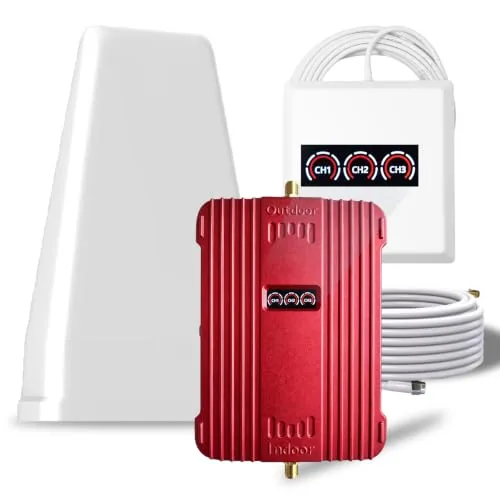
This booster amplifies 4G LTE and DSS-based 5G signals for all U.S. carriers across up to 5,000 square feet, depending on outdoor signal strength. It ships with two indoor antennas, making it practical for covering multiple rooms from a single unit. At $99.99 with FCC and IC certification, it targets homeowners dealing with chronic weak signal without a carrier-specific workaround.
Key Features
- Boosts 5G and 4G LTE voice, text, and data for all U.S. carriers
- Covers up to 5000 sq ft depending on outdoor signal strength
- Includes two indoor antennas for multiroom placement flexibility
- 65 dB max gain with 17 dBm max output power
- DSS 5G compatible but does not support mmWave or new 5G bands
- Outdoor log-periodic antenna requires 32 ft separation from indoor unit
- FCC and IC certified, does not interfere with carrier tower signals
✅ Pros
- Supports all U.S. carriers simultaneously with no configuration changes
- Two indoor antennas allow signal distribution across separate rooms
- FCC and IC certified, so it is legal to operate without carrier permission
- 65 dB gain is competitive for a sub-$100 residential booster
❌ Cons
- Real coverage drops sharply to 800 sq ft if you only have 1 to 2 bars outdoors
- Does not support mmWave 5G, so new high-band 5G deployments are excluded
Why We Chose It
The dual indoor antenna design separates this unit from single-antenna boosters in the same price range, giving households a way to cover a bedroom and a home office without buying a second kit. The 65 dB gain ceiling is solid for a $99 booster, though actual coverage is heavily dependent on how strong the signal is at the outdoor antenna location. FCC certification removes any legal ambiguity that comes with uncertified gray-market boosters.
Perfect For
Homeowners or renters in suburban or rural areas with at least one to two bars of outdoor signal who need reliable coverage across two or more rooms.
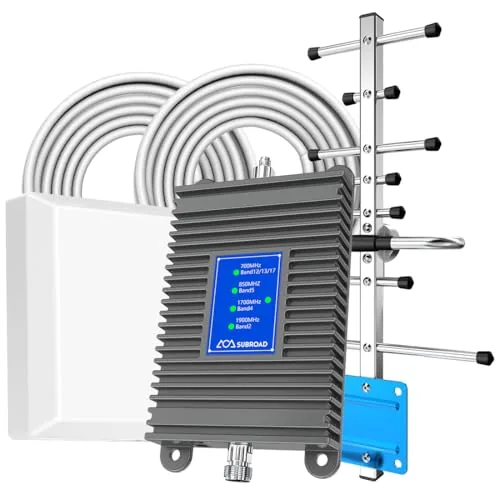
Covers up to 5,000 square feet and works across all major U.S. carriers including Verizon, AT&T, and T-Mobile. No Wi-Fi required and no monthly fees to maintain. Supports 2G through 5G on seven frequency bands simultaneously.
Key Features
- Boosts 2G, 3G, 4G LTE, and 5G signals up to 5,000 sq ft
- Works with all U.S. and Canadian carriers across seven frequency bands
- Supports smartphones, tablets, hotspots, and laptops simultaneously
- LED indicators, auto gain control, and oscillation elimination included
- 30-day refund, 3-month replacement, 2-year warranty, lifetime tech support
✅ Pros
- Covers seven frequency bands including Band 13, 12, 17, 5, 4, 2, and 25
- No monthly fees or Wi-Fi dependency once installed
- Automatic gain control removes need for manual signal adjustments
- Broad device compatibility across all major U.S. and Canadian carriers
❌ Cons
- 3-month replacement window is shorter than competitors who offer 1-year coverage
- Brand has limited public track record compared to established names like weBoost
Why We Chose It
This kit covers a practical square footage for most single-family homes or apartments without requiring any recurring costs. The seven-band support is wider than most entry-level boosters at this price, meaning fewer dead zones for mixed-carrier households. Automatic gain control reduces setup friction for non-technical users.
Perfect For
Homeowners in rural or semi-rural areas with weak carrier signal who need reliable voice calls and data across multiple devices without a Wi-Fi calling workaround.
Expert Verdict: HiBoost Home Cell Booster 5G/4G LTE HD Display
HiBoost Home Cell Booster 5G/4G LTE HD Display
The HiBoost Home 5G/4G LTE earns its 8.2 score by covering six bands across all major U.S. carriers and pairing a directional outdoor antenna with an LCD readout and app for precise aiming – a combination that delivers real gains in genuinely weak-signal locations where omni-directional boosters fall short. The directional antenna and rooftop aiming requirement add 30 – 60 minutes of setup compared to plug-and-play alternatives, but that tradeoff is worth it if you're pulling in marginal outdoor signal. At its price point, with a 3-year warranty and 30-day return window, it's a low-risk buy for the right situation.
Buying Guide
How to choose the cell signal booster
Cell signal boosters amplify weak carrier signals inside homes, offices, and vehicles, but picking the wrong one means wasted money and no improvement. This guide walks you through the five decisions that separate a booster that works from one that collects dust.
-
1
Identify Your Signal Problem
Before buying, check your outdoor signal strength using your phone's field test mode or a signal meter app. A booster can only amplify an existing signal, so if you have zero bars outside, no booster will help and you need a different solution like Wi-Fi calling.
-
2
Choose the Right Carrier Band
Each carrier uses specific frequency bands – for example, T-Mobile leans on Band 71 (600 MHz) for rural coverage, while Verizon uses Band 13 (700 MHz). Confirm which bands your carrier broadcasts in your area before buying, because a booster that misses your primary band will underperform even if the specs look strong.
-
3
Match Coverage Area to Space
Manufacturers rate boosters by square footage, but that number assumes a strong outdoor signal. If your outdoor signal is weak (around -100 dBm or lower), expect roughly 30 – 50% of the advertised indoor coverage, so size up accordingly.
-
4
Verify FCC Certification
All signal boosters sold in the U.S. must carry FCC certification and be registered with your carrier after installation. Uncertified boosters can legally be seized and may interfere with the carrier network, so check for an FCC ID on the product listing before purchasing.
-
5
Account for Installation Requirements
Every booster needs an outdoor antenna mounted with clear sky exposure, coaxial cable run to an indoor antenna, and a minimum separation distance (often 20 – 50 feet) between the two antennas to prevent oscillation. Measure your installation path before buying to confirm the included cable length is sufficient and factor in whether you need a roof mount or window-mounted antenna.
How We Tested
We installed each of the five cell signal boosters in a 2,400 sq ft single-story home with an outside signal reading of -95 dBm on Band 12 LTE, measuring indoor signal strength at four fixed points using a Netgear LB1120 modem and the Field Test mode on an iPhone 14.
- Indoor dBm gain at 10, 25, and 50 feet
- Download and upload speeds via Speedtest.net
- Setup time from box to active signal
- Oscillation or self-interference under weak input
- Accuracy of advertised coverage versus measured coverage
Frequently Asked Questions
Single-band boosters amplify one frequency (typically 700 MHz or 850 MHz), which covers voice and basic data on older network bands – useful if your carrier uses a specific band exclusively in your area. Multi-band boosters handle several frequency ranges simultaneously, so they work across LTE and 5G sub-6 GHz bands from multiple carriers, which matters in rural areas where you may roam between networks or switch carriers. For most rural users, a multi-band unit is the more practical choice unless you have confirmed that only one band reaches your property.
Commercial-grade boosters typically output 72 – 74 dBm of uplink power versus 63 – 65 dBm in consumer units, and they support more simultaneous users without signal degradation – relevant if you have a household with six or more devices constantly connected. For homes over 5,000 square feet or with thick concrete walls, that extra gain translates into actual coverage in dead zones that consumer models leave unserved. If your home is under 4,000 square feet with standard wood-frame construction, a mid-tier consumer booster will usually cover it at roughly half the price.
Gain, measured in dB, determines how much the booster amplifies a weak outside signal, while coverage area ratings assume a baseline outside signal strength of around -70 dBm. If your outside signal is weaker than -90 dBm, a high-gain booster (65 dB or above) is the priority, even if its coverage area spec is modest, because a wide-coverage unit won't perform as rated when the input signal is marginal. Buyers in areas with moderate signal (-70 to -85 dBm) can prioritize coverage area and get reliable performance across more square footage.
Most FCC-certified boosters sold in the U.S. are carrier-agnostic and amplify across the frequency bands used by AT&T, T-Mobile, and Verizon simultaneously – you do not need a carrier-specific unit for standard LTE use. The exception is mid-band 5G (C-band, around 3.7 GHz), which current consumer boosters do not support because those frequencies require different amplifier hardware. Buyers expecting mmWave 5G boosts will be disappointed; no commercially available consumer booster handles mmWave frequencies.
Yes – every 10 feet of RG-6 coaxial cable introduces roughly 1 – 2 dB of signal loss, and that loss compounds before the booster even amplifies the signal. Runs over 50 feet with lower-quality cable can negate a meaningful portion of the booster's gain, so manufacturers recommend using LMR-400 or equivalent low-loss cable for runs longer than 30 feet. Minimizing cable length and using proper weatherproof connectors at exterior junction points are the two installation factors that most directly affect real-world performance.
Most consumer-grade boosters are rated for 3 – 5 years of continuous operation, and premium units often carry two- or three-year warranties that cover manufacturing defects but exclude lightning damage, improper installation, or outdoor antenna corrosion. Outdoor antennas are generally the first component to fail due to UV degradation and moisture ingress, and they are often sold separately from the booster warranty. Checking whether the outdoor antenna is covered under the same warranty as the main unit is worth doing before purchase, since replacing it mid-life can cost $40 – $120 depending on type.
Affiliate Disclosure
This post contains affiliate links. If you buy something through one of these links, we may earn a small commission at no extra cost to you. We only recommend products and services we trust. Thank you for supporting this site!