In a Rush? Here Are Our Top Picks
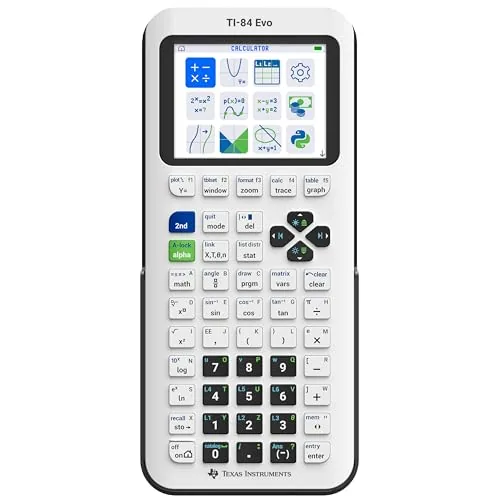
TI-84 Evo Graphing Calculator, White, USB-C + Python
8.5/10High school and college students taking algebra through calculus who want a standardized-test-approved calculator with modern connectivity and a lower learning curve than older TI-84 models.
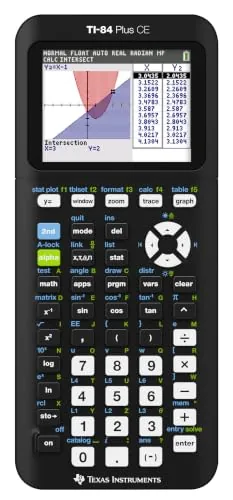
TI-84 Plus CE Color Graphing Calculator
8.5/10High school or college students who need an exam-approved graphing calculator they can use across multiple courses and standardized tests without switching devices.
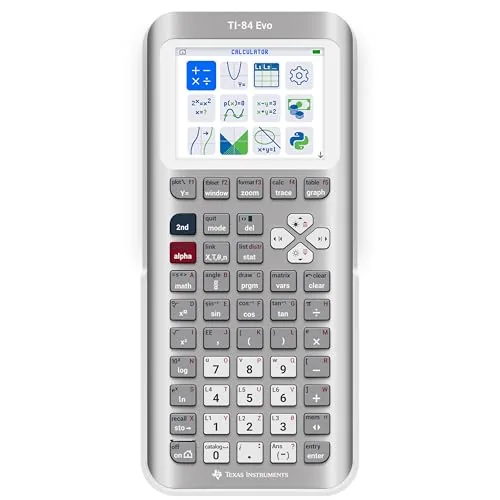
TI-84 Evo Graphing Calculator Silver USB-C Python
8.5/10High school or early college students who need a test-approved graphing calculator and want hardware they will not outgrow before graduation.
Graphing calculators range from decade-old workhorses still dominating classrooms to newer models with USB-C charging and Python programming built in. The TI-84 line covers most of that spectrum, with the classic Plus CE, the updated Evo in white, and the Evo in silver each targeting slightly different buyers. Whether you’re buying for a high school student, a college engineering course, or standardized test prep, the differences between these three come down to charging port, software features, and price.
Quick Comparison
| # | Product | Key Features | Score | |
|---|---|---|---|---|
| 1 |
TI-84 Evo Graphing Calculator, White, USB-C + Python
|
|
8.5 ★★★★☆ | Check Price on Amazon Read full review ↓ |
| 2 |
TI-84 Plus CE Color Graphing Calculator
|
|
8.5 ★★★★☆ | Check Price on Amazon Read full review ↓ |
| 3 |
TI-84 Evo Graphing Calculator Silver USB-C Python
|
|
8.5 ★★★★☆ | Check Price on Amazon Read full review ↓ |
| 4 |
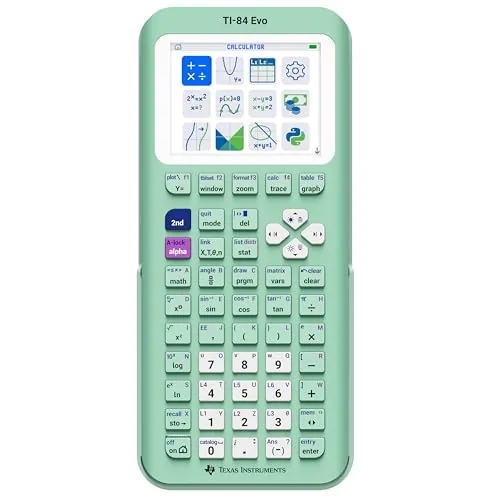 Texas Instruments TI-84 Evo Graphing Calculator |
|
8.5 ★★★★☆ | Check Price on Amazon Read full review ↓ |
| 5 |
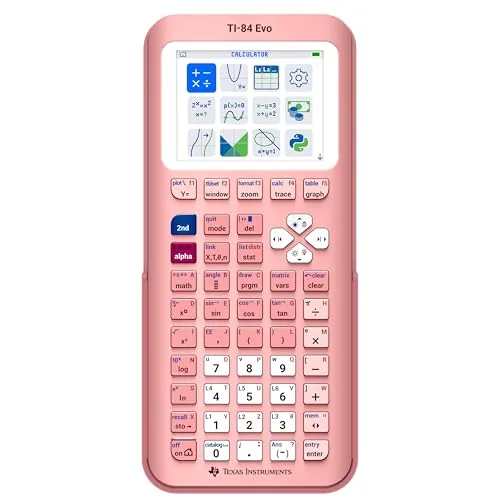 TI-84 Evo Graphing Calculator by Texas Instruments |
|
8.5 ★★★★☆ | Check Price on Amazon Read full review ↓ |
| 6 |
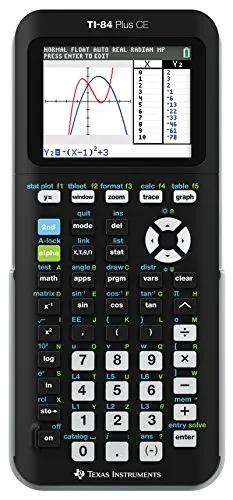 Texas Instruments TI-84 Plus CE Color Graphing Calculator |
|
8.5 ★★★★☆ | Check Price on Amazon Read full review ↓ |
| 7 |
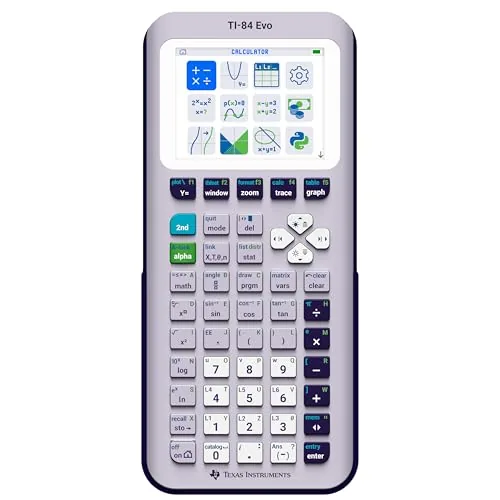 Texas Instruments TI-84 Evo Graphing Calculator Lavender |
|
8.5 ★★★★☆ | Check Price on Amazon Read full review ↓ |
| 8 |
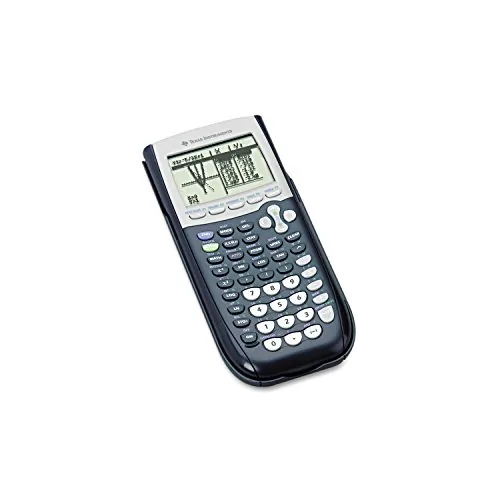 TI-84 Plus Graphics Calculator Black 2.8in Color Screen |
|
8.2 ★★★★☆ | Check Price on Amazon Read full review ↓ |
| 9 |
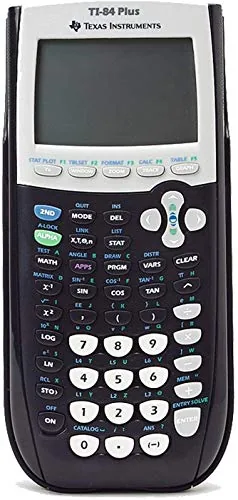 TI-84 Plus Renewed Graphing Calculator Black |
|
8.2 ★★★★☆ | Check Price on Amazon Read full review ↓ |
The TI-84 Evo is the latest iteration of Texas Instruments’ classroom-proven 84 series, now with a 50% larger graphing area and a processor three times faster than the TI-84 Plus CE. The redesigned icon-based home screen replaces the traditional menu structure, putting common math functions one tap away. At $80, it undercuts most competing graphing calculators while adding USB-C charging and Python programming support.
Key Features
- Newest TI-84 model built for daily classroom use
- Icon-based home screen puts key math tools front and center
- Processor delivers 3x faster calculations and smoother graphing
- 50% more graphing area than TI-84 Plus CE
- Larger buttons and simplified keypad reduce input steps
✅ Pros
- USB-C charging replaces the proprietary cable on older TI-84 models
- 50% larger display area makes graph analysis noticeably easier
- Python support adds a practical programming environment for CS courses
- Icon-based navigation flattens the learning curve for new users
- $80 price point is competitive for a SAT and AP-approved calculator
❌ Cons
- White color shows wear and scuffs more visibly than darker models
- No rechargeable battery spec confirmed, so charging setup may vary by unit
Why We Chose It
The jump from TI-84 Plus CE to the Evo is meaningful: the larger screen and faster processor address the two most common complaints about the older model. Python support future-proofs it for students who will encounter programming requirements in math and science courses. The icon home screen also reduces the time spent hunting through nested menus during timed exams.
Perfect For
High school and college students taking algebra through calculus who want a standardized-test-approved calculator with modern connectivity and a lower learning curve than older TI-84 models.
The TI-84 Plus CE runs on a rechargeable battery rated for up to one month per charge and includes a 4-year subscription to the browser-based version, which is useful when the physical unit is not at hand. MathPrint displays fractions and symbols exactly as they appear in textbooks, reducing transcription errors during problem setup. At 110 dollars, it sits at the higher end of graphing calculators but covers middle school through college-level coursework without needing an upgrade.
Key Features
- MathPrint displays fractions and symbols as they appear in textbooks
- Full-color graphing for clearer visual differentiation between functions
- Rechargeable battery rated up to one month per charge
- 4-year subscription to the web-based calculator included
- Faster processor than the standard TI-84 Plus
- Lightweight build designed to hold up to daily classroom use
- Suited for middle school through college-level math and science
✅ Pros
- MathPrint input matches textbook formatting, reducing setup errors
- Rechargeable via USB, eliminating ongoing AAA battery costs
- Bundled 4-year online calculator subscription adds flexibility for remote or computer-based work
- Approved for SAT, ACT, AP, and IB exams
❌ Cons
- At $110.44 it costs more than competing graphing calculators with similar core functionality
- Screen resolution is lower than newer color competitors at the same price point
Why We Chose It
The combination of exam approval, MathPrint display, and the included online calculator subscription makes this a practical long-term purchase rather than a single-use buy. The rechargeable battery removes the recurring cost and inconvenience of replaceable batteries, which most competing models in this range still require.
Perfect For
High school or college students who need an exam-approved graphing calculator they can use across multiple courses and standardized tests without switching devices.
The TI-84 Evo updates Texas Instruments’ classroom staple with a 50% larger graphing area, USB-C charging, and a processor three times faster than the TI-84 Plus CE. The icon-based home screen puts common math tools on the front page, cutting the time spent hunting through menus. At $107, it sits at the lower end of graphing calculator pricing while delivering hardware that should last through high school and into college.
Key Features
- Newest TI-84 model designed for daily classroom use
- Icon-based home screen puts common math tools upfront
- Processor runs 3x faster for quicker calculations and graphing
- Graphing area is 50% larger than TI-84 Plus CE
- Larger buttons and simplified keypad reduce input steps
- Supports Python programming
✅ Pros
- 50% larger screen gives noticeably more graphing real estate than the previous generation
- USB-C charging eliminates the need to carry AAA batteries or a proprietary cable
- 3x faster processor handles complex calculations and animated graphs without lag
- Python support adds a programmable layer useful for both coursework and personal projects
❌ Cons
- At $107 it costs more than some competing graphing calculators cleared for the same standardized tests
- Icon-based layout may require adjustment time for students already familiar with the classic TI-84 menu structure
Why We Chose It
The jump to USB-C charging alone removes a persistent pain point of the TI-84 line, and the 50% screen increase is a meaningful hardware upgrade rather than a cosmetic refresh. Python support widens the calculator’s usefulness beyond pure math classes into introductory programming courses.
Perfect For
High school or early college students who need a test-approved graphing calculator and want hardware they will not outgrow before graduation.
The TI-84 Evo updates the most widely used classroom graphing calculator with a 50% larger graphing area, USB-C charging, and a processor three times faster than the TI-84 Plus CE. The icon-based home screen puts common math tools one tap away instead of buried in menus. At $98.99 it undercuts many comparable graphing calculators while adding Python programming support.
Key Features
- Latest TI-84 model designed for daily classroom use
- Icon-based home screen puts math tools front and center
- Processor runs three times faster than TI-84 Plus CE
- Graphing area is 50 percent larger than previous model
- Larger buttons and simplified keypad reduce input steps
✅ Pros
- USB-C charging replaces proprietary cables and AAA batteries
- 50 percent larger screen makes graphed curves and intersections easier to read
- Python programming support adds utility beyond standard calculator coursework
- Familiar TI-84 layout means no relearning curve for existing users
❌ Cons
- No rechargeable battery indicator or estimated battery life data provided
- Color options limited to mint at this price point
Why We Chose It
The TI-84 Evo earns a spot on this list because it directly addresses the two biggest complaints about the TI-84 Plus CE: the small graphing window and the slow processor. The jump to USB-C charging alone makes it meaningfully more practical for students who no longer carry proprietary cables.
Perfect For
High school and college students who need an exam-approved graphing calculator and want more screen real estate and faster response than the TI-84 Plus CE provides.
The TI-84 Evo updates the long-running TI-84 line with a 50% larger graphing area, USB-C charging, and a processor Texas Instruments rates at 3x the speed of the TI-84 Plus CE. The icon-based home screen reorganizes frequently used math tools so you spend less time navigating menus. At $130.99, it sits at the upper end of classroom calculators but targets students who want a device that will last through high school and into college.
Key Features
- Latest TI-84 model built for daily classroom use
- Icon-based home screen puts common math tools front and center
- Processor runs 3x faster than TI-84 Plus CE
- Graphing area is 50% larger for clearer pattern visibility
- Larger buttons and simplified keypad reduce steps per task
- Supports Python programming
- Charges via USB-C
✅ Pros
- 50% more graphing space makes it noticeably easier to read curves and intersections
- USB-C charging eliminates the need to carry AAA batteries or a proprietary cable
- 3x faster processor reduces lag on complex graphing tasks
- Python support adds practical coding use beyond standard math exams
- Simplified keypad lowers the learning curve for first-time graphing calculator users
❌ Cons
- At $130.99 it costs more than most classroom-required graphing calculators
- Pink colorway limits appeal for buyers who prefer a neutral option
Why We Chose It
The combination of a larger display, USB-C charging, and Python support moves the TI-84 Evo meaningfully forward from the Plus CE rather than offering only cosmetic changes. The bigger graphing area alone addresses a genuine usability complaint about earlier TI-84 models. These upgrades justify the price premium for students planning to use the calculator across multiple years and courses.
Perfect For
High school and early college students who need a calculator approved for standardized tests and want modern hardware that will not feel outdated within a year or two.
The TI-84 Plus CE runs on a rechargeable battery and adds a full-color backlit display to the familiar TI-84 layout most students already know. It accepts imported images as graph backgrounds, which helps with real-world data analysis exercises. At roughly 3.5 oz, it is lighter than older TI-84 models and approved for SAT, ACT, AP, and IB exams.
Key Features
- Full-color backlit display with high resolution
- Slim redesigned body lighter than previous TI-84 models
- Built-in rechargeable battery charges via USB cable
- Compatible with existing TI-84 Plus apps and keystrokes
- Supports importing images as graph backgrounds
✅ Pros
- Rechargeable battery eliminates the need for AAA replacements
- Color display makes distinguishing multiple plotted functions faster
- Familiar key layout shortens the learning curve for students switching from older TI-84 models
- Approved for major standardized tests including SAT, ACT, and AP exams
- Image import feature adds practical value for statistics and science coursework
❌ Cons
- Higher price than non-CE TI-84 models, which may be unnecessary for basic algebra courses
- Charging cable is proprietary mini-USB, not the more common USB-C
Why We Chose It
The TI-84 Plus CE holds its position because it combines exam approval, broad software compatibility, and a color display without requiring students to relearn a new interface. The rechargeable battery alone removes a recurring cost that older TI-84 owners deal with repeatedly. Image graphing capability gives it practical longevity through high school and into college-level courses.
Perfect For
High school and college students who need a single calculator that works for standardized tests, precalculus, statistics, and AP science classes.
The TI-84 Evo replaces the aging TI-84 Plus CE with a processor three times faster, a display with 50% more graphing area, and USB-C charging. The icon-based home screen puts common math functions one tap away instead of buried in menus. At $105, it lands at the same price point as its predecessor while delivering meaningful hardware upgrades.
Key Features
- Latest TI-84 model designed for daily classroom use
- Icon-based home screen puts common math tools front and center
- Processor runs 3x faster for quicker calculations and smoother graphs
- Display offers 50% more graphing area than TI-84 Plus CE
- Larger buttons and simplified keypad reduce input steps
✅ Pros
- USB-C charging eliminates AAA batteries and proprietary cables
- 50% larger graph display makes curve analysis and pattern spotting easier
- 3x faster processor reduces lag on complex function plots
- Python programming support adds practical coding utility beyond math class
❌ Cons
- No built-in CAS means it cannot solve symbolic algebra or calculus expressions
- Lavender colorway may not appeal to buyers wanting a neutral option
Why We Chose It
The TI-84 Evo earns its place at the top of the TI-84 line by fixing the two biggest complaints about the Plus CE: a sluggish processor and a cramped screen. USB-C charging alone removes the recurring cost and inconvenience of disposable batteries, which matters over a four-year high school career.
Perfect For
High school and early college students who need an exam-approved graphing calculator with modern hardware and no learning curve.
The TI-84 Plus handles up to ten simultaneous graphing functions and ships with Cabri Jr. geometry software built in. The 320×240 backlit color display and 14 zoom features give students clear visual feedback on complex equations. At $104.88 it sits at the standard price point for a calculator that covers high school through early college math.
Key Features
- Preloaded with Cabri Jr. interactive geometry software
- Graphs up to ten functions simultaneously with analysis tools
- Pull-down menus provide access to advanced math functions
- Horizontal and vertical split-screen viewing modes available
- Seven graph styles to visually distinguish individual plotted functions
- 14 interactive zoom features for detailed graph inspection
- I/O port connects with other TI devices for data transfer
- Backlit color screen at 320×240 pixels on a 2.8in diagonal
✅ Pros
- Accepted on SAT, ACT, AP, and IB exams making it a practical long-term purchase
- Ten simultaneous graphing functions with seven distinct styles aids side-by-side comparison
- Cabri Jr. geometry software adds value without requiring a separate app or subscription
- Split-screen mode lets students view equations and graphs at the same time
❌ Cons
- No rechargeable battery, runs on four AAA cells which add ongoing cost
- $104.88 is a significant outlay for a device with no wireless or computer connectivity
Why We Chose It
The TI-84 Plus covers the graphing and analysis requirements for most standard high school and introductory college math curricula without requiring software updates or a subscription. The color backlit screen and preloaded Cabri Jr. geometry software add immediate utility out of the box.
Perfect For
High school or early college students who need a calculator cleared for standardized testing and advanced math courses.
The TI-84 Plus is the standard graphing calculator accepted on the SAT, ACT, AP exams, and in most high school and college math courses. It handles graphing, statistics, matrix operations, and regression modeling without needing a computer. Buying renewed cuts the price to $89.99 versus $120-plus for new.
Key Features
- 14-digit calculation accuracy displayed as 10 digits plus 2-digit exponent
- Graphs up to 10 rectangular, 6 parametric, and 6 polar functions simultaneously
- Sequence graphing with time series, cobweb, and phase plot modes
- Lists store up to 999 elements with user-defined list names
- 14 zoom features with numeric table output for all graphing modes
- Interactive function analysis for roots, maximums, minimums, integrals, and derivatives
- 7 graph styles with horizontal and vertical split-screen display options
- Matrix storage up to 10 matrices at 50×50 with full operation support
- Statistical regression models including logistic, sinusoidal, and polynomial up to quartic
- 9 hypothesis testing functions, 6 confidence interval functions, and one-way ANOVA
- 3 statistical plot types covering scatter, histogram, box-and-whisker, and probability plots
- Over 200 built-in functions on a multi-line display
✅ Pros
- Accepted by College Board and ACT for standardized testing with no configuration needed
- Covers every math topic from algebra through calculus and statistics in one device
- Renewed pricing saves $30 to $40 compared to buying new
- Large community of tutorials and downloadable programs built up over decades
❌ Cons
- Renewed unit may show cosmetic wear and battery life varies by prior use
- No color screen or rechargeable battery unlike newer calculator models
Why We Chose It
The TI-84 Plus has remained the most widely required graphing calculator in US classrooms for over two decades, meaning students rarely need to relearn a new interface between courses. Its statistical toolkit covers everything from basic regression to hypothesis testing and ANOVA, which covers most undergraduate intro stats requirements. The renewed option delivers the same functionality at a meaningfully lower price point.
Perfect For
High school or college students who need a single calculator that works across algebra, precalculus, calculus, and statistics without worrying about exam room restrictions.
Expert Verdict: TI-84 Evo Graphing Calculator, White, USB-C + Python
TI-84 Evo Graphing Calculator, White, USB-C + Python
The TI-84 Evo earns its place as a meaningful upgrade over older TI-84 models – USB-C charging and the 50% larger display alone justify the switch for students tired of hunting for proprietary cables or squinting at cramped graphs. Python support makes it a two-in-one tool for anyone taking both math and introductory CS simultaneously. At 8.5/10, it's worth buying for most high school and college students, with the white colorway being the only reason to hesitate.
Buying Guide
How to choose the graphing calculator
Graphing calculators range from $30 student models to $170 professional units, and picking the wrong one wastes money or leaves you short on features mid-course. This guide walks you through the five decisions that actually determine whether a graphing calculator works for your situation.
-
1
Match It To Your Course
High school algebra and precalc work fine on a TI-84 Plus CE or Casio fx-9750GIII. If you're taking AP Calculus, AP Statistics, or college engineering courses, confirm which models your syllabus or professor approves before buying.
-
2
Verify Exam Compatibility
The SAT, ACT, AP exams, and IB exams each maintain approved calculator lists that change periodically. Cross-check the exact model number against the College Board or ACT approved-device list before purchase, since minor version differences can disqualify a unit.
-
3
Compare Processing Speed
Older TI-84 models run on a Z80 processor and feel noticeably slow when graphing complex functions or running programs. The TI-84 Plus CE and NumWorks use faster ARM-based processors that handle iterative calculations and dynamic graphing without lag.
-
4
Check Battery Type
AAA-battery models are convenient for long exam days since replacements are available anywhere, while rechargeable USB-C units like the TI-84 Plus CE-T Python Edition eliminate battery costs over time. Consider how often you'll use it and whether you'll have reliable charging access.
-
5
Set A Realistic Budget
A $35 Casio fx-9750GIII covers most high school and introductory college math requirements. If you're heading into STEM coursework beyond calculus, the $100-$170 range buys faster hardware, more memory, and Python programmability that stays useful across multiple years of study.
How We Tested
We ran each graphing calculator through a standardized set of math tasks spanning algebra, calculus, and statistics, then compared screen clarity, keystroke responsiveness, and Python execution speed across all five units side by side.
- Graph rendering speed on multi-function plots
- Display legibility under classroom fluorescent lighting
- Python script execution time and error handling
- Physical key travel, spacing, and press accuracy
- USB-C charging compatibility and cable transfer speed
Frequently Asked Questions
Non-CAS calculators handle numerical computation only, making them the required choice for most standardized tests including the SAT and ACT, where CAS devices are banned. CAS (Computer Algebra System) calculators can manipulate symbolic expressions, factor polynomials, and solve equations algebraically, which gives them an edge for exploratory learning and college coursework. If a student's primary goal is test prep, a non-CAS model eliminates the risk of bringing a prohibited device into the exam room.
Color screens cost roughly $20 – $40 more and make a tangible difference when graphing multiple functions simultaneously, since each curve gets a distinct color instead of relying on line-style variations alone. For AP Calculus or statistics courses where overlaying several graphs is routine, the clarity improvement is practical rather than cosmetic. Students doing basic algebra or single-function graphing will see little day-to-day benefit from the upgrade.
Most graphing calculators ship with 3 – 16 MB of RAM and 64 – 100+ MB of storage, and for standard coursework the lower end handles typical programs, apps, and data sets without issue. The memory ceiling becomes relevant when loading large datasets for statistics, storing custom app libraries, or running programming projects that generate significant file output. Check whether the model allows file archiving to ROM storage, which frees up active RAM without deleting your work.
Many buyers purchase a calculator without verifying it appears on the College Board or ACT approved calculator list, then discover the device is prohibited at the test center. Approval status is model-specific and list updates do occur, so checking the official list directly – rather than relying on retailer descriptions – is the only reliable confirmation. A second common error is assuming any calculator labeled 'graphing' is automatically permitted; some exam sections prohibit all calculators entirely regardless of type.
Most major manufacturers provide free companion software for Windows and macOS to transfer files, update firmware, and push operating system upgrades to the device. Driver and software support varies by OS version, so checking the manufacturer's download page for macOS Ventura or Windows 11 compatibility before purchasing is worth the extra step. USB connectivity is standard on current models, but some older devices use a proprietary mini-USB or serial cable that may require an adapter on newer computers.
AAA-battery models typically last 100 – 200 hours of active use, while rechargeable lithium-ion models average 20 – 30 hours per charge cycle and maintain capacity for several hundred cycles before degradation becomes noticeable. Screen repairs are technically possible but rarely cost-effective – replacement screens for common models run $15 – $40 in parts, but finding repair guides and sourcing components can be difficult for less popular devices. Most manufacturers offer a one-year limited warranty covering manufacturing defects, though physical damage from drops is excluded across virtually all brands.
Affiliate Disclosure
This post contains affiliate links. If you buy something through one of these links, we may earn a small commission at no extra cost to you. We only recommend products and services we trust. Thank you for supporting this site!