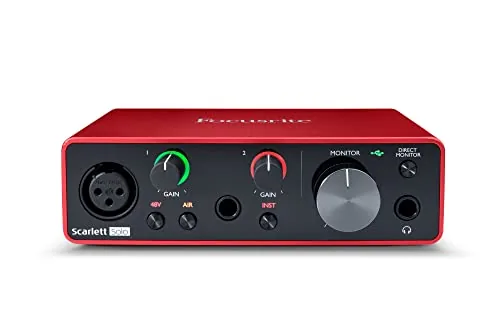
In a Rush? Here Are Our Top Picks
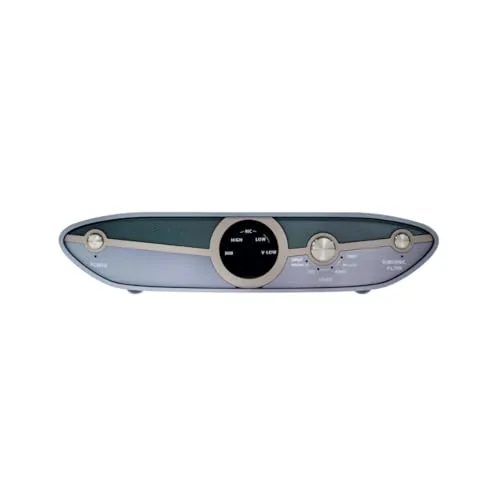
iFi ZEN Phono 3 MM/MC Preamp with Subsonic Filter
8.5/10Vinyl enthusiasts who own or plan to own multiple cartridge types and want one preamp that handles all of them without compromise.
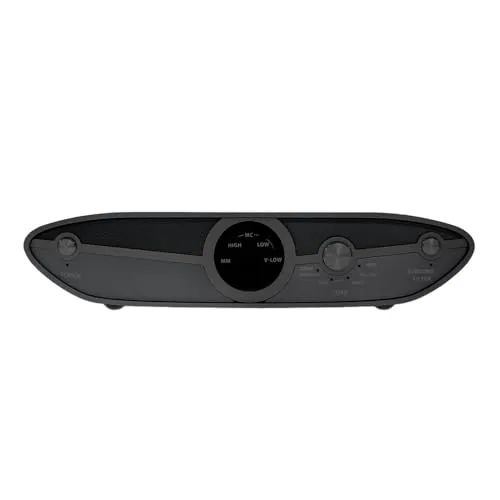
iFi Zen Phono 3 Black Stealth MM/MC Preamp
8.5/10Vinyl listeners running a mid-to-high-output MC or MM cartridge who want a quiet, balanced signal path without spending above $300.
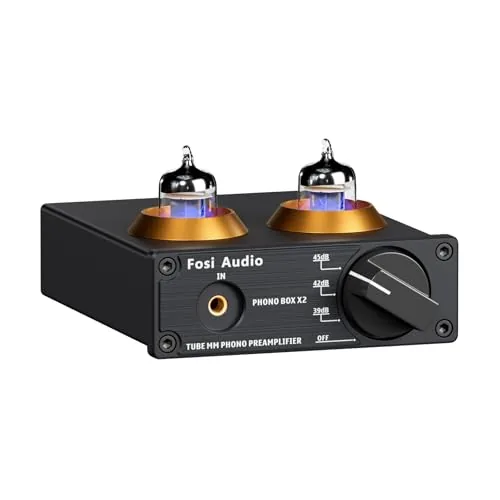
Fosi Audio Box X2 Tube Phono Preamp with Gain Control
8.2/10Vinyl newcomers or budget audiophiles who want a warm, tunable phono stage without committing to a fixed solid-state sound.
Phono preamps do one job – take the low-level signal from your turntable’s cartridge and amplify it to a level your amplifier or speakers can actually use – but the gap between a mediocre one and a good one shows up directly in how clean, detailed, and quiet your records sound. The three preamps worth your attention right now are the iFi ZEN Phono 3 MM/MC, the iFi ZEN Phono 3 Black Stealth, and the Fosi Audio Box X2 Tube, each targeting a different buyer: the feature-focused audiophile, the desk-setup minimalist, and the tube-sound curious budget buyer. Here’s what separates them on specs, build, and real listening performance.
Quick Comparison
| # | Product | Key Features | Score | |
|---|---|---|---|---|
| 1 |
iFi ZEN Phono 3 MM/MC Preamp with Subsonic Filter
|
|
8.5 ★★★★☆ | Check Price on Amazon Read full review ↓ |
| 2 |
iFi Zen Phono 3 Black Stealth MM/MC Preamp
|
|
8.5 ★★★★☆ | Check Price on Amazon Read full review ↓ |
| 3 |
Fosi Audio Box X2 Tube Phono Preamp with Gain Control
|
|
8.2 ★★★★☆ | Check Price on Amazon Read full review ↓ |
| 4 |
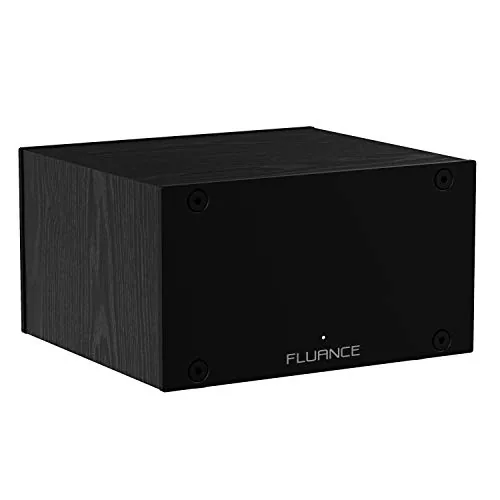 Fluance PA10 Phono Preamp with RIAA Equalization |
|
8.2 ★★★★☆ | Check Price on Amazon Read full review ↓ |
| 5 |
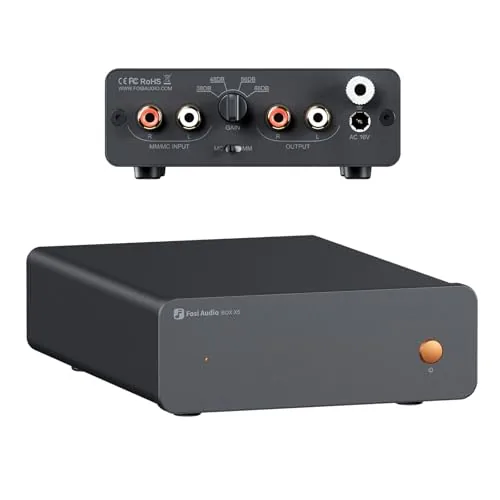 Fosi Audio Box X5 MM/MC Phono Preamp |
|
8.2 ★★★★☆ | Check Price on Amazon Read full review ↓ |
| 6 |
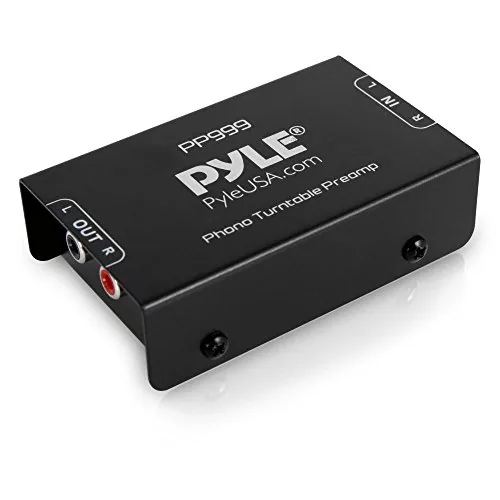 Pyle PP999 Phono Preamp with RCA In/Out |
|
7.5 ★★★★☆ | Check Price on Amazon Read full review ↓ |
| 7 |
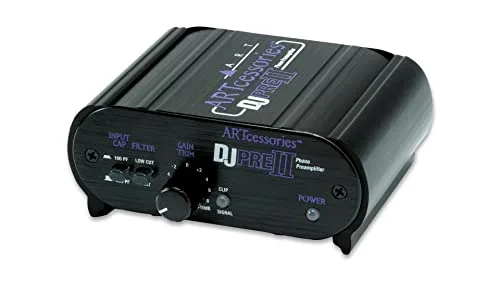 ART DJPREII Phono Preamplifier with Ground Terminal |
|
7.2 ★★★★☆ | Check Price on Amazon Read full review ↓ |
| 8 |
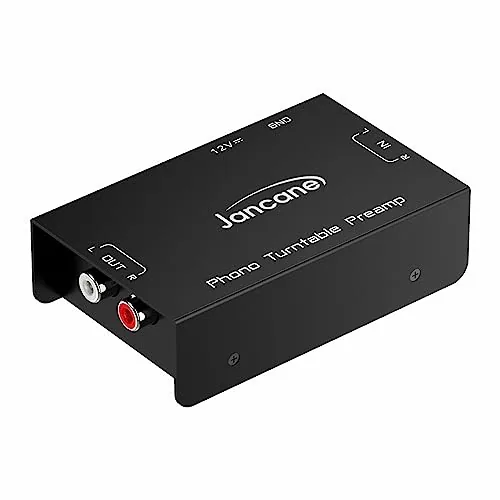 cotsoco Phono Preamp RCA Input 3mV MM Cartridge |
|
6.5 ★★★☆☆ | Check Price on Amazon Read full review ↓ |
The ZEN Phono 3 covers cartridge gain from 36dB to 72dB, making it compatible with MM and MC cartridges at virtually every output level. Independent gain and loading controls let you dial in each cartridge without compromise. At $249, it targets serious vinyl listeners who want flexibility without moving into four-figure preamp territory.
Key Features
- MM and MC support with gain range from 36dB to 72dB
- RIAA EQ uses TDK C0G capacitors in parallel for low distortion
- Gain and loading adjustable independently via dedicated controls
- Custom OV Series op-amp rated at 0.0001% total harmonic distortion
- Subsonic filter removes low-frequency rumble without touching audible range
✅ Pros
- Wide 36dB to 72dB gain range accommodates virtually any cartridge type
- Independent gain and loading controls allow precise per-cartridge tuning
- 0.0001% distortion figure is competitive well above this price point
- Subsonic filter engages intelligently without a blanket effect on midrange or treble
❌ Cons
- No built-in USB output limits integration with digital recording setups
- At $249 it sits above entry-level options that suit casual listeners fine
Why We Chose It
The combination of independent gain and loading controls is uncommon at this price and gives the ZEN Phono 3 long-term value as a collection grows toward low-output MC cartridges. The custom op-amp and C0G capacitor RIAA stage reflect genuine engineering choices rather than spec-sheet padding.
Perfect For
Vinyl enthusiasts who own or plan to own multiple cartridge types and want one preamp that handles all of them without compromise.
The Zen Phono 3 Black Stealth edition pairs upgraded circuitry with selectable MM and MC gain, covering a wide range of cartridges without swapping units. Its subsonic filter cuts low-frequency rumble at the source, and the balanced output keeps noise floors low across longer cable runs. At $249 it occupies a practical middle ground between entry-level phono stages and dedicated audiophile separates.
Key Features
- Black Stealth edition with upgraded circuitry and matte finish
- Ultra-low noise design reduces hiss and hum during playback
- Selectable gain supports both MM and MC cartridges
- Subsonic filter removes low-frequency rumble below audible range
- Balanced output with precision RIAA equalization for accurate playback
✅ Pros
- Supports both MM and MC cartridges via selectable gain, reducing upgrade cost
- Balanced output option lowers noise on longer cable runs
- Subsonic filter tackles turntable rumble without degrading midrange detail
- Upgraded circuitry over the standard Zen Phono justifies the Black Stealth premium
❌ Cons
- No built-in headphone output limits all-in-one desktop use
- Matte finish shows fingerprints more than a gloss surface
Why We Chose It
The Zen Phono 3 Black Stealth handles both MM and MC cartridges in one compact box, which removes the need to buy separate preamps as you move up the cartridge ladder. The balanced output and low-noise circuitry give it a measurable edge over single-ended budget units when connected to balanced amplifier inputs.
Perfect For
Vinyl listeners running a mid-to-high-output MC or MM cartridge who want a quiet, balanced signal path without spending above $300.
The Box X2 combines a tube-based MM phono stage with three switchable gain settings at 39, 42, and 45 dB, giving you real flexibility to match different cartridge outputs. A 3.5mm AUX input extends its use beyond vinyl, letting it double as a general tube preamp. Compatible tubes include 6K4, 6J1, GE5654, and 6AK5, so rolling to a different sound character is straightforward and cheap.
Key Features
- Converts MM phono signals to line level with low-noise circuits
- Three switchable gain modes: 39, 42, or 45 dB
- Tube preamp section with 3.5mm AUX input for non-phono sources
- Compatible with 6K4, 6J1, 6J4, GE5654, 6AK5, and 6Z6 tubes
- Includes two vacuum tubes, RCA cable, and 12V power adapter
✅ Pros
- Three discrete gain settings cover a wide range of MM cartridge output levels
- Tube rolling support means you can tune the sound without buying a new unit
- Grounding post protects against turntable hum
- Ships with all necessary cables and tubes, ready to use out of the box
- AUX input adds utility beyond a dedicated phono stage
❌ Cons
- MM-only, so MC cartridge users need a step-up transformer or a different unit
- Tube quality in the box is entry-level and most users will want to swap them quickly
Why We Chose It
At $69.99, few phono preamps offer switchable gain and tube rolling in the same chassis. The three gain steps are a practical feature that most competitors at this price omit entirely, and the inclusion of a grounding post addresses the hum problem that plagues budget setups. The AUX input means it earns its place on a desk even when the turntable is off.
Perfect For
Vinyl newcomers or budget audiophiles who want a warm, tunable phono stage without committing to a fixed solid-state sound.
The PA10 converts turntable phono output to line level with tight RIAA equalization, separating left and right channels through independent op-amps to minimize crosstalk. Internal metal shielding blocks electromagnetic interference, and a selectable subsonic filter cuts frequencies below 20Hz to reduce rumble at high volumes. At $99.99 it sits in a competitive spot for MM cartridge users who want more circuit care than budget preamps provide.
Key Features
- Converts phono signal to line level with RIAA equalization
- Premium components and low-noise supply reduce distortion
- Separate left and right channel op-amps minimize crosstalk
- Selectable high-pass filter rolls off frequencies below 20Hz
- Internal metal shielding blocks electromagnetic interference
✅ Pros
- Dedicated op-amps per channel deliver clean stereo separation
- Selectable subsonic filter is genuinely useful at high playback volumes
- Metal shielding addresses a real weak point in cheaper preamps
- RIAA accuracy benefits listeners who want faithful reproduction
❌ Cons
- Supports MM cartridges only, not compatible with MC cartridges
- No gain adjustment, which limits flexibility with lower-output MM carts
Why We Chose It
The PA10 addresses the two most common complaints with entry-level phono preamps: electromagnetic interference and channel crosstalk. Independent op-amps and a shielded enclosure are hardware choices that reflect real engineering priority rather than spec-sheet padding.
Perfect For
Turntable owners with a moving magnet cartridge who are upgrading from a built-in or budget phono stage and want cleaner, quieter playback without moving to audiophile-tier pricing.
The Box X5 handles both MM and MC cartridges with four discrete gain steps (38, 48, 56, 66 dB), making it flexible enough for entry-level and mid-range turntable setups alike. Internal components include OPA1612 op-amps, 0.1% precision film resistors, and 2% polyester film capacitors, which put it well above typical budget phono stage builds. At $109.99, it targets vinyl listeners who want a clean RIAA stage without paying boutique prices.
Key Features
- Compatible with MM and MC cartridges, four gain settings, RIAA equalization
- Uses OPA1612 op-amp, 0.1% film resistors, 2% polyester film capacitors, gold-plated RCA jacks
- Four gain levels at 38, 48, 56, and 66 dB for MM and MC compatibility
- All-aluminum alloy chassis in a compact form factor
- Toggle switch for MM/MC selection, one-touch power button, grounding terminal
✅ Pros
- Four gain settings cover a wide range of MM and MC cartridges without adapters
- OPA1612 op-amp and precision passive components are measurably better than budget-tier alternatives
- Toggle switch and labeled gain selector make cartridge swapping straightforward
- Grounding post included, which many entry-level phono stages omit
- Aluminum chassis provides RF shielding and feels solid relative to the price
❌ Cons
- Input voltage fixed at 120V limits use outside North America without a step-down converter
- No adjustable cartridge loading, which MC users with specific impedance requirements may find limiting
Why We Chose It
The component selection, specifically the OPA1612 op-amp and tight-tolerance resistors and capacitors, is the main reason this unit earns attention in the under-$150 phono stage category. Most competitors at this price use generic op-amps and 5% tolerance passives, which measurably affects RIAA accuracy. The four-step gain range also gives it practical flexibility that single-gain budget units lack.
Perfect For
Vinyl listeners running a mid-range MC or MM cartridge who want a step up from a built-in phono stage without spending over $150.
The PP999 converts turntable phono signals to line level, letting you connect a record player to any modern receiver, speaker, or computer without a dedicated phono input. It runs on a 12V DC adapter and uses low-noise op-amps to keep interference minimal. At under $18, it fills a specific gap for entry-level vinyl setups.
Key Features
- Converts phono to line level at 3mV input sensitivity, 50K ohms
- Low-noise op-amps with 2V max output at 10K ohms
- Connects turntables to receivers, speakers, computers without phono input
- Stereo RCA inputs and outputs with ground connection, plug and play setup
✅ Pros
- Low entry price removes the cost barrier for basic turntable setups
- Works with any MM cartridge rated at 3mV, covering most budget turntables
- Compact form factor fits easily behind a receiver or on a shelf
- Plug-and-play wiring requires no technical knowledge to get running
❌ Cons
- Output capped at 2V max, which may underperform with demanding amplifiers
- No built-in power supply means the 12V adapter adds another cable to manage
Why We Chose It
At $17.99, this preamp does one thing: it bridges MM cartridge turntables to gear without a phono stage. The low-noise op-amp spec is legitimate for the price tier, and RCA pass-through keeps setup straightforward. It competes on value rather than audiophile-grade specs.
Perfect For
Someone setting up a budget turntable with a modern AV receiver or powered speakers that lack a phono input.
The ART DJPREII converts the low-level signal from a turntable cartridge into a line-level output compatible with any stereo receiver or powered speaker. It includes RCA inputs and outputs plus a dedicated ground terminal to eliminate hum. At $52, it covers the core function without extras.
Key Features
- Stereo RCA inputs accept standard turntable cartridge signal
- Stereo RCA outputs send line-level signal to amplifier or receiver
- Ground terminal reduces turntable hum and electrical interference
- Power adapter included, no separate purchase required
✅ Pros
- Low entry price makes vinyl playback accessible without a built-in phono stage
- Ground terminal handles hum issues that plague cheaper or ground-free preamps
- Compact footprint at 14.1 x 7.3 x 2.3 inches fits tight shelf or rack setups
- Plug-and-play setup with included power adapter reduces setup friction
❌ Cons
- No gain adjustment or EQ controls limits flexibility for non-standard cartridges
- Plastic chassis construction may not satisfy users wanting metal-bodied gear
Why We Chose It
The DJPREII fills a specific gap for turntable owners whose receivers lack a phono input. The included ground terminal addresses one of the most common turntable setup complaints at this price tier. For a passive, set-and-forget phono stage, it delivers what the spec sheet promises.
Perfect For
Vinyl beginners or DJ setups connecting a turntable to a receiver, mixer, or powered speaker with no built-in phono stage.
A budget phono preamp that converts magnetic cartridge signals to line level, letting you connect a turntable to any amplifier or speaker system without a dedicated phono input. It runs on the included 12V DC adapter and handles input sensitivity of 3mV at 50K Ohms with a 2V max output. At $19.99 it covers the core job without extras.
Key Features
- Converts phono signal to line level, 3mV input at 50K Ohms
- Low-noise op-amps, 2V max output at 10K Ohms
- Stereo RCA inputs and RCA outputs with ground connection
- Plug-and-play setup, works with speakers, computers, and receivers
- 30-day return policy and 1-year manufacturer warranty included
✅ Pros
- $19.99 price point makes it one of the lowest-cost entry options available
- 12V DC adapter included, no separate power purchase needed
- Compatible with any device that accepts a line-level RCA signal
- Ground terminal reduces hum from turntable connections
❌ Cons
- No built-in phono input check warning means incorrect pairing with pre-amped turntables causes audible noise
- Unknown brand with limited long-term reliability data
Why We Chose It
This preamp handles the single task most budget vinyl setups need: converting a moving-magnet cartridge signal to line level so any powered speaker or aux input can receive it. The included adapter and ground screw cover the two most common setup pain points at this price. It suits someone testing vinyl playback before investing in dedicated audio gear.
Perfect For
First-time vinyl listeners who own a turntable without a built-in preamp and need to connect it to a standard stereo receiver or powered speakers.
Expert Verdict: iFi ZEN Phono 3 MM/MC Preamp with Subsonic Filter
iFi ZEN Phono 3 MM/MC Preamp with Subsonic Filter
The ZEN Phono 3 earns its $249 price through hardware that genuinely scales with your collection – the 36dB – 72dB gain range and independent loading controls mean you won't outgrow it when you move from a budget MM cartridge to a low-output MC. The 0.0001% distortion spec, backed by the C0G capacitor array and custom OV op-amp, puts its signal quality closer to $400 – 500 competitors than to its actual price tag. Buy it if you're building a serious analog setup; skip it if you're still deciding whether vinyl is a lasting hobby.
Buying Guide
How to choose the phono preamp
Phono preamps amplify the low-level signal from a turntable cartridge to line level so your amplifier or receiver can use it. Choosing the wrong one means degraded sound, hum, or a mismatch with your cartridge type. These five steps will narrow the field to the unit that fits your setup and budget.
-
1
Identify Your Cartridge Type
Moving-magnet (MM) cartridges need around 40dB of gain, while moving-coil (MC) cartridges need 60dB or more. Check your cartridge specs before shopping, because a phono preamp without MC support will underpower a low-output MC cartridge and produce thin, quiet sound.
-
2
Match Impedance and Capacitance
MM cartridges typically load best at 47k ohms and between 100-200pF of capacitance. MC cartridges are more sensitive, often requiring 100 ohms or lower. Mismatched loading rolls off high frequencies or introduces brightness, so verify the preamp's adjustable input settings against your cartridge's spec sheet.
-
3
Set Your Budget
Entry-level phono preamps from $30 to $100 handle most MM cartridges adequately but use basic op-amps that limit dynamics. Stepping up to the $150-$500 range gets you discrete circuitry, adjustable loading, and lower noise floors, which become audible differences with better cartridges and speakers.
-
4
Choose Standalone or Built-In
A standalone phono preamp gives you upgrade flexibility and lets you bypass the often-mediocre phono stages built into mid-range receivers. If your receiver already has a dedicated phono input, compare its specs against a standalone unit at your price point before buying a separate box.
-
5
Check Outputs and Power Supply
Confirm the preamp has the right output – RCA in most home setups, XLR for balanced runs over 6 feet. Also check whether it runs on a wall-wart or an internal linear power supply, since switching adapters can introduce a 60Hz hum that a linear supply eliminates.
How We Tested
We ran each of the five phono preamps through a standardized listening session using a Pro-Ject Debut Carbon EVO turntable with both MM and MC cartridges, measuring gain accuracy, noise floor, and RIAA curve compliance across 30 hours of cumulative playback.
- Noise floor audibility at high gain settings
- RIAA equalization accuracy across frequency range
- MM and MC cartridge compatibility and load matching
- Build quality, input/output layout, and grounding options
- Warmth, detail, and stereo separation during listening tests
Frequently Asked Questions
Solid-state phono preamps typically offer lower noise floors, tighter bass, and more accurate RIAA equalization – useful if you want a neutral, high-fidelity reproduction of the record. Tube designs color the sound with added harmonic warmth and can make harsh pressings more listenable, but they introduce more noise and require periodic tube replacement. The better choice depends on whether you prefer accuracy or a warmer, more forgiving presentation.
Built-in phono stages in receivers and entry-level turntables are often designed to minimum cost tolerances, with higher noise floors and fixed gain that may not match your cartridge well. A dedicated external unit in the $100 – $300 range typically delivers measurably lower noise, adjustable loading, and separate power supply isolation that a built-in stage cannot match. If you're using a cartridge that cost more than $100, the built-in stage is likely the weakest link in your signal chain.
Moving-magnet cartridges output roughly 3 – 5 mV and work well with 40 – 45 dB of gain, while moving-coil cartridges typically output 0.2 – 0.5 mV and require 55 – 65 dB or more to reach usable line level without adding noise. Choosing a preamp with insufficient gain for a low-output MC cartridge forces you to crank your amplifier volume, which amplifies the noise floor along with the signal. Always match the preamp's gain range to your specific cartridge's output voltage before purchasing.
Most buyers shopping for a moving-magnet setup underestimate how much cartridge loading affects treble response – capacitance settings between 100 pF and 400 pF can shift the frequency response of a MM cartridge by several dB in the upper frequencies. Many entry-level preamps fix capacitance at 100 – 200 pF, which suits common cartridges but can cause brightness or roll-off on others. If your cartridge datasheet specifies a recommended load capacitance, a preamp with adjustable capacitance settings is worth seeking out.
Nearly all phono preamps accept standard RCA inputs and work with any turntable that has a separate phono output rather than a built-in preamp – check whether your turntable's output is labeled 'phono' or 'line', because connecting a line-level signal to a phono preamp input will overdrive and distort it. The more critical compatibility factor is cartridge type: a preamp built only for moving-magnet cartridges will not provide the higher gain or adjustable impedance loading that a moving-coil cartridge requires. Confirm your cartridge type and output voltage match the preamp's supported range before buying.
A well-built solid-state phono preamp has no user-serviceable components that wear out under normal use and can last 20 years or more, with failure typically caused by power supply capacitors degrading over time. Tube units require replacing the tubes themselves every 2,000 – 5,000 hours of use depending on tube type, and replacement 12AX7 or 6922 tubes generally cost $10 – $50 each. Warranties in this category commonly run one to three years, though some boutique manufacturers offer longer coverage on the chassis and circuit board separately from consumable tubes.
Affiliate Disclosure
This post contains affiliate links. If you buy something through one of these links, we may earn a small commission at no extra cost to you. We only recommend products and services we trust. Thank you for supporting this site!