In a Rush? Here Are Our Top Picks
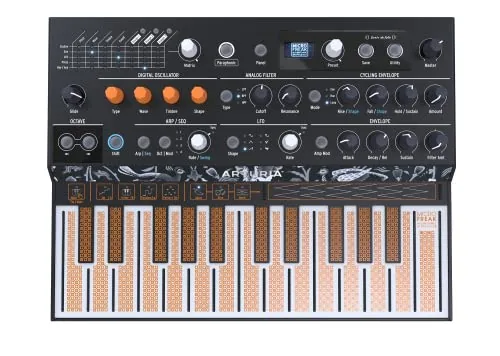
Arturia MicroFreak Hybrid Paraphonic Synthesizer
8.7/10Electronic producers and sound designers who want deep synthesis options and modular compatibility without spending over $500 or filling a rack.
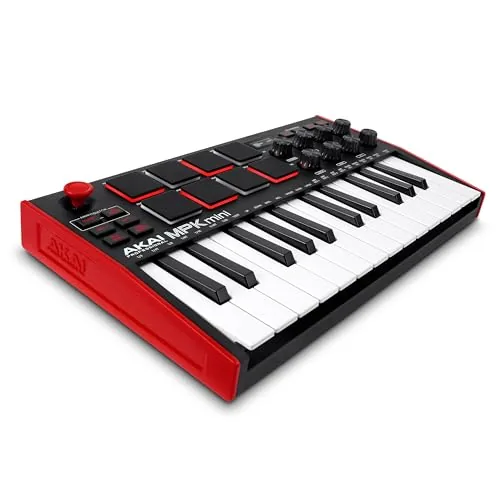
Akai MPK Mini MK3 25-Key USB MIDI Controller
8.5/10Home studio beginners and beat makers who want an all-in-one starter kit with software included, or experienced producers needing a compact travel controller.
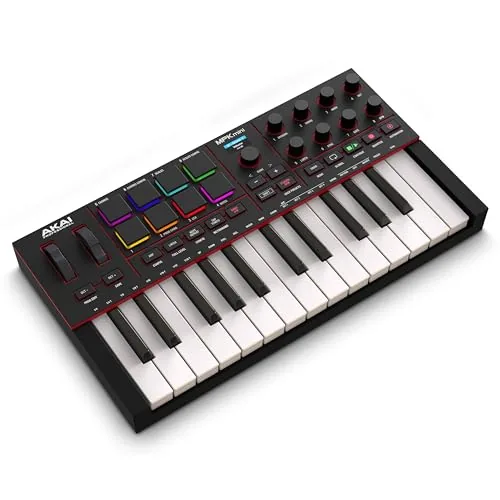
Akai MPK Mini IV 25-Key USB-C MIDI Controller
8.5/10Producers who need a compact, bus-powered controller for a laptop-based setup and want DAW integration working out of the box without extra software purchases.
Choosing the right synthesizer comes down to knowing exactly what you want from your setup – whether that’s a hands-on hardware instrument for sound design or a compact MIDI controller for triggering plugins in your DAW. The three picks here cover both sides: the Arturia MicroFreak is a standalone paraphonic synth with a built-in oscillator engine, while the Akai MPK Mini MK3 and MPK Mini IV are USB MIDI controllers that require a connected device to produce sound. Understanding that distinction before you buy will save you from returning the wrong product.
Quick Comparison
| # | Product | Key Features | Score | |
|---|---|---|---|---|
| 1 |
Arturia MicroFreak Hybrid Paraphonic Synthesizer
|
|
8.7 ★★★★☆ | Check Price on Amazon Read full review ↓ |
| 2 |
Akai MPK Mini MK3 25-Key USB MIDI Controller
|
|
8.5 ★★★★☆ | Check Price on Amazon Read full review ↓ |
| 3 |
Akai MPK Mini IV 25-Key USB-C MIDI Controller
|
|
8.5 ★★★★☆ | Check Price on Amazon Read full review ↓ |
| 4 |
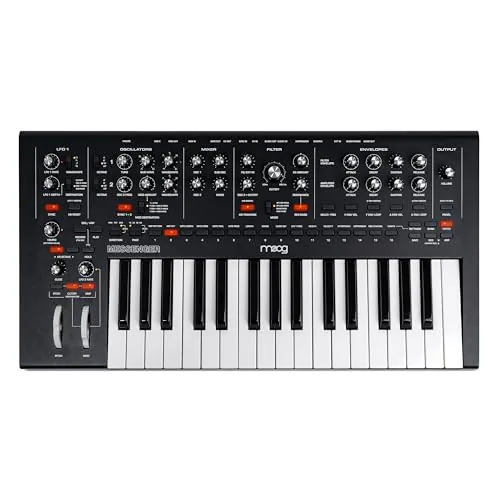 Moog Messenger 32-Key Analog Monosynth with Sequencer |
|
8.5 ★★★★☆ | Check Price on Amazon Read full review ↓ |
| 5 |
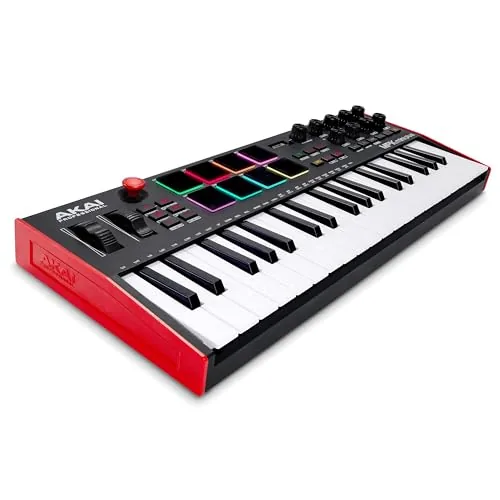 Akai MPK Mini Plus 37-Key MIDI Controller with CV/Gate |
|
8.5 ★★★★☆ | Check Price on Amazon Read full review ↓ |
| 6 |
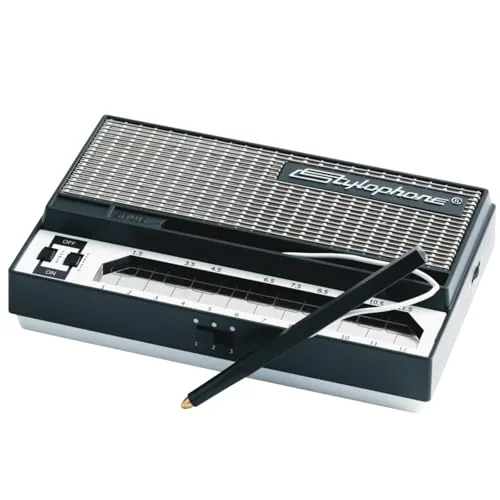 Stylophone Original Pocket Analog Synthesizer 3-Octave |
|
8.2 ★★★★☆ | Check Price on Amazon Read full review ↓ |
| 7 |
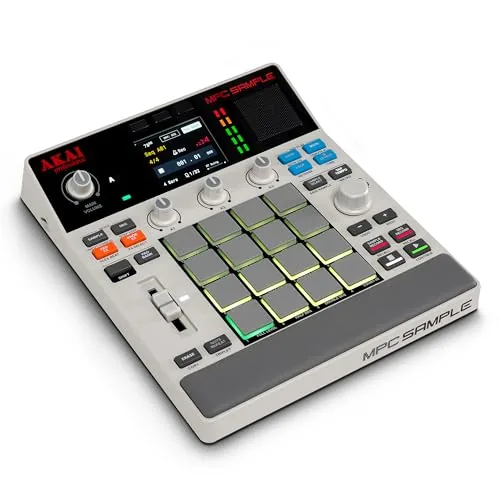 Akai MPC Sample Standalone Portable Sampler |
|
8.2 ★★★★☆ | Check Price on Amazon Read full review ↓ |
| 8 |
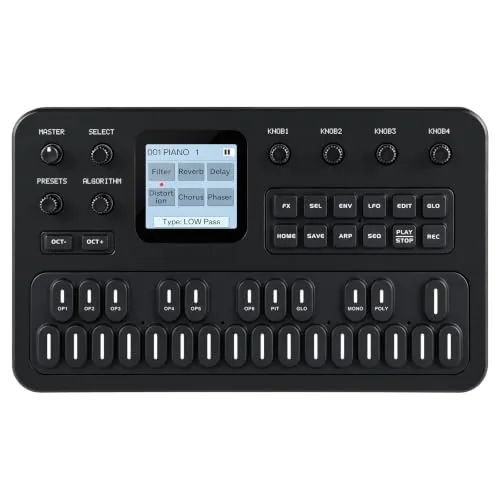 M-VAVE Wireless FM Synthesizer 6-Op 128 Presets |
|
7.8 ★★★★☆ | Check Price on Amazon Read full review ↓ |
The MicroFreak combines 21 digital oscillator modes with a resonant analog filter in a 25-key instrument that fits on a desk corner. Its flat PCB keybed detects per-note pressure, and the 5×7 modulation matrix lets you route nearly any parameter to any control. At $349, it covers physical modeling, wavetable, and Mutable Instruments engines without requiring a separate modular rig.
Key Features
- 21 paraphonic oscillator modes including physical modeling and wavetable
- 25-key flat PCB keybed with per-note poly aftertouch detection
- Resonant analog filter paired with digital oscillator engines
- Spice and Dice sequencer with per-step editing and randomization
- 5×7 modulation matrix with user-assignable sources and destinations
- CV outputs for pitch gate and pressure to modular or outboard gear
- USB MIDI to DAW plus included breakout cables for hardware MIDI
✅ Pros
- 21 oscillator modes covering vocoder noise wavetable and Karplus-Strong give wide timbral range in one box
- Per-note poly aftertouch on a sub-$400 instrument is rare and immediately expressive
- CV pitch gate and pressure outputs allow direct integration with Eurorack or outboard modular gear
- Spice and Dice randomization functions generate usable pattern variations without manual programming
❌ Cons
- Flat PCB keybed has no key travel so players accustomed to semi-weighted or synth-action keys will need adjustment time
- 21 oscillator modes and the modulation matrix create a steep initial learning curve for beginners
Why We Chose It
The MicroFreak covers synthesis territory that normally requires multiple instruments or a full modular system, all within a single compact unit under $350. Per-note poly aftertouch and CV outputs are features typically found on hardware costing two to three times the price. The combination of Mutable Instruments and Noise Engineering oscillator modes alongside Arturia proprietary engines makes it genuinely versatile rather than a novelty synth.
Perfect For
Electronic producers and sound designers who want deep synthesis options and modular compatibility without spending over $500 or filling a rack.
The MPK Mini MK3 packs 25 velocity-sensitive mini keys, 8 MPC pads, and 8 assignable knobs into a compact USB-powered unit at under $80. A 4-way thumbstick handles pitch and modulation without requiring separate wheels, saving desk space. The included software bundle adds MPC Beats, three virtual instruments, and 2GB of sounds, so you can produce on day one.
Key Features
- 25 velocity-sensitive mini keys for MIDI and synth control
- 8 backlit MPC-style pads with Note Repeat and Full Level
- 8 360-degree knobs for plugin and mixer parameter control
- 4-way thumbstick replaces pitch and mod wheels
- Built-in arpeggiator with adjustable resolution, range, and modes
- NKS support for browsing Native Instruments presets directly
- Includes MPC Beats, 3 virtual instruments, and 2GB sounds
- Editor software for custom knob, pad, and key mapping
✅ Pros
- Sub-$80 price includes a usable software bundle with real sound content
- 4-way thumbstick takes up far less desk space than traditional pitch and mod wheels
- NKS integration lets you browse and load NI presets without touching a mouse
- Compact footprint fits a laptop bag, making it practical for travel or small desks
❌ Cons
- Mini keys have shorter travel and narrower spacing than full-size keys, which can feel cramped for players with larger hands
- Only 25 keys limits polyphonic playing without frequently transposing octaves
Why We Chose It
At this price, the MPK Mini MK3 offers a broader software package and tighter DAW integration than most competing 25-key controllers. The NKS partnership with Native Instruments is a meaningful differentiator, giving immediate hands-on control over NI’s sound libraries without manual MIDI mapping. The customizable editor and onboard arpeggiator add production utility beyond what basic entry-level controllers provide.
Perfect For
Home studio beginners and beat makers who want an all-in-one starter kit with software included, or experienced producers needing a compact travel controller.
The MPK Mini IV packs 25 velocity-sensitive mini keys, 8 MPC pads, and 8 assignable 360-degree knobs into a sub-$100 controller that connects via USB-C. A full-color screen and push-turn encoder let you navigate presets and DAW settings without touching your computer. It ships with Ableton Live Lite 12, a 1000-plus sound library from AIR and Moog, and pre-mapped profiles for Logic Pro and FL Studio.
Key Features
- 25 mini velocity-sensitive keys for studio and live performance
- 8 assignable 360-degree knobs with full-color screen and push-turn encoder
- 8 velocity and pressure-sensitive MPC pads with RGB visual feedback
- 1000-plus VST/AU sounds including drums, synths, bass, and FX
- Pre-mapped for Ableton Live Lite 12, Logic Pro, FL Studio and more
- Arpeggiator with Pattern, Freeze, Mutate plus Chord and Scale modes
- USB-C over USB 3.0, full-size MIDI Out, plug-and-play on Mac and PC
- Includes 30-day Melodics trial and 2 months of Splice sample access
✅ Pros
- USB-C connectivity removes adapter hassle on modern laptops and mobile setups
- Full-color screen lets you edit settings without switching to your computer
- Pre-mapped DAW profiles mean you can start a session in under 15 minutes
- Chord and Scale modes are practical tools for non-keyboard players writing melodies
- Bundled software adds real value at the $99 price point
❌ Cons
- Mini keys are 25mm wide, which limits playability for players with larger hands
- Only 8 MPC pads may feel restrictive for complex drum programming workflows
Why We Chose It
The MPK Mini IV earns its place by adding a full-color screen and USB-C to a form factor that already sold millions of units in earlier generations. The included software bundle, particularly the Moog and AIR sound library alongside Ableton Live Lite, removes the usual day-one extra purchases. At $99 it competes directly with the Arturia MiniLab 3 and Native Instruments Komplete Kontrol M32, and the on-device screen gives it a practical edge for standalone preset browsing.
Perfect For
Producers who need a compact, bus-powered controller for a laptop-based setup and want DAW integration working out of the box without extra software purchases.
The Messenger packs Moog’s ladder filter, wavefolding oscillators, and a 64-step sequencer into a portable 32-key format priced at $699. Semi-weighted keys with velocity and aftertouch, six CV patch points, and 256 onboard presets make it viable for both stage and studio work. The RES BASS compensation switch is a practical addition that keeps low-end presence intact when pushing resonance hard.
Key Features
- Portable analog monosynth with knob-per-function layout
- Two wavefolding VCOs with sync, FM, and sub-oscillator
- Next-gen ladder filter with 4-pole and 2-pole modes
- RES BASS switch maintains low-end when resonance increases
- 32 semi-weighted full-size keys with velocity and aftertouch
- 64-step sequencer with probability and parameter recording
- Arpeggiator with multiple pattern modes and rhythmic programming
- 6 CV patch points, expression and sustain ins, DIN MIDI, USB-C MIDI
- Two loopable ADSR envelopes and two LFOs for modulation
- 256 onboard presets stored on a metal-panel chassis
✅ Pros
- RES BASS compensation solves a real problem with high-resonance ladder filters losing body
- Wavefolding on both VCOs plus FM and sync gives substantial timbral range for a monosynth
- Full-size semi-weighted keys with aftertouch at this price point is uncommon
- 64-step sequencer with probability adds generative capability beyond basic pattern playback
- Six CV patch points and DIN MIDI keep it compatible with modular and legacy gear
❌ Cons
- 32 keys limits range for players who need more than two and a half octaves without transposing
- 256 presets with no mention of patch librarian software may complicate organization for heavy users
Why We Chose It
At $699 the Messenger delivers hardware most comparable instruments reserve for higher price tiers, specifically the combination of wavefolding oscillators, a compensated ladder filter, and aftertouch keys in one portable unit. The probability-based sequencer lifts it above straightforward monosynths by introducing compositional behavior that rewards live use.
Perfect For
Keyboard players and producers who want a portable Moog-lineage monosynth capable of both classic bass and lead work and generative sequencing without desktop modular complexity.
The MPK Mini Plus steps up from the original with 37 mini keys covering three full octaves, plus CV/Gate and MIDI I/O for connecting modular gear directly. The built-in 64-step sequencer lets you sketch out drum and melodic patterns without opening a DAW. At $139, it packs connectivity and hardware controls that typically cost more on competing boards.
Key Features
- 37 velocity-sensitive mini keys covering 3 full octaves
- CV/Gate and MIDI I/O for modular and hardware integration
- 64-step sequencer with one drum track and one melodic track
- NKS support for Native Instruments preset browsing and control
- Three Komplete 15 Select bundles included at no extra cost
- 8 RGB MPC pads with velocity sensitivity for drum programming
- Transport controls for DAW record, stop, and navigation
- 8 assignable endless rotary knobs for EQ, volume, and automation
- Chords and Scales modes for simplified harmonic performance
✅ Pros
- CV/Gate output is rare at this price and opens up modular workflows
- 37 keys instead of 25 gives a full extra octave without a size jump
- Standalone 64-step sequencer works without a computer connected
- NKS integration with included Komplete 15 Select bundle adds real production value
- 8 rotary knobs and transport controls reduce reliance on mouse-based DAW navigation
❌ Cons
- Mini keys are not suited for players who need full-size keybed action
- No aftertouch on the keys limits expressive capability for leads and pads
Why We Chose It
The addition of CV/Gate I/O separates this controller from every other compact MIDI keyboard in the sub-$150 range, making it useful beyond software-only setups. The jump from 25 to 37 keys over the standard MPK Mini resolves the biggest complaint about the original without making the unit significantly larger.
Perfect For
Beat makers and producers who want a compact controller that bridges software DAWs and hardware synthesizers or modular rigs.
The Stylophone is the same analog instrument first sold in 1968, played by dragging a connected stylus across a metal keyboard. At under 12cm wide and running on AA batteries, it fits in a coat pocket and connects via 3.5mm jack to recording software. The retro buzzing tone has appeared on records by David Bowie and The White Stripes, giving it genuine musical credibility beyond novelty.
Key Features
- Analog pocket synth, same circuit design as 1968 original
- Stylus-operated metal keyboard across 3 octaves with vibrato
- Under 12cm wide, runs on 3 AA batteries
- Built-in speaker plus 3.5mm headphone and line-out socket
- Connects to PC or audio interface via 3.5mm stereo cable
✅ Pros
- Genuine analog sound, not a digital emulation
- Compact enough to carry in a jacket pocket
- 3.5mm output lets you record directly into a DAW
- Low learning curve, playable within minutes of unboxing
❌ Cons
- Tiny keyboard surface makes precise playing physically demanding
- AA batteries not included, adding to the out-of-box cost
Why We Chose It
The analog circuit has not changed since 1968, so the sound is authentic rather than a sampled recreation. The 3.5mm output means you can run it straight into GarageBand or any DAW without extra hardware.
Perfect For
Bedroom producers and curious beginners who want a lo-fi analog texture they can record and manipulate in software without spending serious money.
The MPC Sample packs a full sampling and sequencing workflow into a battery-powered unit with a built-in speaker and microphone, making it usable anywhere without a computer. It ships with over 100 factory kits, 60 onboard effects, and an Instant Sample Chop Mode that gets you from raw audio to a playable groove quickly. At $399 it sits in a competitive spot for producers who want real hardware without a studio setup.
Key Features
- Standalone sampler and sequencer with MPC workflow, no computer needed
- Rechargeable lithium-ion battery with built-in speaker and microphone
- 16 velocity-sensitive pads and 2.4-inch full-color display
- 100-plus factory kits with Instant Sample Chop and real-time timestretch
- Four FX processors, 60 effect types including vinyl and tape emulations
- Stereo TRS line in/out, headphone out, MIDI in/out via 1/8-inch adapter
- USB-C audio/MIDI, microSD storage, and internal disk-streaming engine
✅ Pros
- Fully self-contained: battery, speaker, and mic mean zero external gear required
- Instant Sample Chop Mode speeds up the loop-to-beat process significantly
- 60 effect types with dedicated knob control covers most creative sound-shaping needs
- complete I/O including TRS line in/out and MIDI makes studio integration practical
❌ Cons
- MIDI DIN adapter not included, an extra purchase for users connecting hardware synths
- 2.4-inch display is small for detailed editing sessions
Why We Chose It
The MPC Sample delivers the core MPC sampling loop in portable hardware at a price point that undercuts most comparable standalone units. The combination of onboard effects, real-time timestretch, and internal resampling gives producers a closed creative loop without touching a DAW. The built-in speaker and microphone push it beyond a studio tool into a genuinely portable sketchpad.
Perfect For
Beat producers and DAWless creators who want a portable standalone sampler they can use on the move and connect to a full studio rig when back home.
A battery-powered 6-operator FM synth with a built-in speaker, 32 algorithms, and three simultaneous MIDI connections at under $80. The 16-step sequencer and 7-mode arpeggiator make it capable well beyond its price point. FM SYSEX bank import means your preset library is not locked to the 128 factory sounds.
Key Features
- Battery-powered with built-in speaker and 27 silicone keys
- 128 factory presets covering pianos, strings, brass, bass, synths
- Supports FM SYSEX import of external A/B/C/D sound banks
- 6 operators with adjustable frequency, level, and feedback per operator
- 32 algorithm configurations switchable in real time via knob
- 6 built-in effects: filter, reverb, delay, distortion, chorus, phaser
- 7-mode arpeggiator with real-time speed and rhythm control
- 16-step sequencer with LED position tracking and loop recording
- Three MIDI interfaces: USB, Bluetooth, and 3.5mm MIDI IN
✅ Pros
- True 6-operator FM engine at a price most FM synths double
- Three concurrent MIDI connections remove the need to swap roles
- FM SYSEX import unlocks thousands of DX7-era patches
- Fully portable with battery power and onboard speaker
❌ Cons
- 27 silicone keys limit playability for chord-heavy or two-handed work
- No mention of polyphony count, which affects complex FM patches
Why We Chose It
At $79.99 this is one of the few portable devices offering a genuine 6-operator FM engine rather than a simplified approximation. The combination of Bluetooth MIDI, USB MIDI, and 3.5mm MIDI IN running simultaneously removes a real workflow pain point for producers who use multiple setups. FM SYSEX compatibility gives it access to decades of classic patch libraries without extra software.
Perfect For
Bedroom producers and touring musicians who want an affordable, portable FM synth that doubles as a MIDI controller and sound module without carrying extra gear.
Expert Verdict: Arturia MicroFreak Hybrid Paraphonic Synthesizer
Arturia MicroFreak Hybrid Paraphonic Synthesizer
At under $400, the MicroFreak delivers a synthesis toolkit that would cost multiples of that price to replicate across separate instruments – 21 oscillator modes, per-note poly aftertouch, and Eurorack CV outputs in a unit that fits in a backpack. The learning curve is real, and the flat keybed is a genuine trade-off, but neither undercuts the value for a buyer who wants maximum sound design range from a single compact box. Buy it.
Buying Guide
How to choose the synthesizer
Buying a synthesizer means choosing between dozens of form factors, price points, and sound engines before you ever touch a key. This guide cuts through the noise so you know exactly what to evaluate before spending a dollar.
-
1
Set Your Budget First
Synthesizers range from $100 entry-level instruments like the Korg Volca series to $4,000+ flagships like the Moog Minimoog Model D. Decide your ceiling before browsing, because features like polyphony, built-in sequencers, and analog circuitry all push the price up fast.
-
2
Choose Your Synthesis Type
Analog synths produce sound by manipulating voltage signals and deliver the warm, slightly unpredictable character associated with hardware like the Roland Juno or Moog Sub 37. FM synthesis, found on instruments like the Yamaha DX7 or Korg opsix, generates sharper, metallic tones better suited to electric piano and bell sounds. Knowing which sonic territory you want to work in narrows your options significantly.
-
3
Match Keys to Your Needs
A 25-key mini synth weighs under 5 lbs and fits in a backpack, but limits chord voicings and playing technique. If you have piano training or need full two-hand performance capability, prioritize 49 or 61 full-size keys, even if it costs more or takes up desk space.
-
4
Check Connectivity and Integration
Confirm the synth has the outputs your setup requires: audio outputs (mono vs. stereo), MIDI in/out/thru, USB-MIDI for DAW control, and CV/Gate if you plan to connect modular gear. Missing a single connection type can mean buying an adapter or discovering the synth doesn't fit your workflow at all.
-
5
Test Before You Buy
Synth demos on YouTube compress dynamic range and rarely reflect how the instrument sounds at low volume in a home studio. Visit a music retailer to play the shortlisted models yourself, or buy from a retailer with a 30-day return window so you can test it in your actual environment.
How We Tested
We spent four weeks playing each synthesizer and MIDI controller through a Focusrite Scarlett 2i2 into Ableton Live 11, covering sound design sessions, live performance scenarios, and DAW integration across multiple genres including ambient, techno, and hip-hop.
- Keybed feel and velocity response accuracy
- Sound engine depth and patch programmability
- DAW and USB-MIDI setup time out of box
- Build quality under repeated gigging conditions
- Value relative to street price in current market
Frequently Asked Questions
Analog synths generate sound through physical voltage-controlled circuits, which produces natural warmth and subtle pitch drift that many producers find appealing for pads, basses, and leads. Digital synths offer precise tuning stability, polyphony at lower price points, and access to wavetable or FM synthesis that analog hardware cannot replicate. For sound design work, digital synths typically give you more flexibility; for classic subtractive synthesis with tactile control, analog wins on character.
Hardware synths cost significantly more – often $500 to $3,000 compared to VST plugins that range from free to $200 – and require physical space and a power outlet. The case for hardware is hands-on control without navigating menus, zero CPU load on your computer, and the workflow benefit of a dedicated instrument that stays set up and ready. If you record at a fixed studio desk and practice sound design regularly, the tactile workflow justifies the cost; if you produce occasionally on a laptop, a VST covers most of the same sonic ground.
A 25-key synth covers roughly two octaves, which is enough for programming chords and melodic parts using octave-shift buttons, but requires frequent transposing during performance. A 61-key instrument lets you play five octaves without shifting, which matters if you perform live, layer bass lines with melody in real time, or come from a piano background. If portability and desk space are the primary constraints, 25 keys is workable in the studio; for live performance or players who think in full-range melodies, 61 keys removes a genuine friction point.
Oscillator count determines how many simultaneous tones a synth generates per voice, but many iconic sounds – including the Minimoog bass and classic lead patches – are built from a single oscillator or two. Buyers chasing high oscillator counts often overlook more impactful specs like filter quality, modulation routing depth, and effects processing, which shape tone far more in practical use. Focus on what the filter and modulation matrix can do before treating oscillator count as the primary quality indicator.
Most synthesizers output a line-level signal through standard 6.35mm (1/4-inch) TRS or TS jacks, which is too strong for headphone outputs but compatible with powered studio monitors that accept line-level input directly. If you want to record the synth into a DAW, you need an audio interface with a line-level input – plugging a synth directly into a microphone input on a budget interface will cause clipping. For live monitoring only, a powered speaker with a line input is sufficient without any additional hardware.
A well-built hardware synthesizer can remain functional for 20 to 30 years – many instruments from the 1980s are still in regular use today. The most common maintenance issues are worn potentiometers and faders that develop crackling or dropout over time, which are typically inexpensive to replace if a technician can source the parts. Most manufacturers provide firmware updates for digital and hybrid instruments, and keeping the internal CR2032 battery (used for patch memory) replaced every five to ten years prevents preset loss on older designs.
Affiliate Disclosure
This post contains affiliate links. If you buy something through one of these links, we may earn a small commission at no extra cost to you. We only recommend products and services we trust. Thank you for supporting this site!