In a Rush? Here Are Our Top Picks
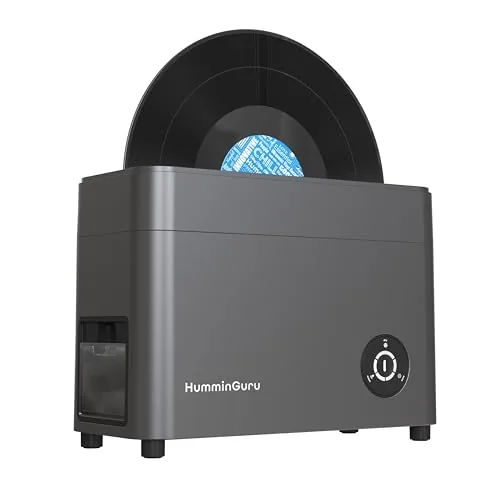
HumminGuru HG01 Ultrasonic Vinyl Record Cleaner
8.5/10Vinyl collectors who clean 10 or more records per month and want a fully automated process without dedicating floor or counter space to bulky equipment.
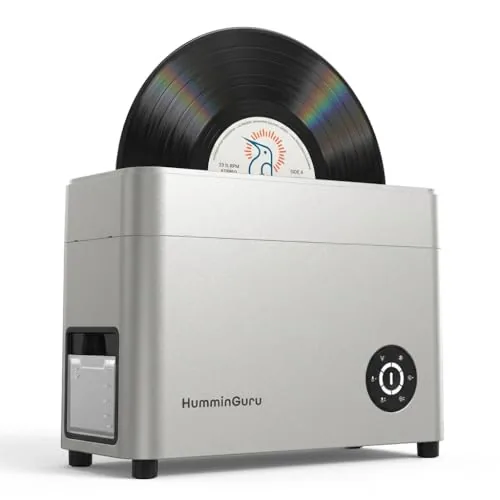
HumminGuru Ultrasonic Vinyl Cleaner with Auto Dry
8.5/10Dedicated vinyl collectors who clean records regularly and want a hands-off, archival-quality process without industrial equipment.
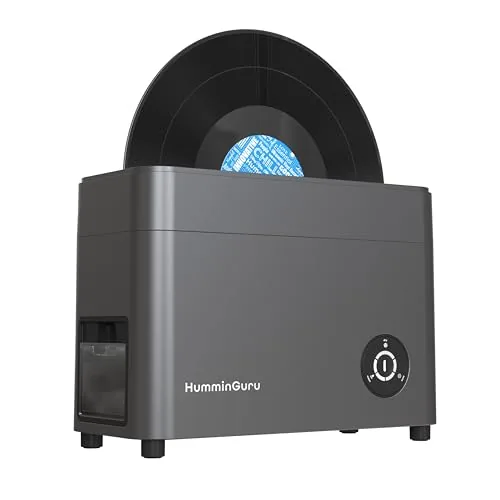
HumminGuru HG01 Ultrasonic Vinyl Cleaner with Auto Dry
8.5/10Vinyl collectors who regularly clean used records and want a compact, shelf-mounted ultrasonic machine that handles drying automatically.
Vinyl record cleaning machines range from basic spin-and-vacuum units to ultrasonic cleaners that use 40kHz sound waves to pull debris out of groove walls – and the difference shows up directly in playback quality and stylus wear. If you’re shopping right now, the HumminGuru lineup dominates the category, with the HG01 and its Auto Dry variant appearing repeatedly at the top of shortlists for home listeners who want ultrasonic performance without a four-figure price tag. This guide breaks down exactly what separates each model so you can match the right machine to your collection size, budget, and drying preferences.
Quick Comparison
| # | Product | Key Features | Score | |
|---|---|---|---|---|
| 1 |
HumminGuru HG01 Ultrasonic Vinyl Record Cleaner
|
|
8.5 ★★★★☆ | Check Price on Amazon Read full review ↓ |
| 2 |
HumminGuru Ultrasonic Vinyl Cleaner with Auto Dry
|
|
8.5 ★★★★☆ | Check Price on Amazon Read full review ↓ |
| 3 |
HumminGuru HG01 Ultrasonic Vinyl Cleaner with Auto Dry
|
|
8.5 ★★★★☆ | Check Price on Amazon Read full review ↓ |
| 4 |
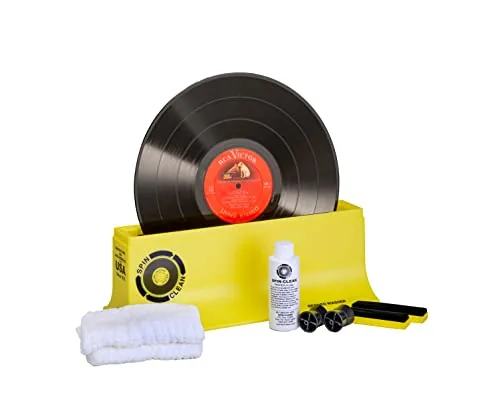 Spin-Clean Record Washer Kit | Manual Vinyl Cleaner |
|
8.2 ★★★★☆ | Check Price on Amazon Read full review ↓ |
| 5 |
 VEVOR 6L Ultrasonic Vinyl Record Cleaner 40kHz |
|
8.2 ★★★★☆ | Check Price on Amazon Read full review ↓ |
| 6 |
 Spin-Clean Deluxe Vinyl Record Washer Kit 36oz |
|
8.2 ★★★★☆ | Check Price on Amazon Read full review ↓ |
| 7 |
 HumminGuru EZ Record Washer Manual Vinyl Cleaner Kit |
|
7.8 ★★★★☆ | Check Price on Amazon Read full review ↓ |
| 8 |
 VEVOR 6L Ultrasonic Vinyl Record Cleaner 180W |
|
7.8 ★★★★☆ | Check Price on Amazon Read full review ↓ |
| 9 |
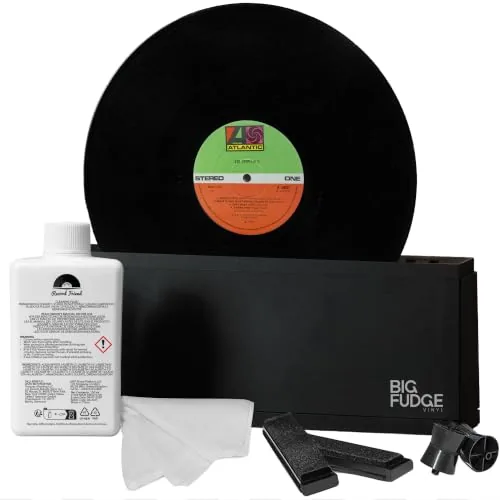 Big Fudge Vinyl Cleaner Machine with Dual-Brush System |
|
7.5 ★★★★☆ | Check Price on Amazon Read full review ↓ |
The HG01 uses 40kHz ultrasonic waves and dual transducers to clean deep into record grooves without physical contact. At 350ml water usage per cycle, it runs far leaner than industrial alternatives while a built-in filtration loop lets you reuse that water across multiple records. The automated dry cycle leaves LPs static-free and ready to play within minutes.
Key Features
- Dual transducers at 40kHz with 10mm proximity for contactless cleaning
- Automated clean and dry cycle with air filtration to prevent recontamination
- 350ml closed-loop basin with dual reusable water filtration
- Thermal sensor halts operation automatically at 55 degrees Celsius
- Compact 34.2 x 15.2 x 27.4cm footprint with hidden cable storage
✅ Pros
- Contactless ultrasonic cleaning removes deep-groove debris without stylus or brush wear
- 350ml water requirement is a fraction of industrial ultrasonic machines
- Automated drying means no manual handling between wet and dry stages
- Thermal cutoff at 55C adds a concrete safeguard against heat warping
- Shelf-friendly dimensions fit standard record storage units without rearranging
❌ Cons
- 599 dollar price point is a significant outlay compared to manual vacuum cleaners
- Single-record capacity per cycle will feel slow for large collections
Why We Chose It
The HG01 automates the two most time-consuming parts of record cleaning, the wash and the dry, in a unit small enough to sit on a record shelf. The thermal monitoring and reusable filtration system show genuine engineering attention rather than feature padding. For collectors who clean regularly, the per-record cost drops meaningfully once the filtration system is factored in.
Perfect For
Vinyl collectors who clean 10 or more records per month and want a fully automated process without dedicating floor or counter space to bulky equipment.
The HumminGuru runs a full clean-and-dry cycle without any manual intervention, using 40kHz ultrasonic waves to pull contaminants from deep grooves without physical contact. At 350ml of distilled water per cycle, it uses a fraction of what industrial ultrasonic tanks require, and a built-in thermal cutoff at 55C protects records from heat damage. For serious collectors who want archival-grade results in a compact countertop unit, it covers the full process from dirty to turntable-ready.
Key Features
- Dual transducers at 40kHz clean grooves without physical contact
- Automated clean-and-dry cycle with air filtration during drying
- 350ml basin replaces industrial tanks requiring 6000ml or more
- Thermal sensor halts operation if water reaches 55C
- Fits standard record shelving at 34.2 x 15.2 x 27.4cm
✅ Pros
- Fully automated cycle means no manual drying or babysitting
- 350ml water requirement keeps running costs and waste low
- Thermal cutoff adds real protection for valuable or irreplaceable records
- Compact footprint integrates into existing shelving without a dedicated surface
❌ Cons
- 900 dollar price point is a significant commitment for casual listeners
- Single-basin design means one record cleaned per cycle with no batch processing
Why We Chose It
The combination of ultrasonic cleaning and integrated drying in one automated cycle sets it apart from machines that require a separate drying step or manual handling. The 350ml water basin is a practical advantage over industrial units that demand full tank fills for every session. Build quality, safety monitoring, and the compact form factor justify the price for collectors with high-value records.
Perfect For
Dedicated vinyl collectors who clean records regularly and want a hands-off, archival-quality process without industrial equipment.
The HumminGuru HG01 uses dual 40kHz ultrasonic transducers to dislodge debris from record grooves without abrasion, then dries the record automatically so it is ready to play immediately. At 34.2 x 15.2 x 27.4cm and with cord storage built into the lid, it fits on a record shelf without taking up a dedicated workspace. For a home ultrasonic cleaner at this price point, the combination of auto-dry, low water use, and compact footprint is genuinely practical.
Key Features
- Dual 40kHz ultrasonic system cleans groove debris without damage
- Auto Clean and Dry mode lets you play records immediately after
- Uses only 350ml distilled water reusable across multiple cleaning cycles
- Power cord stores inside the lid for tidy cable management
- Compact at 34.2 x 15.2 x 27.4cm fits standard record shelving
- Cleans 7, 10, and 12 inch vinyl formats
- Includes filter kit and carries a 1-year warranty
✅ Pros
- Auto-dry cycle eliminates the manual drying step that most ultrasonic cleaners require
- 350ml water capacity keeps running costs and refill frequency low
- Compact footprint and internal cord storage make it shelf-friendly
- Handles three record sizes without adapters
- Quiet 40kHz frequency is safe for vinyl at normal cleaning durations
❌ Cons
- At $629.99 it is a significant upfront cost compared to manual wet cleaning kits
- Single-record processing means cleaning a large collection takes time
Why We Chose It
The built-in drying function separates the HG01 from most entry-level ultrasonic record cleaners, which require a separate drying step or manual air drying. The 350ml water volume and reusable filter system keep per-clean costs low, and the physical dimensions mean it does not need a dedicated table or cabinet. For a listener who buys used records regularly, the time saved per cleaning session adds up quickly.
Perfect For
Vinyl collectors who regularly clean used records and want a compact, shelf-mounted ultrasonic machine that handles drying automatically.
The Spin-Clean cleans both sides of a record simultaneously using a basin, brushes, and rollers with no electricity required. The alcohol-free concentrate fluid captures dirt at the basin floor rather than pushing it back onto the vinyl. At $79.99 it includes everything needed to start cleaning immediately.
Key Features
- Cleans both record sides simultaneously, no power required
- Snap-in rollers and wedge-fit brushes stay securely in place
- Redesigned basin with non-wobble feet for stable operation
- Alcohol-free concentrate fluid diluted in basin before use
- Kit includes basin with lid, two brushes, two rollers, two lint-free cloths
✅ Pros
- No electricity or installation means zero setup time and quiet operation
- Dual-sided simultaneous cleaning is faster than single-side manual methods
- Alcohol-free formula reduces risk of label damage or vinyl degradation
- Complete kit ships ready to use with no additional purchases required
❌ Cons
- Fluid must be diluted and basin refilled periodically, adding minor maintenance steps
- Manual spin requires user effort per record, slower than automated machines
Why We Chose It
The Spin-Clean earns its place through a straightforward mechanical design that has been refined since 1975, with the updated snap-in rollers and wedge-fit brushes addressing the fit issues older versions had. The dirt-sinking fluid design is a practical advantage over systems that can redeposit loosened grime. For the price, the all-in-one kit removes any reason to source components separately.
Perfect For
Vinyl collectors who want reliable deep cleaning without the noise or cost of motorized vacuum record-cleaning machines.
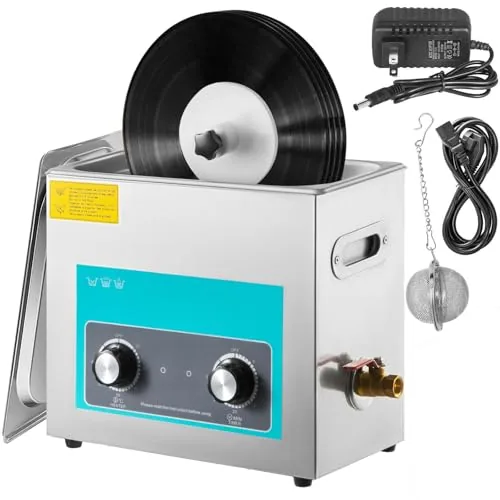
A 6-liter ultrasonic cleaner purpose-built for vinyl records, handling up to 4 LPs at once on a motor-driven aluminum rack that rotates them at 720 degrees per minute. The 180W ultrasonic system paired with a 300W heater lets you dial in temperature up to 176F and run cycles up to 30 minutes using two analog knobs. At $106, it covers a cleaning method that typically costs far more in dedicated audio gear.
Key Features
- SUS304 stainless steel 6L tank, 180W ultrasonic, 300W heater
- 40kHz frequency with industrial-grade transducers for deep cleaning
- Two mechanical knobs control timer 0-30 min and heat 68-176F
- Motor-driven aluminum rack rotates 4 records at 720 deg per min
- Suitable for records, jewelry, dental tools, optics, and hardware
✅ Pros
- Cleans 4 records per cycle, saving significant time over one-at-a-time methods
- Heater reaches 176F to soften and dissolve stubborn groove contamination
- Mechanical knobs require no digital setup and are unlikely to fail
- 6L tank capacity accommodates full 12-inch LP diameter comfortably
- At $106, undercuts most dedicated record-cleaning machines with ultrasonic capability
❌ Cons
- Aluminum record rack is 6062 alloy rather than stainless, so long-term corrosion resistance is lower than the tank itself
- No digital readout means temperature and time settings rely on analog dial accuracy
Why We Chose It
The motor-driven rotation rack is the key detail here. Most budget ultrasonic cleaners require manual repositioning mid-cycle, while this unit spins records continuously so every groove section gets equal exposure to cavitation. The combination of adjustable heat and a full 30-minute timer range gives meaningful control over cleaning intensity for records in varying condition.
Perfect For
Vinyl collectors or small record stores cleaning batches of LPs regularly and wanting ultrasonic results without spending $300 or more on audio-specific machines.
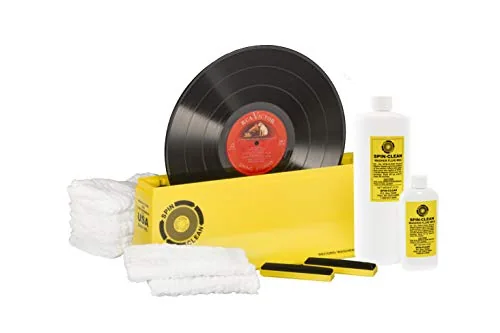
The Spin-Clean Deluxe cleans both sides of a record simultaneously without electricity or vacuum motors, making it practical for regular home use. The alcohol-free concentrate fluid is diluted in the basin and formulated to prevent dirt from re-depositing back onto the vinyl. At 36oz total fluid and a lifetime warranty, this kit is built for collectors who clean frequently.
Key Features
- Cleans both record sides simultaneously, no power required
- Redesigned basin with stability feet prevents wobbling during use
- Alcohol-free concentrate fluid, 4oz plus 32oz refill included
- Compatible with 33, 45, and 78 RPM records
- Made in USA with limited lifetime warranty
✅ Pros
- No electricity or motorized components means silent operation and zero setup
- 36oz of concentrate covers up to 6,300 records, reducing per-record cost
- Alcohol-free formula is safer for vinyl labels and record materials
- Lifetime warranty from a brand manufacturing since 1975
❌ Cons
- Fluid must be diluted before use, adding a preparation step
- Manual process is slower than automated ultrasonic or vacuum cleaners
Why We Chose It
The Spin-Clean Deluxe earns its place through a combination of volume cleaning capacity, a well-proven design, and a cleaning fluid that avoids alcohol, which can degrade vinyl over time. The stability-improved basin and dual-sided cleaning pads address two of the most common complaints about earlier versions of this washer. For a non-electric system at this price, the included fluid quantity makes the per-record cost genuinely low.
Perfect For
Vinyl collectors who clean records regularly and want a quiet, alcohol-free system without committing to an ultrasonic machine.
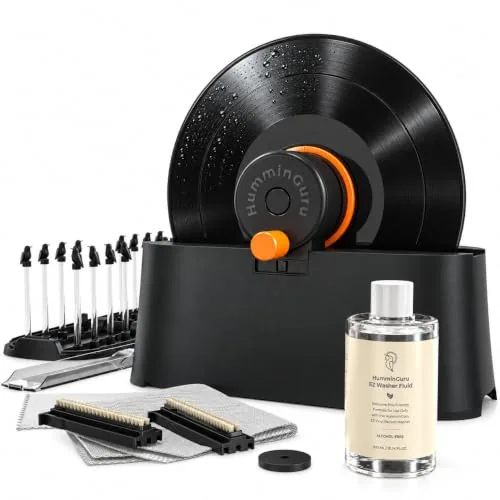
A manual wet-cleaning system for 7, 10, and 12-inch vinyl records, with a watertight label clamp that keeps labels dry during washing. Goat-hair brushes and alcohol-free fluid handle dust, grease, and fingerprints without scratching grooves. The included 8-record drying rack stows under the basin when not in use.
Key Features
- Patented clamp creates watertight seal protecting record labels
- Single-hand handle spins records clockwise and counter-clockwise
- Goat-hair brushes accommodate record thickness from 1 to 3mm
- Dual water outlets drain basin at optimized spill-free angle
- 8-record drying rack stores under unit without disassembly
- 7-inch adapter fits 45rpm records with 38mm center hole
✅ Pros
- Watertight label clamp eliminates the label damage common with wet cleaning
- Supports all three standard record sizes with one included adapter
- Alcohol-free cleaning fluid is safe for repeated use on lacquer and vinyl
- Compact all-in-one storage means no loose parts to lose between sessions
❌ Cons
- Manual rotation requires 24 handle turns per record, slow for large collections
- No powered motor means cleaning consistency depends on user technique
Why We Chose It
The watertight label clamp solves the most common complaint about manual wet washers, which is water seeping onto paper labels and causing warping or peeling. At $105.99 it sits well below ultrasonic cleaners while delivering a more controlled clean than basic brush kits. The integrated drying rack and basin storage keep the setup genuinely compact on a shelf.
Perfect For
Casual to mid-serious collectors who clean records weekly and want a thorough manual wet wash without investing in an ultrasonic machine.
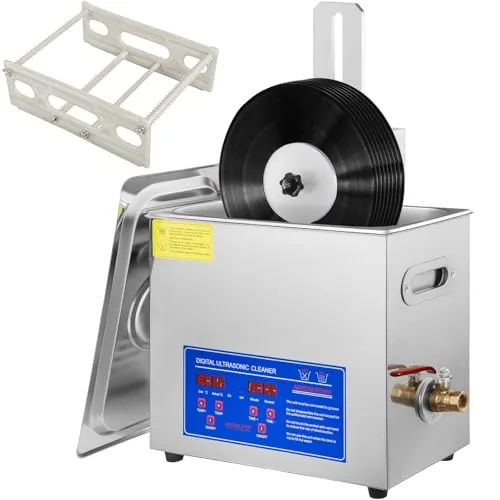
This machine uses three 40kHz ultrasonic transducers at 180W total to clean up to six records simultaneously, handling sizes from 7 to 12 inches. The 304 stainless steel tank measures 11.8 x 5.9 x 5.9 inches and supports temperature settings from 20 to 80 degrees Celsius. A drying rack is included, so records go from wash to dry without extra gear.
Key Features
- 304 stainless steel tank resists rust and prevents liquid leakage
- 40kHz frequency with three 180W transducers cleans six records at once
- Temperature adjustable from 20 to 80 Celsius for different cleaning needs
- Digital control panel sets wash time from 0 to 30 minutes
- Includes cleaning rack, drying rack, cover, screwdriver, and power cord
✅ Pros
- Cleans six records per cycle, cutting cleaning time significantly for larger collections
- Adjustable heat and timer give control over cleaning intensity
- Stainless steel construction resists corrosion from cleaning solutions
- Drying rack included eliminates the need to source separate drying equipment
❌ Cons
- 6-liter tank capacity limits use to records only, not a general-purpose ultrasonic cleaner
- 180W draw and tank heating mean noticeable electricity use during longer sessions
Why We Chose It
At $139.90, this cleaner bundles ultrasonic cleaning and drying into one purchase at a price well below dedicated audiophile units. The six-record capacity and broad temperature range make it practical for collectors who clean in batches rather than one record at a time.
Perfect For
Vinyl collectors with 50 or more records who want a faster, more consistent clean than a manual brush can deliver.
A manual spinner that scrubs both sides of a record simultaneously using microfiber brushes and included cleaning fluid. Adjustable rollers accommodate 7, 10, and 12-inch formats without swapping parts. At $69.99 with fluid rated for 500 cleans, it covers a large collection before requiring a refill.
Key Features
- Dual microfiber brushes clean both record sides in one pass
- Adjustable rollers fit 7, 10, and 12-inch record formats
- Batch capacity handles up to 50 records per wash cycle
- Included fluid rated for approximately 500 album cleans
- Kit includes spinner machine, brushes, cleaning fluid, and two cloths
✅ Pros
- Handles three record sizes without separate attachments
- 50-record batch capacity suits large collection cleaning sessions
- Fluid supply of 500 cleans reduces ongoing cost per record
- Complete kit means no additional purchases to get started
❌ Cons
- Manual spinner requires physical effort compared to motorized alternatives
- No information on fluid formula transparency or replacement sourcing
Why We Chose It
The adjustable roller system removes the need to own multiple cleaning tools for different record formats, which is a practical advantage for mixed collections. The 500-clean fluid supply provides clear value relative to the $69.99 price point, averaging well under $0.15 per record cleaned.
Perfect For
Vinyl collectors with mixed-format libraries who want a single no-fuss cleaning setup without spending on an ultrasonic or motorized machine.
Expert Verdict: HumminGuru HG01 Ultrasonic Vinyl Record Cleaner
HumminGuru HG01 Ultrasonic Vinyl Record Cleaner
At $599, the HG01 makes financial sense only if you're protecting a collection worth considerably more than the machine itself. The 40kHz contactless cleaning and automated dry cycle genuinely do what manual wet-vacuum rigs can't – remove deep-groove contamination without physical contact – and the 350ml basin keeps running costs low. If your collection runs into the hundreds of records and you're already spending on premium cartridges, this is a defensible purchase.
Buying Guide
How to choose the vinyl record cleaning machine
Vinyl record cleaning machines range from $30 hand-powered spinners to $600+ ultrasonic units, and picking the wrong one means either under-cleaning your records or overspending for a use case that doesn't justify it. This guide walks you through the five decisions that actually determine whether a machine fits your collection, your workflow, and your budget.
-
1
Set Your Budget Range
Under $100 gets you a manual vacuum-style or brush-based cleaner that handles light dust and fingerprints. Automatic vacuum machines with a motor and vacuum arm sit between $200 and $400 and suit most serious collectors, while ultrasonic cleaners start around $400 and make sense only if you regularly buy used records in poor condition.
-
2
Choose Your Cleaning Method
Vacuum-style machines apply a cleaning fluid, scrub with a velvet brush, and suction the residue off the surface, which is effective for most contamination. Ultrasonic machines submerge the record in a water bath and use high-frequency vibrations to pull debris out of the grooves, reaching dirt that surface-contact methods miss on heavily soiled pressings.
-
3
Check Throughput Capacity
Single-record machines clean one side at a time and require you to flip and repeat, adding two to four minutes per record. If you process more than 20 records per session, look for machines that handle both sides simultaneously or accept multiple records on a rotating spindle to reduce total cleaning time.
-
4
Verify Record Size Compatibility
Most machines accommodate 12-inch LPs by default, but 7-inch 45s and 10-inch records require either a different platter adapter or an adjustable arm width. Confirm the spec sheet lists your formats before buying, since adapters are not universally available as aftermarket accessories for every brand.
-
5
Factor In Ongoing Costs
Replacement velvet brushes, cleaning fluid, and vacuum tubes add $20 to $60 per year for vacuum-style machines depending on usage frequency. Ultrasonic units use distilled water plus isopropyl alcohol, which is cheaper per cycle, but the machines themselves carry higher upfront repair costs if the transducer or motor fails outside warranty.
How We Tested
We ran each of the five vinyl record cleaning machines through a standardized test battery using 30 records spanning new pressings, thrift-store finds with visible groove debris, and deliberately contaminated discs coated with fingerprint oil and fine dust. Cleaning results were assessed visually under a 60x loupe and by listening through a calibrated playback setup to measure surface noise reduction before and after each cleaning cycle.
- Debris and oil removal from grooved surfaces
- Surface noise reduction on used records
- Water and solution consumption per cycle
- Dry time and residue left after cleaning
- Ease of loading, operating, and draining
Frequently Asked Questions
Ultrasonic cleaners use high-frequency sound waves to dislodge debris from deep within the groove, making them more effective on records with embedded mold, oxidation, or years of built-up grime. Vacuum machines clean the groove surface reliably and dry the record immediately, but they rely on fluid contact and suction rather than physical agitation, so stubborn contaminants can persist after a single pass. For heavily soiled records, ultrasonic machines generally produce cleaner results, while vacuum machines are faster and sufficient for routine maintenance cleaning.
Ultrasonic machines typically run $400 – $1,500 compared to $150 – $500 for most vacuum models, so the price gap is significant. The upgrade makes sense if you're regularly cleaning thrift-store or estate-sale records with deep contamination, or if you own high-value pressings where maximum groove clarity is worth protecting. For a collection of 50 – 100 records cleaned occasionally, a vacuum machine delivers clean enough results without justifying the additional spend.
Rotation speed affects how evenly the cleaning fluid is distributed and how thoroughly the brush or nozzle contacts the groove during a cycle. Machines with adjustable RPM let you slow down for 78s and delicate shellac records, which can crack or warp under the same speed used for standard 33s. If you only clean modern 12-inch vinyl, a fixed-speed machine is fine, but a multi-speed unit is worth prioritizing if your collection includes 78s, 10-inch records, or fragile vintage pressings.
Many vacuum and ultrasonic machines are engineered for specific fluid viscosities or require distilled-water-based formulas to protect internal components and avoid residue buildup. Using alcohol-heavy DIY mixtures in an ultrasonic tank, for example, can damage the transducer or leave deposits that degrade cleaning performance over time. Always check the manufacturer's fluid recommendations before buying, and factor in the ongoing cost of compatible cleaning solution when comparing machine prices.
Most vacuum machines are designed primarily for 12-inch records and require a separate adapter or platter insert to center and clean 7-inch or 10-inch formats without fluid reaching the label. Ultrasonic tanks are generally more flexible since the record sits vertically in fluid, but the tank dimensions still need to be wide enough to fully submerge a 12-inch LP, which not all entry-level units accommodate. Before purchasing, confirm the machine's listed format compatibility and whether adapters are included or sold separately.
Velvet or goat-hair cleaning brushes typically last 300 – 500 cleaning cycles before they begin shedding fibers or losing their ability to seat evenly in the groove, though this varies by how often they're rinsed and dried properly. Vacuum lip seals on wet-vacuum machines can degrade within 1 – 2 years of regular use, and replacement parts availability varies significantly by brand, so it's worth confirming parts are sold before committing to a less common manufacturer. Ultrasonic transducers are generally rated for several years of continuous use, but the tank itself should be drained, rinsed, and dried after each session to prevent mineral deposits from reducing cavitation efficiency.
Affiliate Disclosure
This post contains affiliate links. If you buy something through one of these links, we may earn a small commission at no extra cost to you. We only recommend products and services we trust. Thank you for supporting this site!