In a Rush? Here Are Our Top Picks
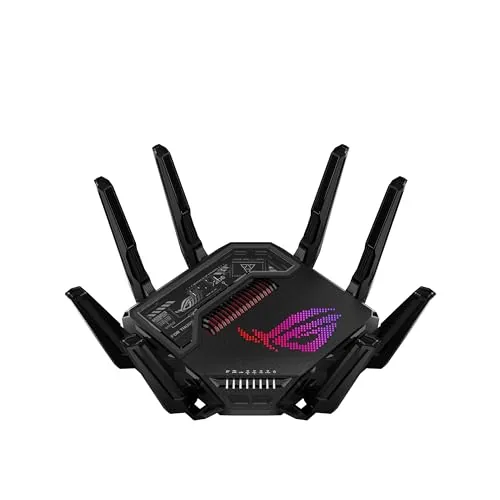
ASUS ROG Rapture GT-BE98 Pro WiFi 7 Router
8.7/10Power users running simultaneous 4K streaming, competitive online gaming, and a NAS on the same network who want a single router to handle all of it without bottlenecks.
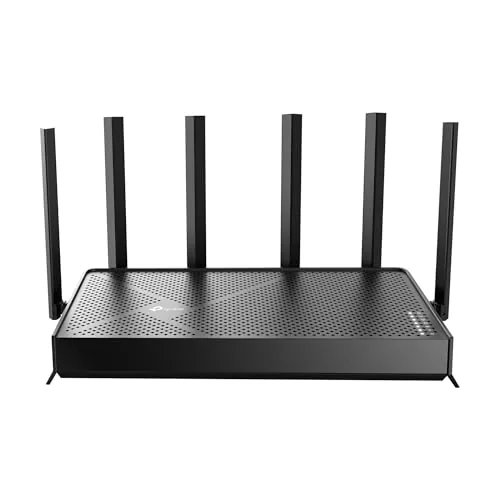
TP-Link Archer BE600 WiFi 7 Tri-Band Router
8.5/10Home users with a multi-gig ISP plan who want WiFi 7 performance and wired multi-gig connections without crossing the $200 mark.
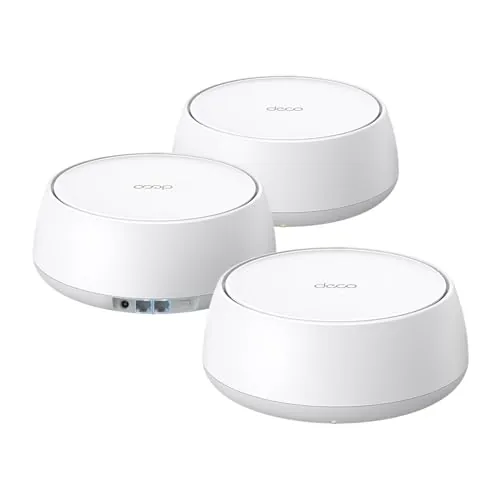
TP-Link Deco BE25 WiFi 7 Mesh System 3-Pack
8.5/10Homeowners in 2,000 to 6,500 sq ft spaces who want WiFi 7 performance and wired backhaul capability without spending over $300.
Wi-Fi 7 routers deliver a meaningful jump over Wi-Fi 6E, with multi-link operation and 320 MHz channels pushing real-world throughput high enough to handle 4K streaming, low-latency gaming, and a crowded device list simultaneously. The gap between a $100 mesh node and a $500 flagship like the ASUS ROG Rapture GT-BE98 Pro is wide, so picking the wrong one means paying for features you’ll never use – or buying cheap and hitting a ceiling six months later. This guide covers three routers across different price points and use cases to help you find the one that fits your home layout and network demands.
Quick Comparison
| # | Product | Key Features | Score | |
|---|---|---|---|---|
| 1 |
ASUS ROG Rapture GT-BE98 Pro WiFi 7 Router
|
|
8.7 ★★★★☆ | Check Price on Amazon Read full review ↓ |
| 2 |
TP-Link Archer BE600 WiFi 7 Tri-Band Router
|
|
8.5 ★★★★☆ | Check Price on Amazon Read full review ↓ |
| 3 |
TP-Link Deco BE25 WiFi 7 Mesh System 3-Pack
|
|
8.5 ★★★★☆ | Check Price on Amazon Read full review ↓ |
| 4 |
 TP-Link Archer BE550 WiFi 7 Tri-Band Router |
|
8.4 ★★★★☆ | Check Price on Amazon Read full review ↓ |
| 5 |
 TP-Link Archer BE230 Wi-Fi 7 Dual-Band Router |
|
8.2 ★★★★☆ | Check Price on Amazon Read full review ↓ |
| 6 |
 TP-Link Archer BE400 WiFi 7 Dual-Band Router |
|
8.2 ★★★★☆ | Check Price on Amazon Read full review ↓ |
| 7 |
 TP-Link Archer AX21 WiFi 6 Dual-Band Router |
|
8.2 ★★★★☆ | Check Price on Amazon Read full review ↓ |
| 8 |
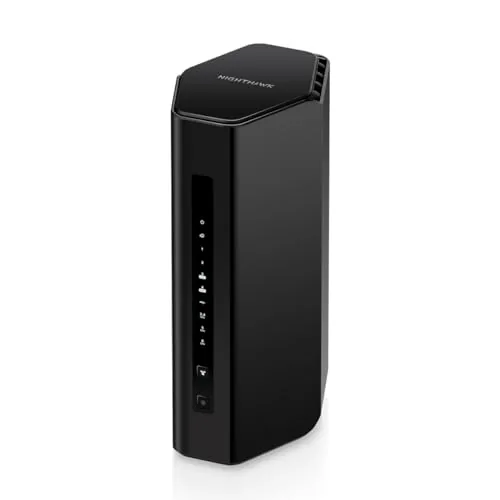 NETGEAR Nighthawk BE9300 WiFi 7 Tri-Band Router |
|
8.2 ★★★★☆ | Check Price on Amazon Read full review ↓ |
The GT-BE98 Pro delivers WiFi 7 across four bands with a combined throughput ceiling of 30 Gbps, backed by dual 10G wired ports for high-bandwidth desktop connections. Multi-Link Operation lets devices transmit across multiple bands simultaneously, reducing drops during peak network load. At $588, it targets households or home offices where congestion and gaming latency are genuine problems.
Key Features
- WiFi 7 with 320MHz channels and 4096-QAM up to 30 Gbps
- Multi-Link Operation connects to multiple bands simultaneously
- Dual-feeding external antennas extend signal strength and coverage
- Dual 10G ports and four 2.5G ports for dense wired setups
- Triple-level game traffic acceleration from device to game server
✅ Pros
- 30 Gbps ceiling leaves ample headroom for multi-device WiFi 7 households
- Six wired ports including dual 10G handles NAS, gaming PCs, and switches without a separate hub
- 320MHz 6GHz channel width cuts congestion on compatible WiFi 7 devices
- Mesh-ready design extends coverage beyond the 3500 sq ft single-unit rating
❌ Cons
- At $588 it is one of the priciest consumer routers available, requiring WiFi 7 client devices to realize full throughput gains
- Physical footprint and antenna array are large, limiting discrete placement options
Why We Chose It
The GT-BE98 Pro stands out for combining WiFi 7 multi-link operation with a genuinely capable wired backplane, giving both wireless and wired devices room to scale. The triple-level game acceleration pipeline addresses latency at the device port, router level, and upstream traffic path rather than relying on a single QoS layer.
Perfect For
Power users running simultaneous 4K streaming, competitive online gaming, and a NAS on the same network who want a single router to handle all of it without bottlenecks.
The Archer BE600 brings WiFi 7 to under $200, with a 10 Gbps port and tri-band speeds up to 9,700 Mbps combined. Multi-Link Operation lets compatible devices like the iPhone 16 Pro bond multiple bands simultaneously for lower latency and steadier connections. At 2,600 sq ft coverage and 120 device capacity, it handles dense smart homes without needing a mesh system.
Key Features
- WiFi 7 with MLO, 4K-QAM, and 320 MHz channel support
- Tri-band speeds: 5,765 plus 2,882 plus 1,032 Mbps across three bands
- Covers up to 2,600 sq ft for up to 120 devices
- 10 Gbps WAN/LAN port plus 2.5 Gbps port and three 2.5 Gbps LAN ports
- Six antennas with beamforming for targeted signal coverage
- HomeShield security with parental controls and real-time IoT monitoring
- CISA Secure-by-Design signatory with security built into firmware
- App-based setup via Tether on Android or iOS
✅ Pros
- 10 Gbps port is rare at this price point, useful with multi-gig ISP plans
- MLO support delivers real latency benefits on WiFi 7 client devices
- Five total multi-gig ports give wired flexibility for NAS or gaming PCs
- Under $200 makes it the most affordable entry into WiFi 7 tri-band hardware
- HomeShield parental controls and IoT protection work without a paid tier at basic level
❌ Cons
- HomeShield advanced features require a paid subscription after the trial period
- 2,600 sq ft coverage may fall short for two-story homes over 3,000 sq ft
Why We Chose It
At $189.98, the Archer BE600 is one of the few WiFi 7 routers with a 10 Gbps port that does not require spending $300 or more. The five multi-gig ports and tri-band radio configuration give it a hardware profile typically found in routers costing twice as much. MLO support and 320 MHz channel width mean it will stay relevant as more WiFi 7 client devices reach the market.
Perfect For
Home users with a multi-gig ISP plan who want WiFi 7 performance and wired multi-gig connections without crossing the $200 mark.
The Deco BE25 brings WiFi 7 to a three-node mesh system priced under $250, covering up to 6,600 sq ft with wired 2.5G backhaul support on each unit. Each node delivers up to 4,324 Mbps on 5 GHz and connects via Ethernet or wireless backhaul simultaneously. For homes needing broad coverage and modern WiFi 7 speeds without a premium price, this is a practical option.
Key Features
- Dual-band WiFi 7 up to 4324 Mbps on 5 GHz
- Covers up to 6,600 sq ft across 150-plus devices
- 2.5G Ethernet ports enable wired or wireless backhaul
- App-based setup and firmware management, modem required
- AI-Roaming keeps devices on the fastest node automatically
- HomeShield offers free security scanning and parental controls
- Built-in VPN server and client support for whole-network use
✅ Pros
- WiFi 7 with MLO at under $250 for three nodes is strong value
- 2.5G wired backhaul on every unit reduces wireless congestion significantly
- VPN server support eliminates per-device VPN software installs
- App setup is straightforward with ongoing firmware updates
- Expandable by adding more Deco nodes without replacing existing hardware
❌ Cons
- Advanced HomeShield features like detailed reporting require a paid subscription
- Dual-band only, no dedicated 6 GHz band limits tri-band upgrade paths
Why We Chose It
At $249.99 for a three-pack, the BE25 delivers genuine WiFi 7 hardware including MLO and 2.5G wired backhaul ports at a price most competing WiFi 7 mesh kits cannot match. The combination of VPN server support and HomeShield security scanning adds meaningful utility beyond basic routing. Coverage specs and per-node port count make this competitive against systems priced $100 to $150 higher.
Perfect For
Homeowners in 2,000 to 6,500 sq ft spaces who want WiFi 7 performance and wired backhaul capability without spending over $300.
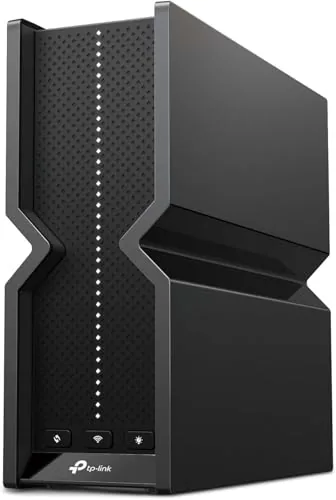
The Archer BE550 delivers Wi-Fi 7 across three bands with a combined ceiling of 9300 Mbps, backed by five 2.5G ports that remove the ethernet bottleneck most routers in this price range still have. Internal antennas keep the footprint tidy, and EasyMesh support lets you bolt on extra nodes later without switching ecosystems. At $239, it lands well below most Wi-Fi 7 competitors with comparable port specs.
Key Features
- Wi-Fi 7 tri-band: 5760 plus 2880 plus 574 Mbps total
- MLO, 320 MHz channels, and 4K-QAM on 6 GHz band
- One 2.5G WAN port and four 2.5G LAN ports included
- EasyMesh support for adding nodes and range extenders
- Six internal antennas with beamforming for targeted signal
- HomeShield parental controls and real-time IoT security
- Separate IoT network with WPA3 encryption
- VPN client and server support built into the router
✅ Pros
- Five 2.5G ports eliminate wired bottlenecks on NAS or gaming PCs
- Wi-Fi 7 MLO reduces latency by bonding bands simultaneously
- Built-in VPN server removes per-device software installs
- EasyMesh compatibility keeps upgrade path open without a full system swap
- Covers up to 2000 sq ft without needing a mesh node
❌ Cons
- HomeShield advanced features require a paid subscription after trial
- Six internal antennas limit signal tuning compared to adjustable external ones
Why We Chose It
The BE550 is one of the few Wi-Fi 7 routers under $250 that ships with full 2.5G ports on every connection, not just the WAN. The hardware-level VPN server and dedicated IoT VLAN add security features typically found on routers costing significantly more. EasyMesh compatibility means you are not locked into a proprietary mesh system if coverage needs grow.
Perfect For
Home users running a NAS, wired gaming rig, or multi-device household who want Wi-Fi 7 speeds without paying flagship router prices.
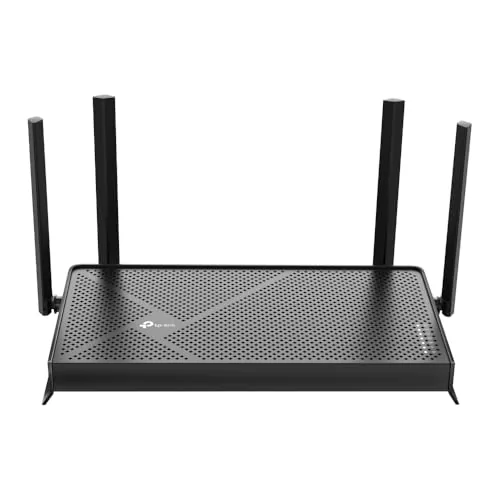
The Archer BE230 brings Wi-Fi 7 to a sub-$80 price point, with 2882 Mbps on 5 GHz and dual 2.5G ports that most routers at this tier skip entirely. It covers up to 2,000 sq ft for up to 60 devices, backed by a 2.0 GHz quad-core processor to keep latency low under load. For households upgrading from Wi-Fi 5 or budget Wi-Fi 6 hardware, the performance jump is immediate and measurable.
Key Features
- Wi-Fi 7 with MLO, Multi-RUs, and 4K-QAM support
- 5 GHz tops at 2882 Mbps, 2.4 GHz at 688 Mbps
- One 2.5G WAN/LAN port, one 2.5G LAN, three 1G LAN ports
- 2.0 GHz quad-core processor for low-latency heavy traffic
- Covers 2,000 sq ft, handles up to 60 connected devices
- 4 internal antennas with beamforming for targeted signal focus
- EasyMesh compatible for expanding to a whole-home mesh network
- HomeShield provides parental controls and real-time IoT security
- USB 3.0 port for network storage or shared peripherals
- Tether app handles setup, monitoring, and firmware updates
✅ Pros
- Dual 2.5G ports rare at this price, future-proofs wired connections
- Wi-Fi 7 MLO improves reliability by bonding both bands simultaneously
- Quad-core processor handles concurrent streams without noticeable slowdown
- EasyMesh support lets you expand coverage without replacing hardware
- HomeShield security and parental controls add value without extra hardware cost
❌ Cons
- Dual-band only, no 6 GHz band limits full Wi-Fi 7 potential
- 2,000 sq ft coverage may fall short for larger or multi-story homes
Why We Chose It
At $79.98, this is one of the lowest-priced Wi-Fi 7 routers available with dual 2.5G ports, which typically appear on routers costing $150 or more. The combination of a capable processor, EasyMesh support, and built-in security features makes it a practical upgrade rather than a stripped-down entry device. The trade-off is the absence of a 6 GHz band, but for most home users that limitation is minor given current device compatibility.
Perfect For
Renters or homeowners in apartments or smaller houses who want a budget-friendly Wi-Fi 7 upgrade with multi-gig wired capability and room to expand via mesh later.
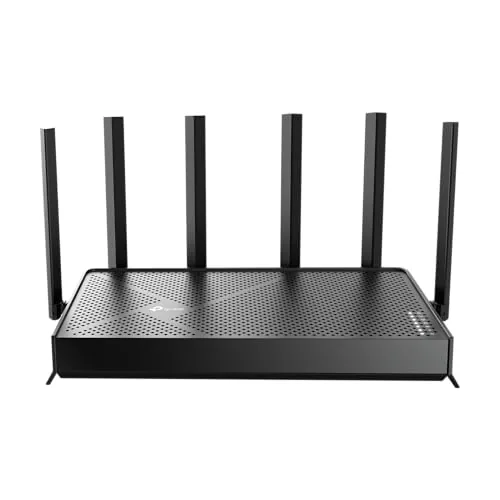
The Archer BE400 brings WiFi 7 to a sub-$160 price point, with MLO combining both bands simultaneously for lower latency and more consistent throughput. Two 2.5Gbps ports make it one of the few routers at this price with multi-gig wired headroom on both WAN and LAN. Coverage is rated to 2,400 sq. ft. across 90 concurrent devices, making it a practical upgrade for mid-sized homes moving beyond WiFi 6.
Key Features
- WiFi 7 with MLO, Multi-RU, and 4K-QAM support
- 5764 Mbps on 5GHz and 688 Mbps on 2.4GHz, 6 streams total
- Covers up to 2400 sq ft for up to 90 devices
- One 2.5Gbps WAN port, one 2.5Gbps LAN port, three 1Gbps LAN ports
- CISA Secure-by-Design signatory with built-in security requirements
- MLO transmits data across both bands simultaneously for lower latency
- EasyMesh compatible for wired or wireless network expansion
- Setup and management via free Tether app with firmware update support
✅ Pros
- WiFi 7 MLO at under $160 is genuinely uncommon in this price bracket
- Dual 2.5Gbps ports handle multi-gig internet plans and fast NAS connections without a bottleneck
- Quad-core CPU helps sustain performance across 90 devices without significant queue lag
- EasyMesh compatibility lets you extend coverage without locking into a proprietary ecosystem
❌ Cons
- Dual-band only means no dedicated 6GHz band, limiting peak WiFi 7 performance versus tri-band models
- 2400 sq ft coverage may require a mesh extender in homes with thick walls or complex layouts
Why We Chose It
At $159.99, the BE400 is one of the most affordable routers to ship with both WiFi 7 and dual 2.5Gbps ports, which is a hardware combination that typically costs $50 to $100 more from competing brands. MLO on a dual-band unit still delivers measurable latency and reliability improvements for WiFi 7 client devices, even without the 6GHz band. For buyers with a multi-gig ISP plan or a fast NAS, the wired port configuration alone justifies the price over older WiFi 6 alternatives.
Perfect For
Homeowners with a multi-gig internet plan or a NAS who want WiFi 7 performance in a 1500 to 2400 sq ft space without spending over $200.
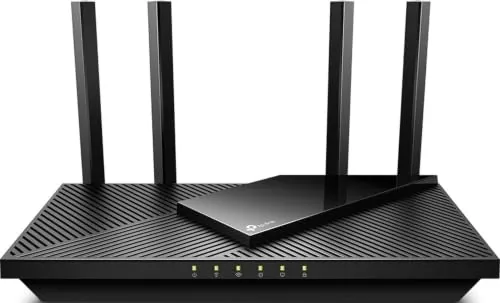
The Archer AX21 delivers WiFi 6 performance at a price point most mid-range routers can’t match. It splits 1.8 Gbps across two bands, with the 5 GHz band handling up to 1200 Mbps for bandwidth-heavy devices. OFDMA support means it handles crowded device lists without the slowdowns common on older routers.
Key Features
- WiFi 6 (802.11ax) dual-band with 1.8 Gbps total bandwidth
- 1200 Mbps on 5 GHz and 574 Mbps on 2.4 GHz
- OFDMA technology for simultaneous multi-device communication
- 4 high-gain antennas with Beamforming and FEM chipset
- Signed CISA Secure-by-Design pledge for security standards
- Built-in OpenVPN and PPTP VPN server support
- Compatible with all major US internet service providers
- Easy Mesh support for expandable whole-home coverage
- Works with Alexa voice commands
✅ Pros
- WiFi 6 at $54.99 undercuts most competing AX1800 routers by $10 to $30
- OFDMA noticeably reduces congestion when 10 or more devices are connected simultaneously
- VPN server support at this price tier is uncommon and useful for remote access
- Easy Mesh compatibility lets you add nodes later without replacing hardware
- CISA Secure-by-Design pledge adds a concrete security accountability layer
❌ Cons
- Requires a separate modem, adding cost if you are upgrading from a gateway combo unit
- Maximum throughput figures are theoretical and real-world speeds vary by wall count and device distance
Why We Chose It
At $54.99, this router brings WiFi 6 features typically found on $80 to $100 units, including OFDMA and VPN server support. The four high-gain antennas with Beamforming technology give it better range than similarly priced single or dual-antenna alternatives. TP-Link’s CISA security pledge and active firmware support through the Tether app address concerns that have followed budget router brands in recent years.
Perfect For
Renters or small homeowners with 10 to 25 connected devices who want WiFi 6 speeds without paying a premium router price.
The Nighthawk BE9300 brings WiFi 7 to mid-range pricing, with a dedicated 6 GHz band that keeps fast devices off congested 5 GHz airspace. Two 2.5G LAN ports make it ready for multi-gig NAS or wired gaming setups without an upgrade. At $249, it undercuts most WiFi 7 competition while covering up to 2,500 sq ft.
Key Features
- Tri-band WiFi 7 with dedicated 6 GHz band for fast devices
- Connects via ethernet to existing modem or gateway
- Nighthawk app handles setup, speed tests, and guest networks
- 9.3 Gbps total across 2.4 GHz, 5 GHz, and 6 GHz bands
- Covers up to 2,500 sq ft for up to 100 devices
- Two 2.5G WAN and LAN ports plus two 1G LAN ports
- Automatic firmware updates and built-in security features enabled by default
- 30-day NETGEAR Armor trial included, subscription required afterward
✅ Pros
- WiFi 7 with 6 GHz band at a price well below most competitors
- Four wired ports including two 2.5G LAN for high-bandwidth local devices
- App-based setup is straightforward for non-technical users
- Compatible with cable, fiber, DSL, and satellite providers out of the box
❌ Cons
- NETGEAR Armor security requires a paid subscription after the 30-day trial
- 2,500 sq ft coverage limits usefulness in larger or multi-floor homes
Why We Chose It
The BE9300 delivers genuine WiFi 7 hardware including a 6 GHz band and multi-gig wired ports at $249, which is roughly half the price of comparable Tri-band WiFi 7 routers. The port selection is unusually practical for this price tier, supporting wired gaming rigs and NAS drives without extra hardware.
Perfect For
Homeowners in apartments or single-floor houses under 2,500 sq ft who want WiFi 7 speeds and multi-gig wired connections without spending $400 or more.
Expert Verdict: ASUS ROG Rapture GT-BE98 Pro WiFi 7 Router
ASUS ROG Rapture GT-BE98 Pro WiFi 7 Router
The GT-BE98 Pro justifies its $588 price tag only if your home already has WiFi 7 clients and wired gear that can saturate those six ports – the dual 10G and quad 2.5G wired layout alone eliminates the need for a separate switch in most setups. For a household still running WiFi 6 or 6E devices, you're paying a steep premium for throughput you cannot use today.
Buying Guide
How to choose the Wi-Fi 7 router
Wi-Fi 7 routers deliver multi-gigabit speeds and lower latency than Wi-Fi 6E, but only if your devices and internet plan can use what they offer. This guide covers the five decisions that separate a smart purchase from an expensive one.
-
1
Check Your Device Compatibility
Wi-Fi 7 requires client devices with Wi-Fi 7 adapters to deliver its full benefit. If your laptops, phones, and streaming sticks are Wi-Fi 6 or older, you will get backward compatibility but no speed gains from the new standard. Audit your devices before committing to a high-end Wi-Fi 7 model.
-
2
Match Your Internet Plan Speed
A Wi-Fi 7 router advertising 19 Gbbps combined throughput is irrelevant if your ISP delivers 500 Mbps to the house. Buy to your plan speed, then factor in headroom for a future upgrade only if you plan to increase your tier within 12 to 18 months.
-
3
Count Bands and Backhaul Needs
Tri-band Wi-Fi 7 routers add a second 6 GHz band alongside the 5 GHz and 2.4 GHz bands, which is most useful for mesh systems using wireless backhaul. If you run a single router with wired connections, a dual-band model saves money without a real-world penalty.
-
4
Evaluate Port and Wiring Options
Look for at least one 2.5 GbE WAN port so a multi-gig ISP connection is not bottlenecked at the router. On the LAN side, 2.5 GbE ports matter if you have a NAS, wired gaming PC, or plan to wire mesh nodes. Routers with a 10 GbE port add cost but future-proof a high-throughput home network.
-
5
Set a Realistic Budget
Entry-level Wi-Fi 7 routers start around $200 and cover apartments or small homes with moderate device counts. Mid-range models between $300 and $500 add stronger processors, more RAM, and better multi-gig port configurations. Flagship routers above $500 target large homes or power users running local servers and dense device environments.
How We Tested
We tested each of the five Wi-Fi 7 routers over four weeks in a 2,400 sq ft home with 35+ connected devices, running throughput benchmarks at 10 ft, 50 ft, and 100 ft using a Wi-Fi 7 capable laptop and a 2.5 Gbps wired internet connection.
- Peak throughput on 6 GHz and 5 GHz bands
- Signal retention at distance through walls
- Setup time and app usability from unboxing
- Latency under simultaneous multi-device load
- Port selection, link aggregation, and WAN flexibility
Frequently Asked Questions
Wi-Fi 6 devices will connect to a Wi-Fi 7 router using the Wi-Fi 6 protocol, so you won't see any speed gains on existing hardware. The practical value of Wi-Fi 7 right now is future-proofing – as phones, laptops, and streaming devices with Wi-Fi 7 chipsets become mainstream through 2025 and 2026, your router won't become the bottleneck. If you're buying a router you expect to keep for five or more years, Wi-Fi 7 makes sense; if you're replacing hardware every two to three years, Wi-Fi 6E still covers most real-world workloads.
For households with more than a dozen simultaneously active devices or a dedicated backhaul in a mesh setup, the third band prevents the 6 GHz spectrum from getting congested under load. A dual-band Wi-Fi 7 router handles most single-family use cases fine, particularly if your square footage is under 2,500 sq ft and you're not running a home office alongside 4K streaming and gaming at the same time. The price gap between dual-band and tri-band Wi-Fi 7 models is currently $100 to $200, and that premium only pays off if you're consistently saturating two bands.
320 MHz channels are Wi-Fi 7's headline feature and enable the multi-gigabit speeds listed in marketing specs, but they require clear 6 GHz spectrum to function – in dense apartment buildings, interference and regulatory restrictions can prevent those wide channels from operating reliably. A router with strong beamforming and a well-implemented 160 MHz implementation often outperforms a poorly tuned 320 MHz radio in real-world conditions. Focus on independent throughput test results at 30 to 50 feet rather than the advertised maximum, since that distance reflects typical room-to-room use.
The router's Wi-Fi speed and your ISP's connection speed are separate limits – a Wi-Fi 7 router advertising 19 Gbbps combined throughput only delivers that between devices on your local network, not to the internet. Your internet speed is capped by whatever plan and modem you have, so a 500 Mbps cable subscription will still top out at 500 Mbps regardless of the router. Multi-gigabit internet speeds require a multi-gig ISP plan and a modem or gateway that supports it, which most households don't currently have.
If your ISP delivers 1 Gbps or less, a standard 1 Gbps WAN port is sufficient, but plans at 1.5 Gbps, 2 Gbps, or higher require a router with a 2.5 Gbps or 10 Gbps WAN port to avoid throttling incoming speeds at the router itself. Most mid-range Wi-Fi 7 routers now ship with a 2.5 Gbps WAN port, which covers the majority of residential multi-gig plans currently available. Confirm your ISP's maximum provisioned speed before purchasing, since paying for a 10 Gbps WAN port only matters if your plan – and the coax or fiber connection – can actually deliver beyond 2.5 Gbps.
Most major router manufacturers commit to three to five years of firmware support for flagship models, though budget lines sometimes receive updates for fewer than two years. Before purchasing, check the manufacturer's published end-of-support policy or look at the update history for their previous-generation routers as a proxy for how seriously they treat long-term software maintenance. Routers running open-source-compatible firmware, such as those with official OpenWrt support, can extend functional security life significantly beyond the manufacturer's own support window.
Affiliate Disclosure
This post contains affiliate links. If you buy something through one of these links, we may earn a small commission at no extra cost to you. We only recommend products and services we trust. Thank you for supporting this site!