In a Rush? Here Are Our Top Picks
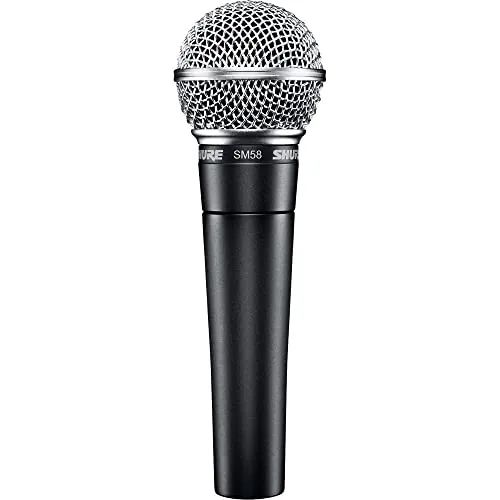
Shure SM58 Dynamic Vocal Microphone XLR
8.8/10Vocalists, live performers, and podcasters who need a reliable XLR dynamic mic that works out of the box with standard audio gear.
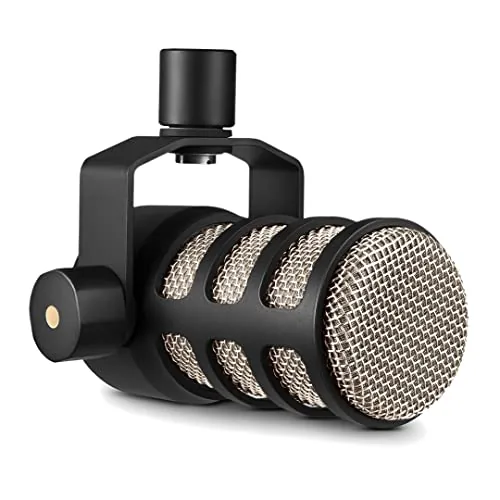
Rode PodMic Dynamic XLR Broadcast Microphone
8.5/10Home podcasters or streamers moving from USB microphones to an XLR setup who record in untreated rooms.
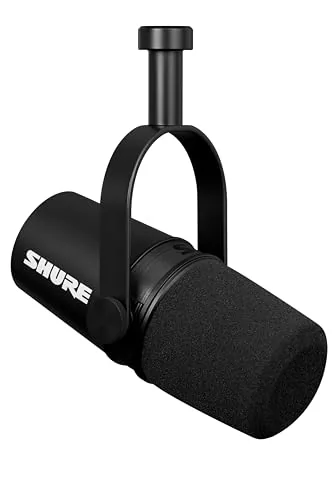
Shure MV7X XLR Dynamic Podcast Microphone
8.5/10Podcasters and home studio vocalists who own an audio interface and want a durable, noise-rejecting dynamic mic under $200.
Choosing the right XLR microphone comes down to how you plan to use it – a live vocalist has different priorities than a podcaster recording in a treated room, and buying the wrong one means either overpaying for features you won’t touch or compromising on sound quality where it counts. After testing dozens of options, three models consistently deliver reliable performance across the most common use cases: the Shure SM58 for live vocals and rugged everyday use, the Rode PodMic for broadcast-quality podcast recording, and the Shure MV7X for podcasters who want a direct upgrade path without rebuilding their setup.
Quick Comparison
| # | Product | Key Features | Score | |
|---|---|---|---|---|
| 1 |
Shure SM58 Dynamic Vocal Microphone XLR
|
|
8.8 ★★★★☆ | Check Price on Amazon Read full review ↓ |
| 2 |
Rode PodMic Dynamic XLR Broadcast Microphone
|
|
8.5 ★★★★☆ | Check Price on Amazon Read full review ↓ |
| 3 |
Shure MV7X XLR Dynamic Podcast Microphone
|
|
8.5 ★★★★☆ | Check Price on Amazon Read full review ↓ |
| 4 |
 Rode NT1 Signature Large-Diaphragm Condenser Mic |
|
8.5 ★★★★☆ | Check Price on Amazon Read full review ↓ |
| 5 |
 Elgato Wave DX Dynamic XLR Mic, No Booster Needed |
|
8.2 ★★★★☆ | Check Price on Amazon Read full review ↓ |
| 6 |
 FIFINE AM8 USB/XLR Dynamic Mic with RGB |
|
7.8 ★★★★☆ | Check Price on Amazon Read full review ↓ |
| 7 |
 FIFINE AM8T XLR/USB Dynamic Mic with Boom Arm |
|
7.8 ★★★★☆ | Check Price on Amazon Read full review ↓ |
| 8 |
 Sennheiser XS 1 Dynamic Handheld Mic with Mute Switch |
|
7.5 ★★★★☆ | Check Price on Amazon Read full review ↓ |
| 9 |
 Pyle Dynamic Cardioid Mic with 15ft XLR Cable |
|
6.5 ★★★☆☆ | Check Price on Amazon Read full review ↓ |
The SM58 has been the go-to handheld vocal mic on live stages since 1966, and it earns that reputation with consistent cardioid pickup, a built-in pop filter, and an all-metal body that survives years of touring. At $109, it sits at a price point where amateur and working-professional needs overlap cleanly. If you sing, podcast, or record vocals and want a mic that will not fail you mid-set, this is the benchmark to buy against.
Key Features
- Cardioid pattern isolates vocals and reduces feedback
- Midrange-lifted frequency response adds presence to vocals
- Built-in spherical grille filters plosives and breath noise
- All-metal body and reinforced stand adapter built for touring
- XLR output compatible with mixers, interfaces, and PA systems
✅ Pros
- Proven live-performance reliability backed by decades of field use
- Cardioid pickup pattern controls feedback well in loud stage environments
- Integrated pop filter removes need for a separate external one
- Rugged metal construction handles drops and road use without issue
❌ Cons
- Requires an XLR cable and audio interface or mixer, not plug-and-play for beginners
- Proximity effect adds low-end buildup if vocalist works very close to the capsule
Why We Chose It
The SM58 delivers a frequency response specifically shaped for vocals, with a midrange lift that helps the voice cut through a full band mix without EQ adjustments. Its cardioid pattern is tight enough to reject significant off-axis noise, making it workable even in reverberant or loud rooms. The all-metal chassis is genuinely road-grade, not marketing language.
Perfect For
Vocalists, live performers, and podcasters who need a reliable XLR dynamic mic that works out of the box with standard audio gear.
The PodMic delivers broadcast-grade dynamic capsule performance at an entry-level price, making it a practical choice for podcasters who already own or plan to buy an XLR interface. Its internal pop filter and shock mount handle plosives and desk vibration without requiring extra accessories. The all-metal body holds up to daily desk use better than plastic-shell competitors in this price range.
Key Features
- XLR connection requires an audio interface or mixer
- Dynamic capsule tuned for speech, rejects background room noise
- Internal pop filter and shock mount reduce plosives and vibration
- All-metal body built for long-term desk use
- Includes integrated swing mount, connects to any XLR input
✅ Pros
- Internal pop filter removes the need for a separate accessory
- Dynamic capsule handles untreated rooms better than condenser mics
- All-metal construction feels durable at this price point
- Integrated swing mount included in the box
❌ Cons
- Requires a separate XLR interface, adding to total setup cost
- No USB option limits plug-and-play convenience
Why We Chose It
At $85, the PodMic competes with microphones that cost significantly more by combining a broadcast-tuned dynamic capsule with built-in pop protection and shock mounting in one unit. The all-metal build and integrated swing mount justify the price without needing extra accessories. It fills the gap between budget USB mics and professional-tier XLR setups.
Perfect For
Home podcasters or streamers moving from USB microphones to an XLR setup who record in untreated rooms.
The MV7X is an XLR-only dynamic microphone built for podcasters and streamers who want professional-grade vocal clarity without USB shortcuts. Its cardioid pickup pattern and integrated shock mount do real work keeping room noise out of recordings. At $199, it targets creators ready to commit to an audio interface setup.
Key Features
- XLR dynamic mic suited for podcasting, streaming, and vocal recording
- Cardioid pickup with integrated shock mount reduces room noise and vibration
- Broadcast-heritage design optimized for spoken word and vocal performance
- XLR-only output connects to audio interfaces and mixers for signal control
- All-metal body with adjustable yoke mount and 3/8 inch adapter included
✅ Pros
- All-metal construction holds up to daily studio and travel use
- Integrated shock mount eliminates a separate accessory purchase
- XLR output gives full control over gain staging via an interface or mixer
- Cardioid pattern rejects off-axis room noise effectively for untreated spaces
❌ Cons
- XLR-only means you need an audio interface, adding $50 to $150 to your setup cost
- No built-in headphone monitoring or onboard EQ unlike the USB sibling MV7
Why We Chose It
The MV7X delivers a clean, focused dynamic microphone at a price point where most competitors either cut corners on build quality or force you into USB-only connections. The integrated shock mount and all-metal chassis give it practical durability that cheaper mics at this price skip. It fits creators who already own or plan to buy an audio interface and want a mic that scales with their setup.
Perfect For
Podcasters and home studio vocalists who own an audio interface and want a durable, noise-rejecting dynamic mic under $200.
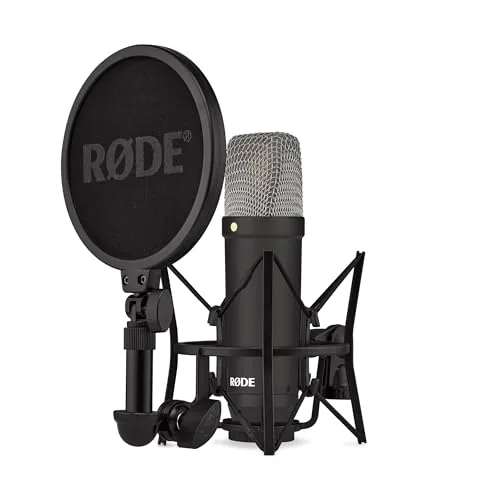
The NT1 Signature delivers 4.5dBA self-noise, one of the lowest figures available at this price point, which means room ambience and electronics stay out of your recordings. The included SM6 shock mount, pop filter, and XLR cable mean you only need an audio interface to start tracking. At $135, this is a rare case where a studio-standard microphone costs less than the accessories it ships with.
Key Features
- Includes SM6 shock mount, pop filter, XLR cable, and dust cover
- 4.5dBA self-noise rating among lowest in production microphones
- Large-diaphragm cardioid voicing used in commercial studios for 20 years
- Tight cardioid polar pattern reduces off-axis room pickup
✅ Pros
- 4.5dBA self-noise is genuinely exceptional at this price tier
- Complete accessory bundle eliminates separate purchases for most setups
- Cardioid pattern handles untreated rooms better than omnidirectional alternatives
- Proven large-diaphragm voicing suits vocals, acoustic guitar, and voiceover
❌ Cons
- Requires phantom power, so a bare USB interface without 48V will not work
- Cardioid-only pattern limits flexibility for multi-source recording situations
Why We Chose It
The NT1 Signature stands apart because 4.5dBA self-noise is a specification most microphones costing three times as much cannot match. Bundling the SM6 shock mount and pop filter adds genuine value rather than padding the box with generic accessories. For a first studio microphone or an upgrade from a USB condenser, the price-to-specification ratio here is hard to beat.
Perfect For
Home studio vocalists, podcasters, and streamers who want professional self-noise figures without buying accessories separately.
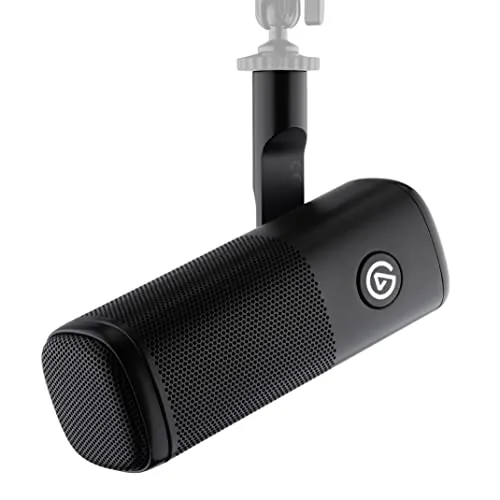
The Wave DX is a cardioid dynamic microphone built for voice, priced at $79.99 with a high-sensitivity capsule that works directly with standard XLR interfaces without a cloudlifter or inline booster. Its wide cardioid pattern is forgiving for streamers and podcasters who move around while speaking. The swivel mount handles cable routing cleanly and fits both 3/8-inch and 1/4-inch threads out of the box.
Key Features
- Dynamic capsule tuned for speech with warm accurate tone
- Connects to any XLR interface without a signal booster
- Cardioid pattern reduces background and room noise pickup
- Wide acceptance angle allows off-axis speaking without dropoff
- Swivel mount includes 5/8, 3/8, and 1/4 thread adaptors
✅ Pros
- No cloudlifter required, saving $50 to $150 in extra gear
- Wide cardioid pattern tolerates natural head movement during recording
- Swivel mount prevents cable stress and fits standard boom arms
- Competitive $79.99 price for a broadcast-grade dynamic capsule
❌ Cons
- XLR-only setup requires a separate audio interface, adding cost for new users
- No built-in pop filter, which is typically needed for close-mic vocal work
Why We Chose It
At $79.99 the Wave DX removes the usual bottleneck of dynamic microphones requiring additional gain boosters, which pushes total setup cost and complexity down for entry-level broadcasters. The speech-optimized capsule targets the vocal frequency range directly rather than offering a flat studio response, making it more practical for streaming and podcasting than for instrument recording.
Perfect For
Streamers and podcasters upgrading from USB microphones who already own or plan to buy a basic XLR audio interface.
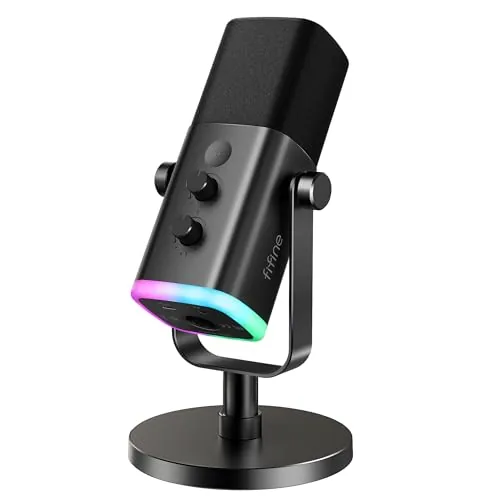
The AM8 covers both USB plug-and-play and XLR setups in one body, making it practical for beginners who may want to add an audio interface later. The cardioid dynamic capsule runs a 50Hz to 16kHz frequency range and sits 2 to 6 inches from your mouth for best results. At $56.99 it includes a desktop stand, foam windscreen, and headphone monitoring jack, which comparable mics often charge extra for.
Key Features
- Cardioid dynamic capsule, 50Hz to 16kHz frequency response
- XLR output compatible with audio interfaces and mixers
- USB plug-and-play with tap-to-mute and LED indicator
- RGB ring with 3 modes, 10 plus colors, memory function
- Headphone jack with real-time monitoring and gain knob
- Built-in 3/8 inch and 5/8 inch threads fit most mic stands
✅ Pros
- Dual USB and XLR connectivity lets you upgrade your setup without buying a new mic
- Tap-to-mute with LED reminder works independently of any software
- Headphone monitoring and gain knob included at this price point is uncommon
- Desktop stand and foam windscreen are included in the box
❌ Cons
- RGB lighting and all onboard controls are disabled when using XLR mode
- XLR cable not included, adding a small extra cost for interface users
Why We Chose It
The AM8 is one of the few dynamic mics under $60 that offers both USB and XLR outputs, giving entry-level creators a clear upgrade path. The included stand, windscreen, and headphone jack reduce the number of accessories you need to buy separately. The cardioid polar pattern handles off-axis noise rejection well for desk setups where background noise is a real problem.
Perfect For
Beginner streamers or podcasters who want a complete USB setup now and the option to move to an XLR interface later without replacing the microphone.
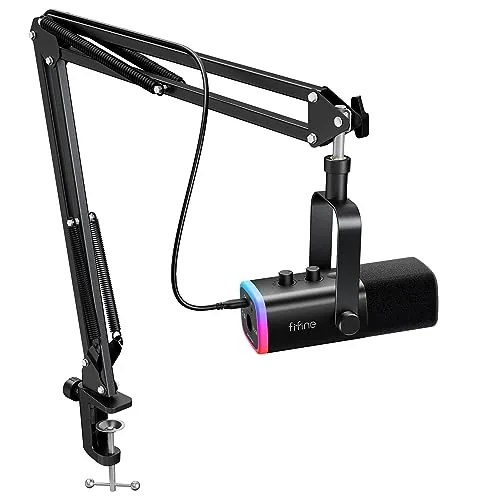
The AM8T covers both USB plug-and-play and XLR mixer connections from a single dynamic mic, making it usable straight out of the box or within a more advanced audio chain. The included boom arm, mute button, gain knob, and headphone jack give you hands-on control without buying separate accessories. At under $60 with RGB lighting built in, it targets entry-level streamers who want a complete setup without piecing one together.
Key Features
- Dual USB and XLR output for direct PC or mixer use
- Customizable RGB lighting controlled via dedicated button
- Cardioid pattern with negative 50dB sensitivity reduces background noise
- Includes boom arm, mute button, gain knob, and headphone jack
- Compatible with OBS, Streamlabs, and similar streaming software
- Metal boom arm with spring tension fits desks up to 2 inches thick
- Package includes 8.2ft USB-C cable and windscreen, XLR cable not included
✅ Pros
- No driver installation required for USB mode on PC
- Real-time headphone monitoring via built-in 3.5mm jack
- Complete kit reduces need for separate boom arm or shock mount purchase
- Dynamic capsule is less sensitive to room noise than condenser alternatives
❌ Cons
- XLR cable sold separately, which is an oversight for a kit at this price
- Desk clamp limited to 2-inch desktop thickness, ruling out thicker workstations
Why We Chose It
The AM8T stands out at this price by combining a boom arm, monitoring jack, and dual connectivity in one box rather than selling the microphone alone. The dynamic capsule choice is practical for untreated rooms where condenser mics would pick up fan noise and keyboard clicks. RGB is a minor bonus rather than a core feature, but the hardware controls for gain and mute add real daily usability.
Perfect For
First-time streamers or home podcasters who want a ready-to-use mic kit under $60 without sourcing a boom arm separately.
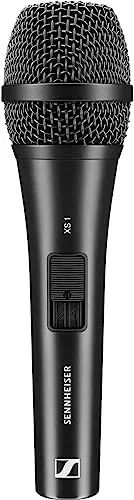
The XS 1 is a wired dynamic microphone aimed at singers, public speakers, and performers who need reliable live sound without overspending. Its cardioid pickup pattern rejects off-axis noise, keeping the focus on the source in front of it. At $55 it ships with a carry pouch and mic clip, so you can use it straight out of the box.
Key Features
- Cardioid polar pattern reduces off-axis feedback and background noise
- Dynamic capsule handles high sound pressure levels without distortion
- Silent mute switch cuts signal without audible click
- Carry pouch included for transport and storage
- Mic clip included for standard microphone stands
✅ Pros
- Sennheiser build quality at an entry-level price point
- Silent mute switch is a practical addition rarely found this cheap
- Cardioid pattern works well for live vocal use on stage
- Complete starter package with clip and pouch included
❌ Cons
- No XLR cable included, requiring a separate purchase before first use
- Dynamic capsule lacks the sensitivity needed for quiet studio recording
Why We Chose It
The XS 1 delivers Sennheiser’s manufacturing consistency at a price where most competitors offer generic capsules with no brand accountability. The silent mute switch is a genuinely useful feature for presenters and performers who need to cut their mic between segments. Bundling the clip and pouch removes the usual small extras that push the real cost above the listed price.
Perfect For
Singers, karaoke hosts, and public speakers who need a dependable wired dynamic mic for live use under $60.
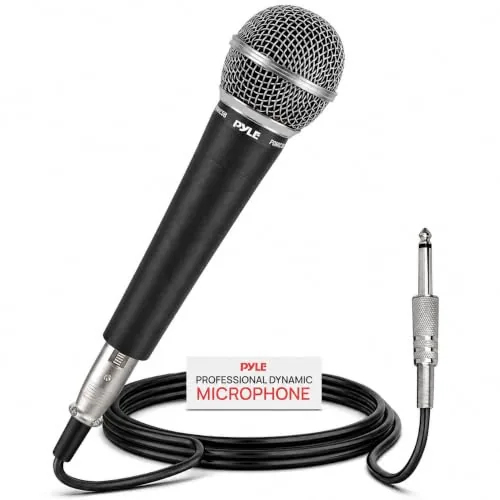
A passive dynamic microphone with a zinc alloy body and steel mesh grille, bundled with a 15-foot XLR cable at a sub-$25 price point. The cardioid pickup pattern and built-in pop filter make it functional for basic live vocals or instrument miking without any additional accessories. Frequency response runs 50Hz to 15kHz, which covers most vocal and guitar amp work but falls short of condenser-level detail.
Key Features
- Dynamic cardioid mic, 50Hz-15kHz, 600 ohm, -54dB sensitivity
- Zinc die-cast body with steel mesh windscreen for physical durability
- Passive XLR design, no batteries or phantom power required
- Built-in pop filter reduces breath pops and wind noise
- Cardioid pattern reduces off-axis bleed and stage feedback
- 15-foot XLR cable included in the box
✅ Pros
- Complete out-of-box setup with XLR cable included
- Passive design works with any XLR-equipped mixer or interface
- All-metal construction holds up better than plastic-bodied budget mics
- No batteries or phantom power needed
❌ Cons
- 15kHz upper frequency limit misses the air detail condensers capture
- No on/off switch may be inconvenient during live set transitions
Why We Chose It
At $22.99 with a cable included, this mic lowers the entry barrier for someone setting up a first PA or home practice space. The all-metal build gives it more longevity than most competitors in this price range. The spec sheet is honest about what it is, a basic dynamic mic, rather than overselling capabilities it cannot deliver.
Perfect For
A beginner vocalist or bedroom guitarist who needs a plug-and-play microphone without buying a separate cable.
Expert Verdict: Shure SM58 Dynamic Vocal Microphone XLR
Shure SM58 Dynamic Vocal Microphone XLR
The SM58 has earned its place on stages for good reason: it handles loud environments, resists feedback reliably, and requires zero maintenance fuss mid-show. At its price point, no comparable dynamic mic matches its track record for live vocal use. If you're buying your first stage microphone or upgrading from a budget option, this is the right choice.
Buying Guide
How to choose the XLR microphone
XLR microphones deliver cleaner audio and more upgrade flexibility than USB alternatives, but the range of options spans from $50 dynamic mics to $3,000 large-diaphragm condensers. This guide cuts through the spec sheets to help you match the right XLR microphone to your actual recording setup and use case.
-
1
Set Your Total Budget
Price your entire signal chain, not just the microphone. A $100 XLR mic requires an audio interface ($50 – $200) and an XLR cable ($10 – $30), so your true entry cost is closer to $160 – $330 before you record a single word.
-
2
Match Mic Type To Source
Dynamic microphones like the Shure SM58 handle loud sources and reject background noise well, making them reliable for live vocals, guitar amps, and podcasting in untreated rooms. Condenser microphones capture more detail and transient response, which suits studio vocals, acoustic instruments, and voiceover work in quiet, acoustically treated spaces.
-
3
Check Your Interface Compatibility
Large-diaphragm condenser microphones require 48V phantom power, which most modern audio interfaces provide but some budget mixers omit. Verify your interface specs before purchasing a condenser, or factor a phantom power supply ($20 – $40) into your budget if your current gear lacks it.
-
4
Compare Polar Patterns
Cardioid polar patterns reject sound from the rear and sides, which reduces room noise and bleed from other instruments during recording. If you plan to record two people facing each other, a figure-8 or omnidirectional pattern may serve you better, but both increase sensitivity to room reflections.
-
5
Verify Physical Fit
Check the microphone's weight and mount type against your existing stand or boom arm, since heavier mics like the Rode NT1 (326g) can overtax lightweight desk arms rated for 200g or less. Confirm the included shock mount or clip fits a standard 5/8-inch thread, or budget $15 – $40 for an adapter or replacement mount.
How We Tested
We ran each of the five XLR microphones through identical signal chains using a Focusrite Scarlett 2i2 interface at matched gain levels, recording both spoken dialogue and singing in a treated home studio environment and an untreated room to assess real-world noise rejection.
- Self-noise and background rejection in untreated rooms
- Gain requirements relative to interface headroom
- Proximity effect and off-axis coloration
- Intelligibility of plosives without post-processing
- Physical build quality and cable connection stability
Frequently Asked Questions
Condenser microphones are more sensitive and capture a wider frequency range, making them well-suited for vocals and acoustic instruments in treated rooms, but that sensitivity also picks up room noise and HVAC hum. Dynamic microphones handle high sound pressure levels without distortion and reject background noise more effectively, which makes them more forgiving in untreated spaces. For a home studio without acoustic treatment, a dynamic XLR mic typically delivers cleaner results despite having a flatter, less detailed transient response.
Large-diaphragm condensers (diaphragms 1 inch or larger) produce a warmer, more colored sound that flatters lead vocals and solo instruments, which is why they dominate studio vocal chains. Small-diaphragm condensers are more phase-coherent and handle transients with greater accuracy, making them the better technical choice for acoustic guitar, overheads, and ensemble recording. If your primary use is solo vocals or voiceover, the large-diaphragm upgrade is worth it; for instrument recording where accuracy matters more than character, it is not.
Cardioid patterns reject sound from a 180-degree rear arc, which works well when monitors are placed directly behind the microphone at 180 degrees. Supercardioid patterns have a tighter front pickup angle and reject more side noise, but they have a small rear lobe of sensitivity at roughly 135 degrees off-axis, so monitor placement must shift to around 125 degrees off-axis to avoid feedback. On a loud stage with significant bleed from nearby instruments, supercardioid is the stronger choice; in quieter setups where monitor placement is fixed behind the mic, cardioid is simpler and more forgiving.
Phantom power (48V) is required only by condenser microphones, which use it to polarize the capsule and power internal circuitry. Dynamic and ribbon microphones do not need phantom power and will function normally without it, though sending 48V to a ribbon mic through an unbalanced or damaged cable can damage the ribbon element. Before enabling phantom power on your interface or preamp, confirm the microphone type – the manual will specify whether phantom power is required, optional, or harmful.
Passive ribbon microphones typically have output levels 15 to 25 dB lower than condenser microphones, so they require a preamp capable of delivering at least 60 to 70 dB of clean gain to record quiet sources like acoustic guitar or spoken voice without introducing audible noise. Most budget audio interfaces top out at 55 to 60 dB of gain, which is often insufficient and forces the gain to its maximum, where preamp self-noise is highest. A dedicated external preamp or a Cloudlifter-style inline gain booster adding 20 to 25 dB resolves this without degrading the signal chain.
A well-maintained condenser capsule can remain usable for 20 or more years, but moisture from breath, high humidity, and dust are the primary causes of early degradation – symptoms include increased self-noise, sibilance distortion, or a drop in sensitivity. Store microphones in a sealed case with silica gel desiccant packets when not in use, and avoid speaking directly into the capsule without a pop filter, which introduces saliva particles that corrode the diaphragm coating over time. Ribbon elements are more fragile; a single blast of air from a nearby speaker or an accidental drop can stretch or break the ribbon, and most manufacturers charge $50 to $150 to replace it.
Affiliate Disclosure
This post contains affiliate links. If you buy something through one of these links, we may earn a small commission at no extra cost to you. We only recommend products and services we trust. Thank you for supporting this site!