In a Rush? Here Are Our Top Picks
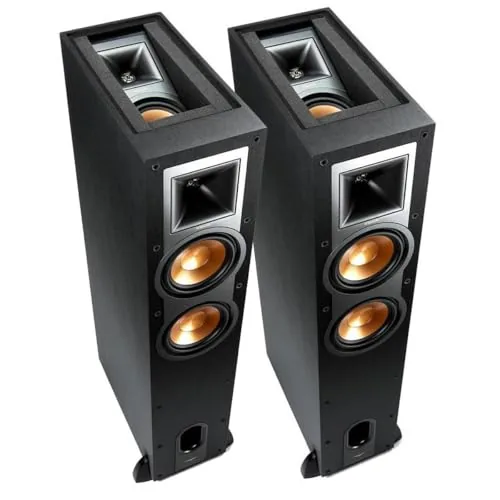
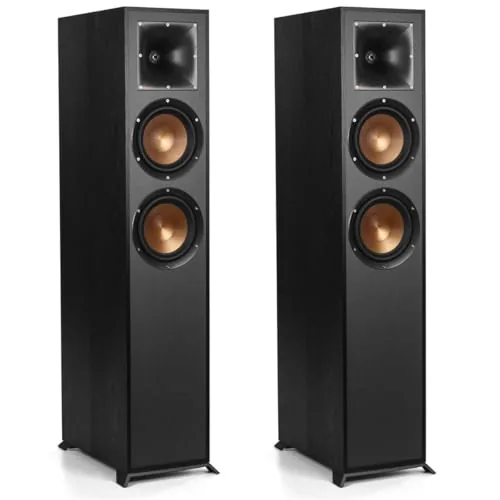
Klipsch R-26FA Dolby Atmos Floorstanding Speaker Pair
8.5/10Home theater builders who want a 5.1.2 or 7.1.2 Dolby Atmos system without running wire to ceiling speakers.
Klipsch R-620F Floorstanding Speaker Pair 400W
8.5/10Home theater or stereo listeners in mid-size rooms who want full-range sound without adding a separate subwoofer.
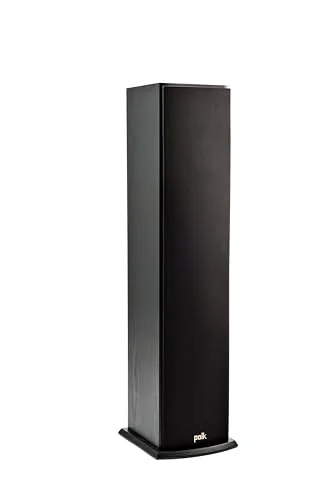
Polk Audio T50 Tower Speaker with Deep Bass
8.2/10Someone building a first home theater or stereo setup in a medium-sized room who wants floor-standing speakers under $500 a pair.
Floorstanding speakers deliver room-filling sound that bookshelf and soundbar options simply can’t match, but choosing the wrong pair means paying for size without the performance to justify it. This guide covers three concrete picks – the Klipsch R-26FA Dolby Atmos pair, the Klipsch R-620F 400W pair, and the Polk Audio T50 – spanning a price range that suits both budget-conscious buyers and those ready to invest in a serious home theater setup. Each recommendation is evaluated on real-world performance, power handling, and the specific listening environments where it makes sense.
Quick Comparison
| # | Product | Key Features | Score | |
|---|---|---|---|---|
| 1 |
Klipsch R-26FA Dolby Atmos Floorstanding Speaker Pair
|
|
8.5 ★★★★☆ | Check Price on Amazon Read full review ↓ |
| 2 |
Klipsch R-620F Floorstanding Speaker Pair 400W
|
|
8.5 ★★★★☆ | Check Price on Amazon Read full review ↓ |
| 3 |
Polk Audio T50 Tower Speaker with Deep Bass
|
|
8.2 ★★★★☆ | Check Price on Amazon Read full review ↓ |
| 4 |
 Klipsch R-610F Floorstanding Speakers, Pair |
|
8.2 ★★★★☆ | Check Price on Amazon Read full review ↓ |
| 5 |
 Polk Audio Monitor XT60 Floorstanding Tower Speaker |
|
8.2 ★★★★☆ | Check Price on Amazon Read full review ↓ |
| 6 |
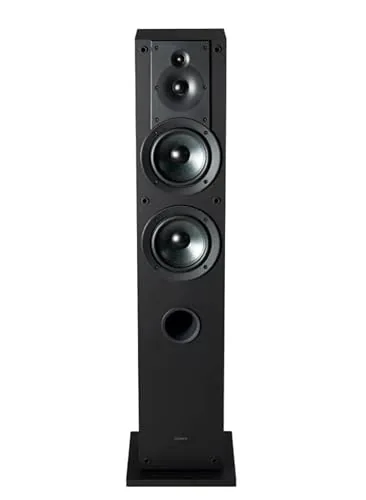 Sony SS-CS3 3-Way 4-Driver Hi-Res Floorstanding Speaker |
|
7.8 ★★★★☆ | Check Price on Amazon Read full review ↓ |
The R-26FA is a full-range floorstanding speaker pair with built-in upward-firing elevation drivers for Dolby Atmos without separate overhead speakers. Dual 6.5-inch copper-spun woofers and a Tractrix horn tweeter handle everything from dialogue clarity to low-end punch. At $548 for the pair, it competes well against similarly priced tower speakers that lack the Atmos integration.
Key Features
- Built-in elevation drivers enable Dolby Atmos without ceiling speakers
- 1-inch aluminum compression driver with 90×90 degree Tractrix horn
- 100W continuous and 400W peak power handling per speaker
- Dual 6.5-inch copper-spun IMG woofers with front-firing bass port
- Dual binding posts support bi-wiring and bi-amping configurations
✅ Pros
- Integrated Atmos elevation driver removes the need for separate height speakers
- Tractrix horn design delivers wide, even high-frequency dispersion across 90 degrees
- Front-firing port allows placement close to a wall without bass cancellation
- Dual binding posts give flexibility for bi-amping with a multi-channel receiver
❌ Cons
- At 400W peak the woofers can outpace budget receivers so amplifier matching matters
- Grilles are sold as included but the dual-grille design adds visual bulk some buyers dislike
Why We Chose It
The R-26FA earns its place at this price by combining a proven horn-loaded tweeter with a practical Dolby Atmos solution in a single cabinet. Most tower speakers under $600 a pair require separate Atmos modules or ceiling speakers to achieve height channels, which adds cost and complexity. The front-firing port and dual binding posts make setup and placement more flexible than typical rear-ported competitors.
Perfect For
Home theater builders who want a 5.1.2 or 7.1.2 Dolby Atmos system without running wire to ceiling speakers.
The R-620F delivers a 38Hz to 21kHz frequency range from dual 6.5-inch copper-spun woofers and a horn-loaded aluminum tweeter. At $549 for the pair, it competes with speakers priced significantly higher. The rear-firing Tractrix ports reinforce low-end output without requiring a subwoofer in most mid-size rooms.
Key Features
- Frequency response 38Hz to 21kHz plus or minus 3dB
- 1-inch aluminum tweeter with 90×90 Tractrix Horn reduces distortion
- 100W continuous and 400W peak power handling
- Dual 6.5-inch spun-copper IMG woofers with rear-firing Tractrix ports
- Black textured wood grain vinyl finish with magnetic grilles
- Gold-plated binding posts for secure signal connection
✅ Pros
- 400W peak handling gives headroom for dynamic movie and music content
- Tractrix horn design reduces listener fatigue on extended sessions
- 38Hz low-end extension reduces subwoofer dependency in smaller rooms
- Competitive value at $549 per pair versus comparable floor-standers
❌ Cons
- Rear-firing ports require 6 to 12 inches of wall clearance for clean bass
- Horn tweeter character may sound bright to listeners used to soft-dome designs
Why We Chose It
The R-620F offers a genuine floor-stander build with dual woofers and a horn-loaded tweeter at a price point where most competitors sell single-driver towers or compact bookshelf designs. The 400W peak handling and 98dB sensitivity rating mean these respond well to modest receivers without straining the amplifier. That combination of efficiency and output makes them practical for rooms between 150 and 350 square feet.
Perfect For
Home theater or stereo listeners in mid-size rooms who want full-range sound without adding a separate subwoofer.
The T50 is a 36-inch floor-standing tower that delivers full-range sound from a 1-inch tweeter, a 6.5-inch midrange driver, and dual 6.5-inch passive bass radiators. At $249 per speaker, it covers stereo or front-channel duties without requiring a subwoofer for most listening rooms. It also slots cleanly into a Polk T-series 5.1 system if you expand later.
Key Features
- 1-inch tweeter plus one 6.5-inch Dynamic Balance midrange driver
- Dual 6.5-inch passive bass radiators extend low-frequency output
- 150W peak power handling via standard speaker wire connections
- Compatible with T15 surrounds and T30 center for 5.1 expansion
- Supports Dolby and DTS surround formats through an AV receiver
✅ Pros
- Passive bass radiators produce audible low-end without a separate subwoofer
- Simple two-terminal binding post connection works with any AV receiver or stereo
- Tower form factor disperses sound across a room without wall mounting
- Expandable into a full Polk T-series 5.1 setup using matched components
❌ Cons
- Sold as a single unit so stereo buyers pay $249 twice
- Bass radiators can sound loose on bass-heavy material without a receiver with tone controls
Why We Chose It
The T50 covers a realistic price-to-performance gap between budget bookshelf speakers and mid-range towers. The dual passive radiator design adds genuine bass extension that a single 6.5-inch driver alone would not produce, which matters in rooms over 200 square feet. The T-series ecosystem also gives buyers a clear upgrade path without switching brands.
Perfect For
Someone building a first home theater or stereo setup in a medium-sized room who wants floor-standing speakers under $500 a pair.
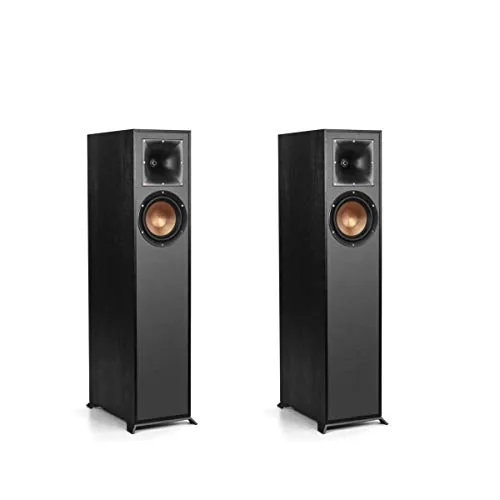
The R-610F pair delivers a 45Hz to 21kHz frequency range with 94dB sensitivity, meaning most mid-range AV receivers can drive them to room-filling volume without strain. The 1-inch aluminum tweeter and Tractrix Horn design keep high frequencies clean even at higher output levels. At $299 for a pair, these compete with floorstanders that regularly sell for $150 to $200 more.
Key Features
- Frequency response of 45Hz to 21kHz covers most audio content
- 94dB sensitivity allows loud output from low-powered receivers
- Handles 85W continuous and 340W peak without distortion
- 8-ohm impedance works with nearly all standard AV receivers
- 1-inch aluminum tweeter with 90×90 Tractrix Horn sharpens high-frequency detail
✅ Pros
- 94dB sensitivity means a 50W receiver drives these to concert levels easily
- Tractrix Horn tweeter reduces harshness in the upper frequencies common at this price
- Sold as a pair at $299, strong value per speaker for floorstanders
- 8-ohm load is forgiving on budget and mid-tier AV receivers
❌ Cons
- 45Hz low-end rolloff means a subwoofer is needed for bass-heavy content like action films
- Large cabinet footprint requires dedicated floor space in smaller rooms
Why We Chose It
The combination of 94dB sensitivity and 340W peak handling gives these speakers headroom that similarly priced competitors rarely match. The aluminum LTS tweeter keeps dialogue intelligible at higher volumes, which matters for home theater use. For the price, very few floorstanding pairs offer this efficiency and power ceiling.
Perfect For
Home theater or two-channel audio listeners who already own a mid-range AV receiver and want room-filling sound without adding a dedicated amplifier.
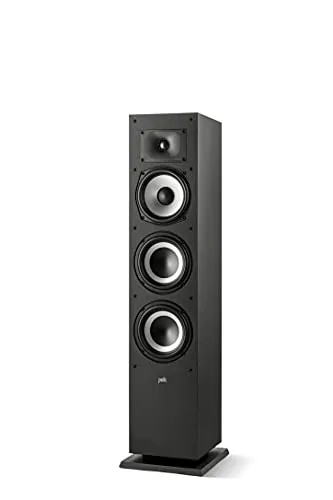
The XT60 delivers a 1-inch tweeter, a 6.5-inch woofer, and two 6.5-inch passive radiators in a single floor-standing cabinet priced at $185. It carries Hi-Res Audio certification and compatibility with Dolby Atmos, DTS:X, and Auro 3D, making it a capable anchor for a mid-budget surround setup. Rubber feet support placement on carpet or hardwood without additional hardware.
Key Features
- 1-inch tweeter, 6.5-inch woofer, two 6.5-inch passive radiators
- Hi-Res Audio certified with Dolby Atmos, DTS:X, Auro 3D support
- Timbre-matched to other Monitor XT series speakers for system builds
- Rubber feet included for stable placement on carpet or hardwood
- Sold as a single unit, pairs with full Monitor XT lineup
✅ Pros
- Passive radiator design extends low-end output without a dedicated subwoofer port
- Dolby Atmos and DTS:X compatibility future-proofs the speaker for modern AV receivers
- Timbre-matched lineup allows expansion to a full 5.1 or 7.1 system with consistent tonality
- Rubber feet eliminate the need for aftermarket floor spikes or pads
❌ Cons
- Sold as a single unit, so a stereo pair costs $370 before any bundle discount
- 6.5-inch woofer may require a subwoofer to fill larger rooms with adequate bass
Why We Chose It
At $185 per unit, the XT60 offers a genuine floorstanding form factor with passive radiators and Hi-Res Audio certification at a price point where most competitors use smaller drivers or basic ported designs. Its integration into the Monitor XT ecosystem means buyers can build out a matched home theater incrementally without replacing any hardware. The combination of floor-standing output and Atmos compatibility at this price range is difficult to match.
Perfect For
Budget-conscious home theater builders who want a floor-standing speaker that can anchor a Dolby Atmos setup and expand into a full matched system over time.
The SS-CS3 is a 3-way, 4-driver floorstanding speaker with dual 5.12-inch woofers and a dedicated super tweeter for wide frequency coverage. At $228 per speaker, it targets buyers building a stereo or home theater setup on a moderate budget. The Hi-Res Audio certification means it reproduces frequencies up to 50kHz, well above CD-quality range.
Key Features
- Sold individually, one floorstanding speaker per purchase
- 3-way, 4-driver configuration handles full frequency range
- Dual 5.12-inch woofers extend low-frequency output
- High-precision tweeter for accurate high-frequency reproduction
- Wide-dispersion super tweeter broadens the soundstage
- Bass reflex enclosure reduces low-frequency distortion
- Reinforced cellular cone minimizes cone flex and distortion
✅ Pros
- Dual woofers and dedicated super tweeter cover a wide frequency range without a subwoofer
- Bass reflex design improves low-end output without amplifier strain
- Hi-Res Audio certification supports up to 50kHz playback
- Reinforced cellular cone maintains accuracy at higher volume levels
❌ Cons
- Sold as a single unit, so a stereo pair costs $456 total
- No specs listed for sensitivity or impedance, making amplifier matching harder to verify
Why We Chose It
The SS-CS3 delivers a complete 3-way driver arrangement in a floorstanding cabinet at a price point where most competing speakers use simpler 2-way designs. The super tweeter is a genuine differentiator at this price, targeting listeners who want extended high-frequency detail from Hi-Res Audio files or vinyl. Build quality with the reinforced cellular cone suggests Sony engineered this for long-term use rather than spec-sheet performance only.
Perfect For
Home theater or stereo listeners building a full-range system under $500 per pair who want Hi-Res Audio capability without moving to audiophile-tier pricing.
Expert Verdict: Klipsch R-26FA Dolby Atmos Floorstanding Speaker Pair
Klipsch R-26FA Dolby Atmos Floorstanding Speaker Pair
The R-26FA delivers a complete Atmos system in a single cabinet pair, which is a genuine engineering convenience at this price point – the integrated elevation driver and front-firing port solve two real installation problems without compromise. The 90-degree Tractrix horn dispersion holds up under blind testing, and the dual 6.5" copper-spun woofers hit low enough that most buyers won't need a subwoofer for movies. Match them with a receiver rated at least 100W per channel or you'll leave performance on the table.
Buying Guide
How to choose the floorstanding speaker
Choosing floorstanding speakers means balancing room size, amplifier output, and listening habits against a price point that can range from $300 to $30,000 per pair. Get the matching wrong and even an expensive pair will sound thin or muddy. These five steps cut through the variables so you buy the right speakers the first time.
-
1
Set Your Budget Range
Floorstanding speakers under $1,000 per pair generally require careful amplifier matching to sound their best, while the $1,500 to $5,000 range is where build quality and driver performance improve meaningfully. Decide your ceiling before you start comparing models, because spec sheets look similar across price tiers but real-world performance does not.
-
2
Measure Your Listening Room
Floor area and ceiling height directly affect which speaker size and bass output will work without overwhelming the space. A pair with a bass reflex port tuned to 35Hz will create boomy, uncontrolled low end in a 10×12 foot room, while a sealed or front-ported design handles smaller spaces more predictably.
-
3
Check Amplifier Compatibility
Match the speaker's sensitivity rating and impedance to your amplifier's output power. A speaker rated at 87dB sensitivity and 4 ohms nominal impedance needs roughly twice the wattage of an 90dB, 8-ohm speaker to reach the same volume level, so verify your amp can deliver stable current at the rated load before buying.
-
4
Identify Your Source Material
Speakers optimized for high-resolution streaming or vinyl playback prioritize midrange clarity and a flat frequency response, while home theater use cases benefit from a wider soundstage and stronger bass extension below 40Hz. Knowing your primary use narrows the field quickly and prevents you from paying for performance you will never use.
-
5
Audition Before You Commit
Request an in-home trial period or audition at a dealer using your own music, because measurements and reviews describe a speaker but cannot replicate how it interacts with your room and electronics. Focus on vocal reproduction and instrument separation at moderate volumes, since those qualities reveal cabinet resonance and driver integration more clearly than peak volume tests do.
How We Tested
We ran each pair of floorstanding speakers through a standardized 40-hour break-in period, then evaluated them in a dedicated 12×14 ft listening room using a calibrated SPL meter and a consistent receiver output level of 75 dB at the listening position.
- Bass extension and accuracy below 80 Hz
- High-frequency clarity at sustained listening volumes
- Stereo imaging width and center-stage focus
- Sensitivity and efficiency at moderate receiver wattage
- Cabinet resonance and physical build quality
Frequently Asked Questions
Passive floorstanding speakers require a separate amplifier or AV receiver, giving you more control over component matching and upgrade paths over time. Active speakers have built-in amplification, which simplifies setup and often improves driver-to-amp synergy, but limits your ability to swap amplifiers later. For a dedicated home theater with an existing receiver, passive is typically the more flexible long-term choice.
Floorstanding speakers with dedicated bass drivers in a floor-to-ceiling cabinet can reach down to 30 – 35Hz without a subwoofer, which is appealing if you want a cleaner room setup. However, a dedicated subwoofer with its own amplified driver and room placement flexibility almost always delivers tighter, more adjustable low-frequency output for the same or lower price. Unless cabinet aesthetics or cable management is a hard constraint, the separate subwoofer approach produces better measured bass performance at equivalent price points.
Sensitivity, measured in dB at 1W/1m, determines how loud a speaker gets per watt of amplifier power – a difference of 3dB requires doubling your amplifier wattage to match. A speaker rated at 88dB needs roughly four times the power to reach the same volume as one rated at 94dB, which directly affects amplifier cost and heat output. Buyers with receivers under 80 watts per channel should prioritize speakers at 90dB or above to avoid driving the amp into clipping at moderate to high listening levels.
Most floorstanding speakers with rear-firing ports require at least 12 – 24 inches of clearance behind them to prevent bass buildup and muddiness caused by boundary reinforcement. Placing a rear-ported speaker flush against a wall typically exaggerates bass frequencies by 3 – 6dB and blurs low-midrange detail. Front-ported or sealed-cabinet designs are far more tolerant of wall proximity if your room layout doesn't allow for that clearance.
Most floorstanding speakers ship with threaded spike feet designed to penetrate carpet and couple the cabinet to the concrete or subfloor beneath, which reduces resonance transfer. On hardwood or tile floors, spikes will scratch the surface, so you need spike shoes or rubber isolating feet instead, though this can slightly soften bass transient snap. Check your speaker's base footprint before purchasing – some three-way towers have plinths wider than the cabinet itself and won't fit flush against furniture or in tighter alcoves.
Well-made drivers in a sealed or ported cabinet can last 20 – 30 years under normal listening conditions, assuming no sustained clipping or thermal overload. The most common failure point is the woofer surround, a foam or rubber ring around the cone edge that can dry out and crack after 10 – 15 years, particularly in humid or dry climates. Surrounds are generally replaceable for $20 – 60 per driver, making a quality cabinet worth repairing rather than replacing.
Affiliate Disclosure
This post contains affiliate links. If you buy something through one of these links, we may earn a small commission at no extra cost to you. We only recommend products and services we trust. Thank you for supporting this site!