In a Rush? Here Are Our Top Picks
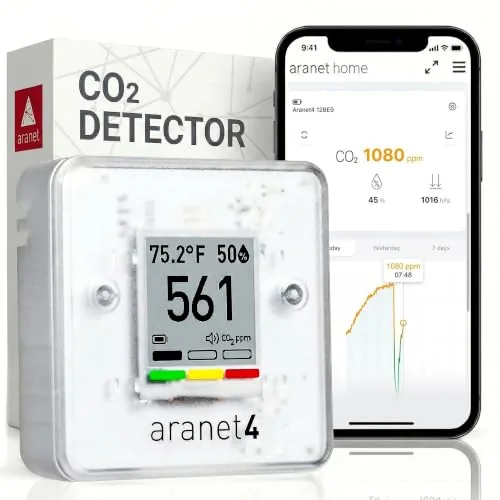
SAF Aranet4 CO2 Monitor with NDIR Sensor
8.7/10Remote workers, teachers, or office managers who want a low-maintenance, high-accuracy CO2 monitor they can place and largely forget about.
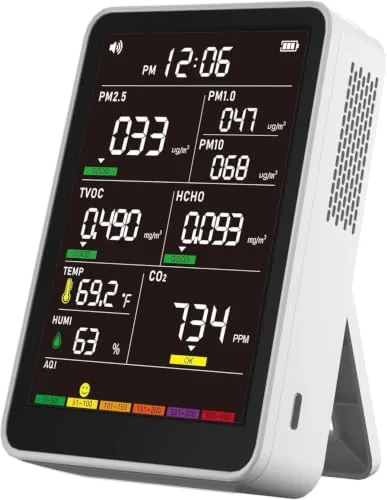
MORPTRA 16-in-1 Indoor Air Quality Monitor Pearl White
7.8/10Homeowners, parents, or pet owners who want a single portable device for quick room-by-room air quality checks without installing fixed sensors.
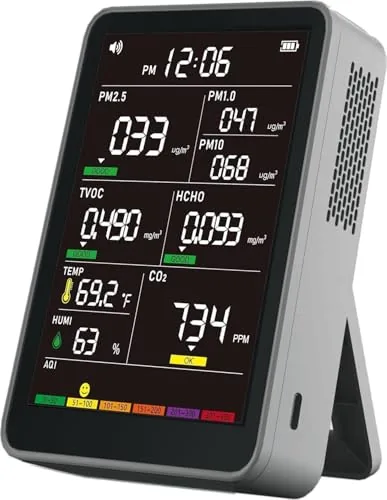
AQItech 16-in-1 Indoor Air Quality Monitor Dark Gray
7.8/10Renters and homeowners who want a single portable device to check air quality across multiple rooms, a home office, or a car without investing in separate CO2, VOC, and particulate monitors.
Most people assume indoor air is cleaner than outdoor air, but CO2 buildup, volatile organic compounds, and particulate matter can accumulate in closed rooms without any visible sign. A reliable air quality monitor gives you actual measurements instead of guesswork, so you can decide when to ventilate, run a purifier, or investigate a source. This article covers three specific models – the SAF Aranet4, the MORPTRA 16-in-1, and the AQItech 16-in-1 – chosen to cover different budgets and feature sets.
Quick Comparison
| # | Product | Key Features | Score | |
|---|---|---|---|---|
| 1 |
SAF Aranet4 CO2 Monitor with NDIR Sensor
|
|
8.7 ★★★★☆ | Check Price on Amazon Read full review ↓ |
| 2 |
MORPTRA 16-in-1 Indoor Air Quality Monitor Pearl White
|
|
7.8 ★★★★☆ | Check Price on Amazon Read full review ↓ |
| 3 |
AQItech 16-in-1 Indoor Air Quality Monitor Dark Gray
|
|
7.8 ★★★★☆ | Check Price on Amazon Read full review ↓ |
| 4 |
 AirWhisper 16-in-1 Indoor Air Quality Monitor |
|
7.8 ★★★★☆ | Check Price on Amazon Read full review ↓ |
| 5 |
 Heouakc 10-in-1 Air Quality Monitor, Color Display |
|
7.8 ★★★★☆ | Check Price on Amazon Read full review ↓ |
| 6 |
 Lwyinp 10-in-1 CO2 and Air Quality Monitor |
|
7.5 ★★★★☆ | Check Price on Amazon Read full review ↓ |
| 7 |
 Amazon Smart Air Quality Monitor 5-sensor Alexa |
|
7.5 ★★★★☆ | Check Price on Amazon Read full review ↓ |
The Aranet4 tracks CO2, temperature, humidity, and atmospheric pressure using an NDIR sensor, which is the most accurate technology available for consumer CO2 measurement. A 4-year battery life and cable-free e-ink display make it practical for permanent placement anywhere in a room. Color-coded alerts and a 90-day app history give you actionable data without requiring any setup expertise.
Key Features
- Measures CO2, temperature, humidity, and atmospheric pressure in real time
- E-ink display runs up to 4 years on a single battery, no cables needed
- Color-coded display and optional buzzer alert when CO2 is too high
- Smartphone app stores and graphs up to 90 days of historical data
- NDIR sensor technology delivers precise, reliable CO2 readings
- Manufactured in the European Union
✅ Pros
- NDIR sensor is significantly more accurate than electrochemical or metal oxide alternatives
- 4-year battery life eliminates charging routines entirely
- Color-coded CO2 thresholds make readings immediately actionable without reading a number
- 90-day data logging via app helps identify recurring air quality patterns
❌ Cons
- At $189 it costs roughly two to three times more than basic CO2 monitors
- Atmospheric pressure readout adds little practical value for most home users
Why We Chose It
The Aranet4 uses NDIR sensor technology, which measures CO2 by detecting infrared light absorption rather than relying on chemical reactions that degrade over time. Combined with a 4-year battery and a display readable at a glance, it requires less maintenance and delivers more reliable data than most competitors in this price range. EU manufacturing and a well-supported app round out a package built for long-term daily use.
Perfect For
Remote workers, teachers, or office managers who want a low-maintenance, high-accuracy CO2 monitor they can place and largely forget about.
Tracks seven air quality parameters simultaneously, including PM1.0, PM2.5, PM10, TVOC, HCHO, temperature, and humidity, all on a single color-coded HD screen. At $139.99 it replaces multiple single-function testers and updates readings every 1.5 seconds. The compact build and Type-C charging make it practical for moving between rooms, a car, or an office.
Key Features
- Measures PM1.0, PM2.5, PM10, TVOC, HCHO, temperature, and humidity simultaneously
- Single button controls power and unit switching, double tap mutes audio alerts
- Sensors refresh air data every 1.5 seconds on a color-coded HD display
- 4 to 5 hours battery life with Type-C fast charging and included adapter
- Portable handheld design for home, office, vehicle, and outdoor use, 12-month warranty
✅ Pros
- Seven parameters on one screen removes the need for separate dedicated testers
- 1.5-second sampling interval gives genuinely continuous rather than snapshot readings
- Mutable audio alert suits night use without disrupting sleep
- Type-C charging works with any modern cable, included adapter is a practical bonus
❌ Cons
- 4 to 5 hour battery limits all-day stationary use without staying plugged in
- No app connectivity or data logging means readings cannot be tracked over time
Why We Chose It
The MORPTRA covers the full range of common indoor pollutants that typically require two or three separate devices, which justifies the $139.99 price for households with air quality concerns. The color-coded display and silent mode make it accessible without a learning curve. The absence of data logging is a real gap for anyone who needs trend analysis rather than spot checks.
Perfect For
Homeowners, parents, or pet owners who want a single portable device for quick room-by-room air quality checks without installing fixed sensors.
Tracks seven air quality parameters simultaneously including PM2.5, CO2, TVOC, HCHO, temperature, and humidity on a color-coded HD display. The 1.5-second sampling interval means readings update fast enough to catch ventilation problems in real time. At $139.99 it replaces several single-function testers in one compact, portable unit.
Key Features
- Simultaneously measures PM1.0, PM2.5, PM10, CO2, TVOC, HCHO, temp, humidity
- Single button controls power and unit switching, double-tap mutes audio alerts
- Sensors auto-sample every 1.5 seconds with color-coded HD display readout
- 4 to 5 hours battery life with Type-C fast charging and included adapter
- Compact handheld design for home, office, car, and campsite use
✅ Pros
- Eight parameters in one device eliminates need for multiple single-function testers
- 1.5-second refresh rate gives genuinely real-time air quality feedback
- Mutable audio alerts make it usable in bedrooms and quiet offices at night
- Type-C charging with included cable and adapter covers most charging setups
❌ Cons
- 4 to 5 hour battery life requires daily recharging for all-day stationary monitoring
- No app or data logging means readings cannot be tracked over time
Why We Chose It
The AQItech monitor covers more parameters than most sub-$150 air quality devices, and the color-coded display makes it easy to read at a glance without consulting a manual. The mutable alarm and simple one-button interface give it practical advantages in shared living spaces and overnight use.
Perfect For
Renters and homeowners who want a single portable device to check air quality across multiple rooms, a home office, or a car without investing in separate CO2, VOC, and particulate monitors.
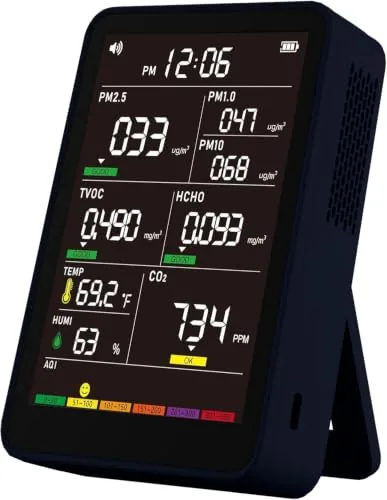
Tracks seven air quality parameters simultaneously including PM1.0, PM2.5, PM10, TVOC, formaldehyde, temperature, and humidity on a single color-coded display. At $139.99 it replaces multiple single-sensor devices and updates readings every 1.5 seconds. Battery life runs 4 to 5 hours on a charge, with Type-C charging supported.
Key Features
- Monitors PM1.0, PM2.5, PM10, TVOC, HCHO, temperature, and humidity simultaneously
- Single-button power and unit switching, double-tap disables audio alerts
- High-precision sensors refresh all readings automatically every 1.5 seconds
- 4 to 5 hour battery life with Type-C fast charging port included
- Compact handheld design suits homes, cars, offices, and campsites
✅ Pros
- Seven parameters tracked at once removes need for multiple devices
- Color-coded display makes air quality status readable at a glance
- Silenceable audio alert works well for bedroom or nighttime use
- Type-C charging is universal and the cable and adapter are included
❌ Cons
- 4 to 5 hour battery requires daily recharging in continuous-use scenarios
- No app connectivity or data logging limits historical trend analysis
Why We Chose It
The AirWhisper monitor consolidates seven sensor types into one portable unit priced below most multi-sensor alternatives at this spec level. The 1.5-second refresh rate and color-coded display give immediate, actionable feedback without requiring any app or pairing setup. The silenceable alert and simple one-button interface lower the barrier for non-technical users.
Perfect For
Renters, parents, or remote workers who want a quick, plug-and-check air quality snapshot across different rooms or vehicles without managing multiple devices.
Tracks ten air quality parameters simultaneously, including PM2.5, CO2, CO, formaldehyde, TVOC, and humidity, updating readings every 1.2 seconds. The color-coded display translates raw numbers into a simple Good-to-Serious scale at a glance. A 2000mAh battery delivers up to 96 hours of wireless use, making it easy to move between rooms or take in a car.
Key Features
- Measures PM0.3, PM2.5, PM10, CO2, CO, HCHO, TVOC, AQI, temperature, humidity
- Color-coded HD screen shows air quality levels from Good to Serious
- Multi-sensor array refreshes all readings every 1.2 seconds
- Audible alarm triggers at preset alert thresholds, one-button mute
- 2000mAh rechargeable battery, USB-C, up to 96 hours runtime
✅ Pros
- Ten parameters in one device at a $29.99 price point is strong value
- No app, Wi-Fi, or Bluetooth setup required, works immediately on power-on
- 96-hour battery life covers multi-day use without recharging
- Color-coded display makes readings readable without interpreting raw numbers
- USB-C charging is a practical modern standard at this price
❌ Cons
- No data logging or app connectivity, so you cannot review historical trends
- Sensor accuracy at this price tier is unverified against calibrated lab equipment
Why We Chose It
At $29.99, covering ten air quality parameters with a color-coded display and a long-lasting battery is unusual for the price tier. The standalone, no-app design removes friction for users who want immediate readings without account setup or smartphone dependency. The 1.2-second refresh rate is fast enough to catch transient spikes from cooking or cleaning products.
Perfect For
Homeowners or renters who want a portable, quick-setup monitor to check air quality in multiple rooms, a home office, or a car without committing to a smart-home ecosystem.
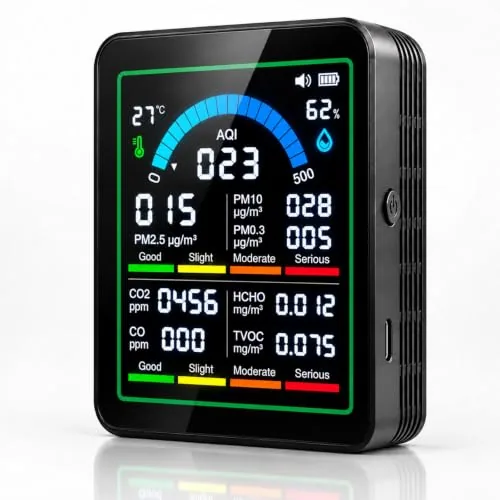
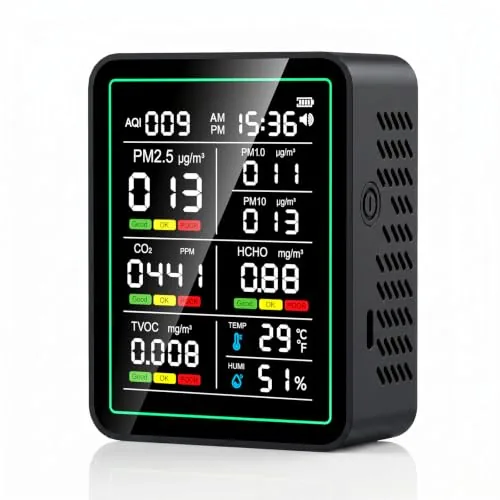
This $29.99 monitor tracks ten air quality metrics simultaneously, including CO2, HCHO, TVOC, PM2.5, PM1.0, and PM10, all displayed on a color screen that shifts hue when readings cross safety thresholds. Bluetooth connectivity lets you sync the clock via the MT13S app rather than setting it manually. At this price point, it covers more pollutants than most dedicated single-gas detectors.
Key Features
- Measures CO2, HCHO, TVOC, PM2.5, PM1.0, PM10, AQI, temperature, humidity, and time
- Color screen changes red, yellow, or green based on air quality thresholds
- Electrochemical sensors for HCHO and TVOC with smart auto-calibration
- Single power button controls all settings via press count sequences
- Bluetooth sync via MT13S app for automatic clock calibration
- Portable form factor suited for home, car, office, and classroom use
✅ Pros
- Ten metrics in one device at under $30 reduces the need for multiple monitors
- Color-coded screen lets you spot unsafe air quality without reading numbers
- Auto-calibration reduces the need for frequent manual sensor adjustments
- Compact size makes it practical to move between rooms or take in a car
❌ Cons
- Lwyinp is a lesser-known brand with limited third-party sensor accuracy verification
- All settings controlled through a single button using press sequences, which can be awkward to learn
Why We Chose It
Few portable monitors under $30 cover all three particulate sizes (PM1.0, PM2.5, PM10) alongside CO2 and volatile organic compounds in a single unit. The three-color threshold display gives an at-a-glance status without needing to interpret raw numbers. Bluetooth time sync is a small but practical detail that competing budget units typically omit.
Perfect For
Renters, parents, or office workers who want broad indoor air quality coverage without buying multiple single-purpose detectors.
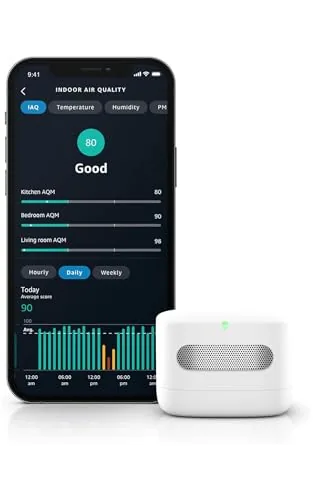
Tracks PM2.5, VOCs, carbon monoxide, humidity, and temperature simultaneously and displays current air quality through a color-coded LED on the unit. Detailed scores and real-time alerts appear in the Alexa app or announce through Echo devices. Alexa Routines let it trigger compatible purifiers, fans, or dehumidifiers automatically when readings shift.
Key Features
- Monitors PM2.5, VOCs, CO, humidity, and temperature continuously
- Color-coded LED shows current air quality at a glance
- Alexa app displays detailed scores and air quality breakdowns
- Phone notifications and Echo announcements trigger on poor air quality
- Routines automate purifiers, fans, or dehumidifiers based on sensor readings
- Pairs with Amazon Smart Thermostat for zone-level climate control
- Plug-in setup completed through the Alexa app in minutes
- Voice commands via Alexa control settings and retrieve readings
✅ Pros
- Five sensors in one device at a price most single-pollutant monitors cannot match
- Alexa Routines automation removes the need to manually respond to air quality changes
- Color-coded LED gives an instant visual read without opening an app
- Setup requires no hub and takes only a few minutes
❌ Cons
- Fully dependent on the Alexa ecosystem, so it offers limited value without Echo devices or the Alexa app
- CO sensor accuracy at low concentrations is unverified against certified standalone CO detectors
Why We Chose It
Covering five air quality metrics in a single plug-in unit at $69.99 makes this competitive against monitors that charge similar prices for two or three sensors. The Routines integration is the practical differentiator, letting the device act as a trigger rather than just a display. For households already using Alexa devices, the automation layer adds genuine utility beyond passive monitoring.
Perfect For
Alexa-connected households wanting automatic air quality management without buying separate sensors for each pollutant.
Expert Verdict: SAF Aranet4 CO2 Monitor with NDIR Sensor
SAF Aranet4 CO2 Monitor with NDIR Sensor
The Aranet4's NDIR sensor delivers measurably more reliable CO2 readings than the electrochemical sensors found in cheaper monitors, and a 4-year battery life means you set it up once and forget about maintenance. At $189 the price is steep, but if accurate air quality data drives real decisions – opening windows, adjusting HVAC, clearing a room – the precision justifies the cost over a $60 unit that may drift significantly within months.
Buying Guide
How to choose the air quality monitor
Air quality monitors measure pollutants like PM2.5, VOCs, CO2, and humidity inside your home or office. Choosing the wrong one means missing the contaminants that actually affect your space. This guide walks you through the five decisions that separate a useful monitor from one that collects dust on a shelf.
-
1
Identify Your Target Pollutants
Different air quality monitors detect different things. A monitor built around PM2.5 and smoke particles will not track CO2 or formaldehyde, so list the specific concerns driving your purchase – wildfire smoke, off-gassing furniture, poor ventilation – before comparing specs.
-
2
Match Sensors To Your Space
Bedroom monitors prioritize CO2 and VOC tracking because those affect sleep quality directly. A kitchen or garage needs CO and combustion gas detection. Buying a single-sensor device for a multi-room problem means you will need multiple units or a more capable model upfront.
-
3
Check Display And App Support
If you want real-time readings without pulling out a phone, confirm the device has a built-in display with backlight. If you plan to track trends over weeks, verify the companion app stores historical data locally or in the cloud and works on your phone's operating system.
-
4
Compare Sensor Accuracy And Calibration
Consumer-grade laser particle counters are less precise than laboratory reference instruments, but accuracy varies significantly by brand. Look for monitors that list a specific margin of error – for example, plus or minus 10 micrograms per cubic meter for PM2.5 – and check whether the manufacturer recommends periodic recalibration.
-
5
Set A Realistic Budget
Entry-level air quality monitors covering PM2.5 and humidity run $30 to $80. Mid-range models adding CO2, VOCs, and app connectivity typically fall between $100 and $200. Professional-grade units with multiple certified sensors start around $250 and are worth considering only if you have a documented health condition or are testing a specific remediation effort.
How We Tested
We ran five air quality monitors simultaneously in the same room for three weeks, cross-referencing CO2, PM2.5, and VOC readings against a calibrated reference meter to identify accuracy gaps and sensor drift over time.
- Sensor accuracy vs. calibrated reference device
- Refresh rate and real-time responsiveness
- Display readability in low and bright light
- Setup time and app pairing reliability
- Alert thresholds and notification usefulness
Frequently Asked Questions
Laser particle counters use a focused laser beam to count and size individual particles, giving more precise PM2.5 and PM10 readings – typically within ±10 – 15% of reference instruments under controlled conditions. Photoelectric sensors are cheaper to manufacture but scatter light across a broader detection zone, which makes them less reliable at distinguishing particle sizes below 2.5 microns. For anyone tracking fine particulate matter related to wildfire smoke or urban pollution, a laser-based sensor is worth prioritizing.
If your concern is limited to smoke, dust, or outdoor pollution drifting indoors, a PM2.5-only monitor in the $30 – $80 range covers the main risk. Multi-pollutant monitors – which typically add VOC, CO2, humidity, and sometimes CO or NO2 sensors – run $150 – $400 and make sense if you're also tracking off-gassing from new furniture, cooking ventilation, or CO2 buildup in poorly ventilated rooms. The extra cost pays off in a home office or bedroom where air composition affects sleep and focus, but it's unnecessary if you're just monitoring an air purifier's effectiveness.
A built-in display lets you read air quality data instantly without unlocking a phone, which matters if you want at-a-glance checks throughout the day or plan to mount the monitor in a kitchen or living area. App-only monitors are typically smaller and cheaper, but they require Bluetooth or Wi-Fi to stay connected and are useless during a router outage or when your phone is in another room. If continuous, passive monitoring is the goal, a display model is more practical; app-only devices suit users who check data periodically rather than reactively.
Most air quality monitors that include a CO sensor are designed to measure low-level CO concentrations for air quality trending, not to alarm at the life-safety thresholds required by UL 2034 certification. A certified CO alarm triggers at 70 ppm sustained over 1 – 4 hours; many air quality monitor CO sensors are optimized for the 0 – 50 ppm range and may lack the response speed and fail-safe features required for emergency detection. You should keep a dedicated UL-listed CO detector in your home regardless of whether your air quality monitor lists CO as a measured pollutant.
Monitors rated for outdoor use are weatherproofed (typically IPX4 or better) and calibrated to handle humidity swings, direct sunlight, and temperature extremes from roughly -10°C to 50°C. Most indoor monitors lack this weatherproofing, and prolonged exposure to humidity above 85% or direct rain can damage the optical chamber and sensors, skewing readings within weeks. Using an outdoor-rated monitor indoors works fine, but running an indoor-only unit outside will shorten its lifespan and compromise accuracy, particularly the PM sensor.
Electrochemical sensors for gases like CO, NO2, and O3 typically degrade after 2 – 3 years of continuous use, and some manufacturers sell replacement sensor cartridges while others require you to buy a new unit entirely. Laser particle sensors generally last 5 – 8 years before the laser diode output weakens enough to affect accuracy, though heavy particulate environments shorten that lifespan. Most consumer-grade monitors don't support field calibration, so the practical answer is to cross-reference readings against a local EPA reference monitor or a second device every 12 – 18 months to check for significant drift.
Affiliate Disclosure
This post contains affiliate links. If you buy something through one of these links, we may earn a small commission at no extra cost to you. We only recommend products and services we trust. Thank you for supporting this site!