In a Rush? Here Are Our Top Picks
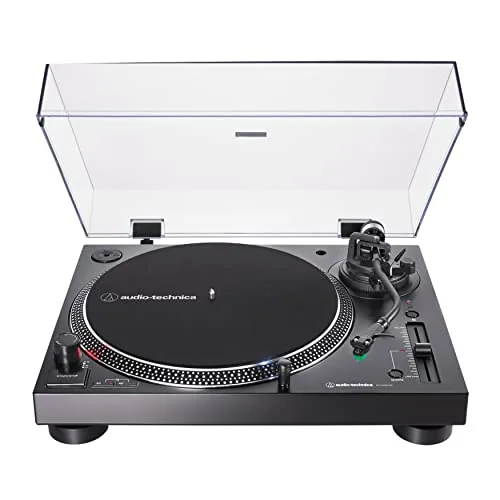
Audio-Technica AT-LP120XBT-USB Bluetooth Turntable
8.5/10A buyer who wants one deck to feed both Bluetooth speakers in a living room and a recording setup on a computer, without owning a separate phono preamp.
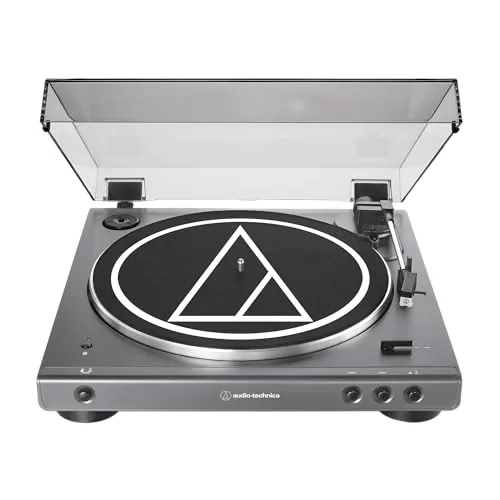
Audio-Technica AT-LP60XBT Bluetooth Belt-Drive Turntable
8.2/10Someone setting up their first vinyl system who wants to connect wirelessly to a Bluetooth speaker or soundbar without buying extra components.
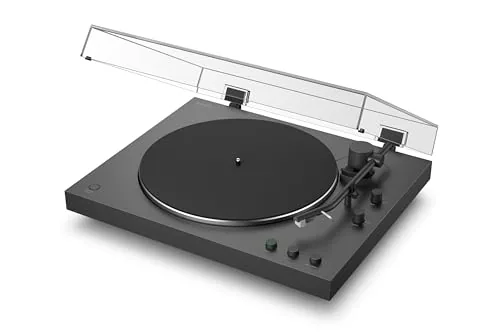
Sony PS-LX3BT Bluetooth Turntable, Fully Automatic
8.2/10Someone building or upgrading a vinyl setup who wants Bluetooth flexibility, no manual cueing, and a unit that connects to existing gear without a separate phono preamp.
Bluetooth turntables have closed the gap between vinyl’s analog warmth and the convenience of wireless speakers and headphones, making them a practical choice whether you’re setting up a dedicated listening room or just want records playing through your existing Sonos system without running cables. The market ranges from entry-level automatic decks like the Sony PS-LX3BT and Audio-Technica AT-LP60XBT – both under $200 and designed for hands-off simplicity – to the more capable AT-LP120XBT-USB, which adds manual operation, a built-in phono preamp bypass, and USB recording for around $300. Knowing which features actually matter for your setup will save you from overspending on specs you won’t use or underspending on a deck that limits your options later.
Quick Comparison
| # | Product | Key Features | Score | |
|---|---|---|---|---|
| 1 |
Audio-Technica AT-LP120XBT-USB Bluetooth Turntable
|
|
8.5 ★★★★☆ | Check Price on Amazon Read full review ↓ |
| 2 |
Audio-Technica AT-LP60XBT Bluetooth Belt-Drive Turntable
|
|
8.2 ★★★★☆ | Check Price on Amazon Read full review ↓ |
| 3 |
Sony PS-LX3BT Bluetooth Turntable, Fully Automatic
|
|
8.2 ★★★★☆ | Check Price on Amazon Read full review ↓ |
| 4 |
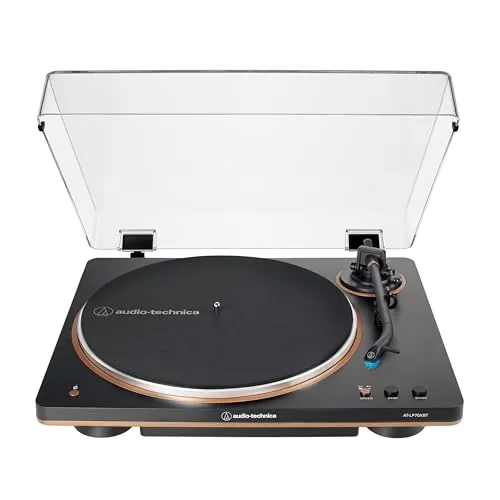 Audio-Technica AT-LP70XBT-BZ Bluetooth Belt-Drive Turntable |
|
8.2 ★★★★☆ | Check Price on Amazon Read full review ↓ |
| 5 |
 Audio-Technica AT-LP70XBT Bluetooth Belt-Drive Turntable |
|
8.2 ★★★★☆ | Check Price on Amazon Read full review ↓ |
| 6 |
 1byone Belt-Drive Turntable with Wireless and Remote |
|
7.8 ★★★★☆ | Check Price on Amazon Read full review ↓ |
| 7 |
 1byone Bluetooth Turntable HiFi System with 36W Speakers |
|
7.5 ★★★★☆ | Check Price on Amazon Read full review ↓ |
| 8 |
 Cotsoco Retro Belt-Drive Turntable with Bluetooth |
|
6.5 ★★★☆☆ | Check Price on Amazon Read full review ↓ |
The AT-LP120XBT-USB covers three connection methods from a single deck: Bluetooth via aptX Adaptive, USB to computer, and analog RCA to a receiver or powered speakers. The built-in switchable phono preamp means you can skip an external preamp entirely, and the AT-VM95E elliptical cartridge is a genuine upgrade over the stylus that ships with most decks at this price. At $440 it sits above entry-level but below audiophile territory, which is exactly where its feature set lands.
Key Features
- aptX Adaptive Bluetooth for stable high-quality wireless audio
- Direct-drive DC servo motor with quartz speed lock
- Selectable 33, 45, and 78 RPM speeds
- Variable pitch control with quartz lock override
- Anti-resonance die-cast aluminum platter with felt mat
- AT-VM95E dual moving magnet cartridge, 0.3×0.7 mil elliptical stylus
- Compatible with all VM95 series replacement styli
- Balanced S-shaped tonearm with hydraulic lift damping and lockable rest
- AT-HS6 universal half-inch mount headshell included
- Built-in switchable phono preamp for phono or line output
- Connects via Bluetooth, dual RCA, or USB to computer
- Stroboscopic platter with speed indicator for accuracy checks
- Removable target light for cueing in low-light conditions
- AC adapter external to chassis to reduce signal chain noise
- Damped base construction reduces low-frequency feedback
✅ Pros
- Three connection options cover wireless, analog, and digital recording without extra hardware
- AT-VM95E cartridge is a genuine performer and accepts affordable stylus upgrades
- Built-in preamp removes the need for a separate phono stage
- 78 RPM support handles shellac records, uncommon at this price point
- aptX Adaptive Bluetooth delivers noticeably better audio quality than standard Bluetooth
❌ Cons
- At $440 you are paying a premium for the Bluetooth feature, which audiophiles may bypass in favor of a wired setup
- Fully manual operation requires returning the tonearm by hand, which some buyers will find inconvenient
Why We Chose It
The AT-LP120XBT-USB earns its place at this price by pairing a capable AT-VM95E cartridge with genuine connection flexibility, including aptX Adaptive Bluetooth that most competitors skip. The external AC adapter and damped base address two common noise sources that cheaper decks ignore. The VM95 stylus upgrade path also means the deck can grow with a buyer’s needs without replacing the whole cartridge.
Perfect For
A buyer who wants one deck to feed both Bluetooth speakers in a living room and a recording setup on a computer, without owning a separate phono preamp.
The AT-LP60XBT plays 33-1/3 and 45 RPM records fully automatically and streams via Bluetooth aptX to wireless speakers or connects through dual RCA cables to wired systems. The AC adapter sits outside the chassis, which keeps power supply noise away from the phono signal. At $199 it covers both wireless and wired setups without requiring a separate preamp.
Key Features
- Bluetooth with aptX codec for wireless speaker connection
- Dual RCA output cable included for wired system connection
- Fully automatic operation at 33-1/3 and 45 RPM
- Anti-resonance die-cast aluminum platter
- Redesigned tonearm base and headshell reduce tracking resonance
- Built-in dual moving magnet phono cartridge with replaceable stylus
- External AC adapter reduces electrical noise in signal chain
✅ Pros
- Bluetooth aptX support means lower latency and better audio quality than standard Bluetooth
- Fully automatic operation handles cue and return without user input
- External power supply is a genuine noise-reduction measure, not just a marketing claim
- ATN3600LC stylus is user-replaceable without tools or a technician
- Works with both wireless and traditional wired setups from one unit
❌ Cons
- Belt-drive design and entry-level cartridge limit ceiling for serious audiophiles upgrading from a higher-tier table
- No manual tonearm override for cueing to a specific groove mid-record
Why We Chose It
The combination of Bluetooth aptX, a built-in phono preamp, and fully automatic operation removes the three most common friction points for new turntable buyers: no separate preamp purchase, no manual cueing, and no wired speaker requirement. The external AC adapter addresses a real engineering problem at this price point rather than being a spec-sheet checkbox.
Perfect For
Someone setting up their first vinyl system who wants to connect wirelessly to a Bluetooth speaker or soundbar without buying extra components.
The PS-LX3BT removes setup friction with one-button auto start, stop, and tonearm return. Bluetooth output pairs directly to wireless speakers or headphones, while the built-in phono EQ means you can skip a dedicated phono preamp entirely. At $398 it sits in the mid-range where convenience and audio quality genuinely overlap.
Key Features
- One-button auto start, stop, and tonearm return
- Bluetooth output for wireless speakers and headphones
- Built-in audio cable for wired connection to receivers or powered speakers
- Switchable phono EQ works with or without a dedicated phono input
- Transparent dust cover keeps records visible while protected
- Aluminum tonearm with precision pivot bearing for accurate groove tracking
- Moving magnet cartridge with 3.5 plus or minus 0.5g stylus pressure
- Aluminum die-cast platter for stable, consistent platter rotation
✅ Pros
- Fully automatic operation eliminates manual cueing and tonearm lifting
- Switchable phono EQ adds flexibility across a wide range of audio setups
- Bluetooth and wired outputs covered in a single unit
- Aluminum tonearm and die-cast platter are above-average components at this price
- Transparent dust cover lets you display records without removing protection
❌ Cons
- 3.5g stylus pressure is on the heavier side and may cause slightly faster stylus and record wear than lighter-tracking cartridges
- Bluetooth audio introduces latency that makes it unsuitable for video sync use cases
Why We Chose It
The PS-LX3BT earns its place at $398 by combining genuinely useful automation with hardware that does not cut corners, specifically the aluminum tonearm and die-cast platter, which competitors at this price often replace with plastic. The built-in switchable phono EQ is a practical addition that makes the turntable work with almost any speaker or receiver without extra purchases.
Perfect For
Someone building or upgrading a vinyl setup who wants Bluetooth flexibility, no manual cueing, and a unit that connects to existing gear without a separate phono preamp.
The AT-LP70XBT-BZ handles playback fully automatically, meaning the tonearm drops and returns on its own at 33-1/3 or 45 RPM. Bluetooth output pairs with wireless speakers while the built-in switchable preamp also supports wired phono or line-level connections. The included AT-VM95C cartridge accepts any VM95 Series stylus upgrade, so improving sound quality later requires no new headshell.
Key Features
- Fully automatic operation at 33-1/3 and 45 RPM
- Integrated AT-VM95C cartridge accepts all VM95 Series styli
- Switchable built-in preamp for phono or line-level output
- J-shaped tonearm designed to reduce tracking error
- Includes RCA cable with ground wire and 45 RPM adapter
✅ Pros
- AT-VM95C cartridge is upgradeable to higher VM95 styli without replacing the headshell
- Bluetooth plus wired output covers both wireless and traditional stereo setups
- Fully automatic arm lift removes risk of needle drag at record end
- Die-cast aluminum platter adds mass and reduces unwanted vibration
❌ Cons
- Bluetooth introduces minor audio latency, making it unsuitable for video syncing
- AT-VM95C is the entry-level stylus in the VM95 range, so a stylus upgrade is worth budgeting for
Why We Chose It
The AT-LP70XBT-BZ earns its place at $319 by combining wireless Bluetooth convenience with a genuine upgrade path through the VM95 stylus system. The automatic mechanism and switchable preamp lower the barrier for new vinyl listeners, while the die-cast platter and J-tonearm reflect real engineering attention rather than cosmetic choices.
Perfect For
Buyers stepping up from a budget turntable who want Bluetooth flexibility now and a clear path to better sound quality later.
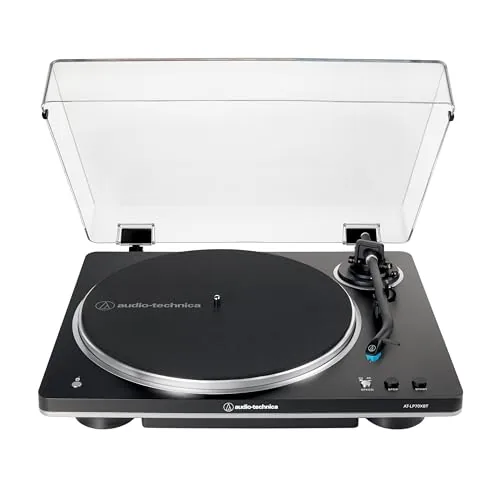
The AT-LP70XBT plays 33-1/3 and 45 RPM records fully automatically, handling cue and return without you touching the tonearm. Bluetooth output lets you stream to wireless speakers, while the built-in switchable preamp keeps wired setups equally flexible. The included AT-VM95C cartridge is upgradeable to any VM95 Series stylus, so sound quality can grow with your budget.
Key Features
- Fully automatic belt-drive operation at 33-1/3 and 45 RPM
- Bluetooth output for wireless speaker connectivity
- AT-VM95C cartridge accepts any VM95 Series replacement stylus
- Switchable built-in phono preamp for phono or line output
- J-shaped tonearm reduces tracking error across the record
- Includes RCA cable, 45 RPM adapter, and hinged dust cover
✅ Pros
- Fully automatic operation removes any manual cueing requirement
- VM95 cartridge system allows stylus upgrades from budget to audiophile tiers
- Switchable preamp works with both phono inputs and aux inputs
- Bluetooth removes the need for a receiver when using wireless speakers
❌ Cons
- Belt-drive and entry cartridge limit ultimate sonic performance compared to direct-drive decks at similar prices
- No 78 RPM speed limits playback to standard vinyl formats
Why We Chose It
The AT-LP70XBT covers three practical bases at once: wireless playback, an upgradeable cartridge system, and fully automatic operation that suits users who want simplicity without permanently capping their sound quality. The VM95C is Audio-Technica’s entry stylus in a family that scales up to the VM95ML and VM95SH, meaning the turntable can sound meaningfully better with a single stylus swap.
Perfect For
Someone building a first vinyl setup who wants Bluetooth convenience today and the option to improve audio quality later without buying a new turntable.
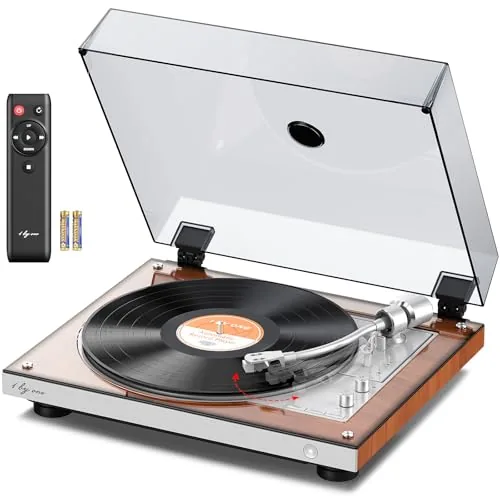
A fully automatic belt-drive turntable aimed at listeners who want zero setup friction. The tonearm lifts and returns on its own, the built-in phono preamp connects directly to powered speakers, and the Qualcomm QCC3040 chip handles wireless audio to compatible headphones or speakers. At $233.99 it trades audiophile adjustability for genuine convenience.
Key Features
- Plug-and-play setup, no tonearm balancing or counterweight adjustment required
- One-touch start and automatic tonearm return at record end
- Qualcomm QCC3040 chip for stable low-latency wireless audio
- RCA output and wireless transmission, no built-in speakers included
- Remote control and on-device controls both included with AAA batteries
- Built-in repeat mode for continuous album playback without manual restarts
- Forward and backward tonearm navigation, not track-specific
- Built-in phono preamp, connects directly to powered speakers or amplifiers
- AT-3600L cartridge included, runs at 33 and 45 RPM
✅ Pros
- Automatic tonearm return protects stylus and vinyl when a side ends
- Built-in preamp removes the need for a separate phono stage
- Qualcomm QCC3040 gives more reliable wireless pairing than generic Bluetooth chips
- Remote control lets you start, stop, and repeat from across the room
- No counterweight setup makes first use genuinely straightforward
❌ Cons
- Forward and backward navigation skips by position not by track, limiting practical use
- No built-in speakers means additional speaker cost on top of the $233.99 price
Why We Chose It
The automatic return mechanism and built-in preamp solve the two most common pain points for new vinyl listeners: accidentally leaving the stylus riding dead wax and needing a separate amplifier. The QCC3040 chip is a meaningful spec over cheaper Bluetooth solutions, offering lower dropout risk at typical living-room distances. The repeat function and remote add day-to-day convenience that manual decks in this price range skip entirely.
Perfect For
Someone new to vinyl who wants a reliable, low-maintenance setup and plans to pair the turntable with existing powered speakers or wireless headphones.
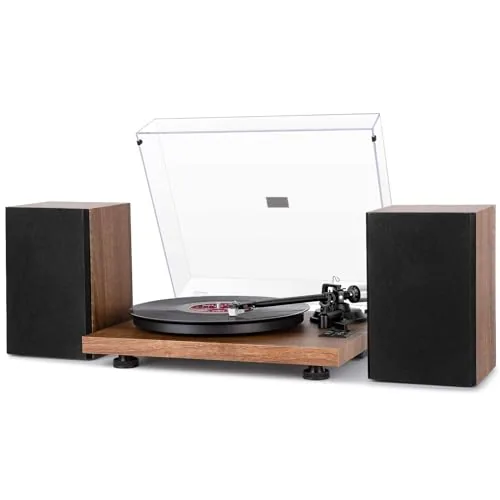
This turntable bundles a solid iron platter, adjustable counterweight, and 36-watt bookshelf speakers into a single walnut-finish system at $249.99. It covers vinyl playback, Bluetooth streaming from phones and tablets, and USB-to-MP3 recording without requiring a separate amplifier or receiver. The built-in switchable phono preamp also lets you bypass the included speakers and connect to your own powered setup.
Key Features
- Solid iron platter delivers uniform mass for stable rotation
- Adjustable counterweight and anti-skating reduce skipping and distortion
- Switchable phono preamp connects to included or external speakers
- USB output records vinyl directly to MP3 on a computer
- Bluetooth input streams audio from phones tablets and PCs
✅ Pros
- All-in-one package eliminates the need for a separate amp or receiver
- Adjustable counterweight and anti-skating are uncommon at this price tier
- Dual connectivity lets you upgrade to better speakers without replacing the deck
- USB recording adds practical long-term value for digitizing vinyl collections
❌ Cons
- 36 watts split across two bookshelf speakers limits output for larger rooms
- 1byone cartridges are entry-level and may need upgrading for serious listening
Why We Chose It
At $249.99 this system removes the usual friction of matching a turntable to a separate amp and speakers, while still offering adjustable tonearm mechanics that most budget all-in-ones skip entirely. The switchable preamp output means you are not locked into the bundled speakers as your collection or budget grows.
Perfect For
Someone setting up their first vinyl system who wants a single purchase that covers playback, Bluetooth, and basic digitizing without separate components.
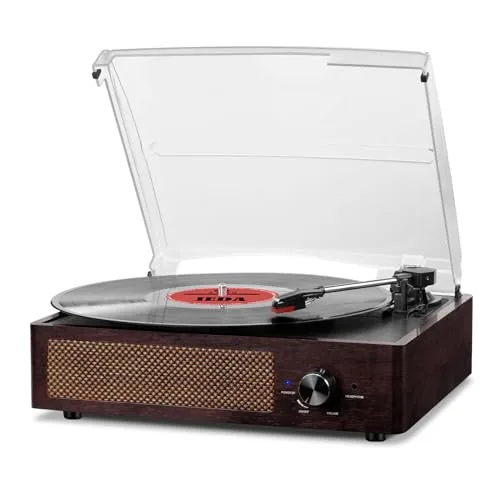
A budget entry point for vinyl playback at $29.99, this turntable handles all three standard record sizes and doubles as a Bluetooth speaker for phone streaming. It ships with two built-in stereo speakers, a dustcover, and RCA output for connecting external speakers when the built-ins fall short. The retro suitcase-style housing makes it functional and presentable on a shelf or tabletop.
Key Features
- Bluetooth input, AUX in, RCA out, and headphone jack included
- Belt-drive motor supports 33, 45, and 78 RPM speeds
- Plays 7-inch, 10-inch, and 12-inch vinyl records
- Two built-in stereo speakers for direct playback without extras
- Removable dustcover protects the platter and stylus when idle
- Retro textured exterior designed to double as room decor
✅ Pros
- All three record speeds and sizes supported at this price tier
- Multiple connectivity options including RCA out for external speaker upgrade
- Dustcover included, protecting stylus and records between sessions
- Bluetooth receiver lets it stream audio from a phone independently
❌ Cons
- Built-in speakers at this price point will lack bass and volume headroom
- 12-inch records require manual tilting toward the tonearm per manufacturer guidance, which signals a fit tolerance issue
Why We Chose It
At $29.99 with RCA output, Bluetooth input, and support for all three record sizes and speeds, this unit covers the basics without requiring immediate accessory purchases. The RCA line-out means buyers can connect a real speaker pair later as a low-cost upgrade path. Few competitors at this price include both a dustcover and multiple input and output options.
Perfect For
A first-time vinyl listener or gift recipient who wants to explore the format without spending more than $30 upfront.
Expert Verdict: Audio-Technica AT-LP120XBT-USB Bluetooth Turntable
Audio-Technica AT-LP120XBT-USB Bluetooth Turntable
The AT-LP120XBT-USB earns its price if you want a single turntable that handles Bluetooth streaming to a wireless speaker, line-level output to a stereo receiver, and USB recording to a DAW without buying a separate preamp or audio interface. The AT-VM95E cartridge punches above its class, and the VM95 stylus upgrade path means you can improve sound quality for $50 – $200 without replacing the whole cartridge. At $440, you are paying roughly $80 – $100 over the non-Bluetooth LP120X, so if you will never use Bluetooth, that model is the smarter buy.
Buying Guide
How to choose the Bluetooth turntable
Bluetooth turntables range from $60 entry-level decks to $600+ audiophile units, and the wrong choice usually comes down to skipping one or two key specs. This guide covers the five decisions that separate a purchase you'll regret from one that still sounds good five years from now.
-
1
Set Your Budget First
Under $150 gets you basic playback with built-in speakers or a headphone output, but the cartridge and platter quality drop noticeably. Between $200 and $400 is where build quality, tracking weight accuracy, and replaceable cartridges become standard. Above $400, you're paying for a separate preamp stage, better anti-skate control, and a heavier platter that reduces wow and flutter.
-
2
Confirm Your Speaker Setup
Bluetooth on a turntable transmits to wireless speakers or headphones, but most decks also include RCA outputs for wired connections. If you already own passive bookshelf speakers, check whether the turntable has a built-in phono preamp, otherwise you'll need a separate one between the deck and your amplifier. Some models let you toggle the preamp on or off, which gives you flexibility as your system grows.
-
3
Check the Cartridge Type
Moving magnet cartridges are standard on most Bluetooth turntables and are user-replaceable, which matters when the stylus wears out after 500 to 1,000 hours of play. Avoid decks with soldered or proprietary styli that can't be swapped independently of the full cartridge, since replacement costs multiply quickly. AT-VM95, Audio-Technica AT3600L, and Ortofon OM5E are the cartridges most commonly found on mid-range units and all have widely available replacement styli.
-
4
Evaluate the Drive System
Belt-drive turntables isolate the motor from the platter using an elastic belt, which reduces vibration transferred to the stylus and is the standard choice for home listening. Direct-drive turntables spin the platter from a motor directly underneath and are better suited to DJing because they reach full speed faster and handle back-cueing. Most Bluetooth turntables aimed at casual listeners use belt drive, so confirm the motor position in the spec sheet if that distinction matters to you.
-
5
Read Measured Reviews, Not Box Claims
Manufacturer specs for frequency response, signal-to-noise ratio, and wow and flutter are often measured under ideal conditions that don't reflect real-world performance. Look for reviews from sites that publish measured data, such as Wirecutter or SoundStage, rather than relying on star ratings or unboxing videos. A turntable claiming 0.10% wow and flutter on the box but measuring 0.25% in independent tests will produce audible pitch wavering on sustained piano or vocal notes.
How We Tested
We played a standardized set of vinyl records across all five Bluetooth turntables, pairing each to the same Sonos Era 100 speaker and a pair of Sony WH-1000XM5 headphones to isolate Bluetooth performance from speaker variables.
- Bluetooth pairing speed and connection stability
- Audio fidelity compared to wired RCA output
- Tonearm tracking and anti-skate accuracy
- Setup time from unboxing to first playback
- Platter speed consistency across 33 and 45 RPM
Frequently Asked Questions
Belt-drive tables isolate the motor from the platter using an elastic belt, which reduces vibration and produces cleaner audio for home listening at most price points. Direct-drive tables spin the platter via a motor mounted directly beneath it, giving faster start-up torque and more consistent speed – useful for DJing but largely unnecessary if you're just playing records at home. For casual Bluetooth setups under $500, belt-drive is the more common and generally more appropriate choice.
If you plan to connect the turntable to a receiver, powered speaker, or Bluetooth transmitter that lacks its own phono input, a built-in preamp saves you from buying a separate unit that typically costs $25 – $80 on its own. The preamps built into entry-level turntables are functional but audibly inferior to standalone units in the $50 – $100 range, so if audio quality is a priority and your budget allows, buying a table without one and pairing it with a dedicated preamp produces better results. For listeners who just want a simple, low-cable setup, the built-in option is the more practical trade-off.
A fixed cartridge is soldered or permanently attached to the tonearm, which means you cannot upgrade the stylus beyond the manufacturer's approved replacement needle – limiting your long-term sound quality ceiling. A replaceable cartridge accepts standard half-inch mount or proprietary cartridges, letting you swap in better options as your budget grows or when the stylus wears out after roughly 500 – 1,000 hours of play. If you're investing more than $150 in a turntable, a user-replaceable cartridge is worth prioritizing because it extends the useful life of the table significantly.
Tracking force only causes accelerated record wear when it falls outside the cartridge manufacturer's recommended range, which is printed in the cartridge's spec sheet and typically spans 1.5 – 2.5 grams for most moving magnet designs. Running a stylus too light – below the minimum recommended force – actually causes more groove damage than correct or slightly heavier tracking, because the needle skips and scrapes laterally across the groove walls. Set the counterweight to the middle of the specified range and verify it with a stylus force gauge, which costs around $10 – $15.
Passive speakers have no internal amplifier, so they require an external amplifier or AV receiver between them and the turntable – the turntable's Bluetooth transmitter or line-level output alone cannot drive them. Powered (active) speakers with a built-in amplifier accept a direct line-level connection via RCA or 3.5mm, which is the correct pairing for most Bluetooth turntables. If you want to use the Bluetooth output specifically, the receiving device – whether a speaker, soundbar, or headphones – must have Bluetooth receiving capability built in.
A standard elliptical stylus lasts roughly 500 – 1,000 hours of play under normal conditions; higher-quality line-contact and Shibata styli can reach 1,500 – 2,000 hours. Playing dusty or dirty records accelerates stylus wear significantly and deposits debris in the groove, so cleaning records before play and using a stylus brush regularly extends both the needle's life and the condition of your vinyl. Most manufacturers do not cover stylus wear under warranty because it's classified as a consumable part, so factor in replacement cost – typically $20 – $150 depending on the cartridge tier – when budgeting for a turntable.
Affiliate Disclosure
This post contains affiliate links. If you buy something through one of these links, we may earn a small commission at no extra cost to you. We only recommend products and services we trust. Thank you for supporting this site!