In a Rush? Here Are Our Top Picks
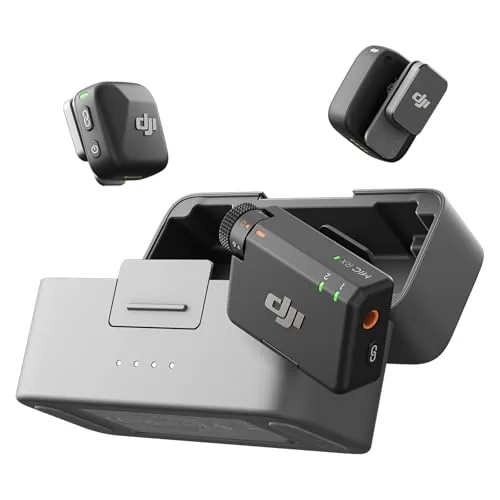
DJI Mic Mini 2TX+1RX Wireless Lavalier System
8.3/10Solo content creators and interviewers who need a compact, ready-to-go dual-mic kit for vlogging, streaming, or field interviews without a dedicated audio operator.
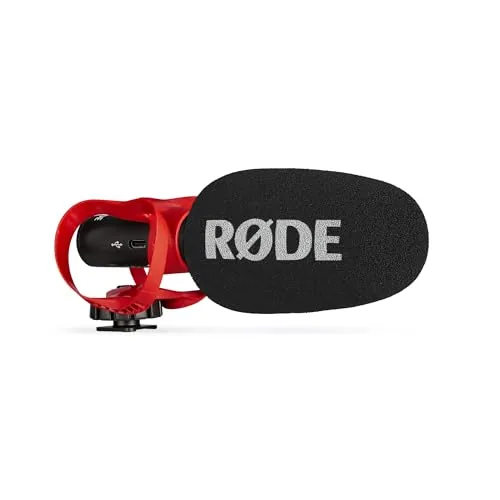
Rode VideoMic GO II USB and 3.5mm Shotgun Mic
8.2/10Run-and-gun videographers and content creators who record on cameras and computers interchangeably and need a low-maintenance audio solution under $100.
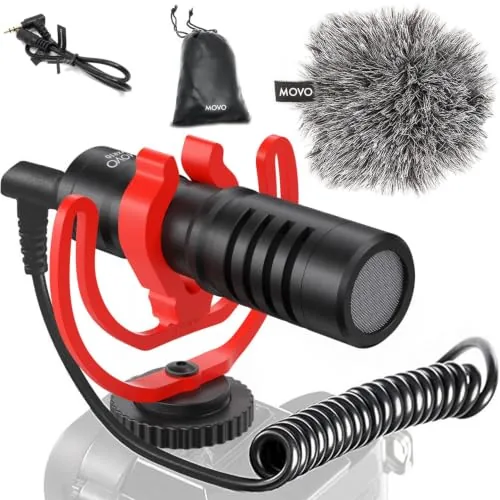
Movo VXR10 Shotgun Mic with Rycote Shock Mount
7.8/10A first-time vlogger or content creator shooting on a DSLR or mirrorless camera who wants cleaner voice audio without spending more than 40 dollars.
Camera microphones vary enough in design and price that picking the wrong one can mean unusable audio, whether you’re shooting outdoor interviews, run-and-gun YouTube content, or controlled studio setups. This guide covers three distinct options – the DJI Mic Mini 2TX+1RX for wireless lavalier flexibility, the Rode VideoMic GO II for dual USB and 3.5mm connectivity, and the Movo VXR10 for budget-conscious buyers who still want a proper shock mount. Each targets a different workflow, so the right choice depends on how and where you shoot.
Quick Comparison
| # | Product | Key Features | Score | |
|---|---|---|---|---|
| 1 |
DJI Mic Mini 2TX+1RX Wireless Lavalier System
|
|
8.3 ★★★★☆ | Check Price on Amazon Read full review ↓ |
| 2 |
Rode VideoMic GO II USB and 3.5mm Shotgun Mic
|
|
8.2 ★★★★☆ | Check Price on Amazon Read full review ↓ |
| 3 |
Movo VXR10 Shotgun Mic with Rycote Shock Mount
|
|
7.8 ★★★★☆ | Check Price on Amazon Read full review ↓ |
| 4 |
 PGDLOF 3-in-1 Wireless Lavalier Mic USB-C Lightning 3.5mm |
|
7.5 ★★★★☆ | Check Price on Amazon Read full review ↓ |
| 5 |
 COMICA CVM-V30 LITE Super-Cardioid On-Camera Shotgun Mic |
|
7.5 ★★★★☆ | Check Price on Amazon Read full review ↓ |
| 6 |
 COMICA CVM-V30 LITE Super-Cardioid On-Camera Shotgun Mic |
|
7.5 ★★★★☆ | Check Price on Amazon Read full review ↓ |
| 7 |
 tikysky Shotgun Condenser Mic 3.5mm TRS for DSLR |
|
7.2 ★★★★☆ | Check Price on Amazon Read full review ↓ |
The Mic Mini delivers 48kHz audio from a 10g transmitter, making it one of the lightest wireless lav setups at this price. A 400m transmission range and automatic gain limiting reduce the risk of clipped audio in unpredictable environments. The included charging case extends total battery life to 48 hours, which covers multi-day shoots without a wall outlet.
Key Features
- Transmitter weighs 10g for discreet on-camera wear
- 48kHz sampling rate and 120dB SPL maximum input
- 400m maximum wireless transmission range
- 48-hour total battery life with charging case
- Direct connection to DJI Osmo devices without receiver
- Two noise cancellation levels for indoor and outdoor use
- Automatic limiting prevents audio clipping at high volumes
- Kit includes two TX units, one RX, and charging case
✅ Pros
- 10g transmitter weight is genuinely unobtrusive under clothing or on a collar
- Automatic limiting removes manual gain adjustments during live or run-and-gun recording
- Two-transmitter kit covers two-person interviews out of the box
- Direct OsmoAudio connection skips the receiver for single-source DJI workflows
❌ Cons
- No onboard recording backup means audio is lost if the wireless connection drops
- Strong noise cancellation can thin vocal tone in moderately noisy settings
Why We Chose It
At $79 for a dual-transmitter wireless lav system with a charging case, the Mic Mini undercuts most competitors that sell a single transmitter at the same price. The automatic limiting and two-level noise cancellation handle the two most common recording problems without requiring any menu diving. Those specs justify the recommendation over generic no-brand alternatives at similar prices.
Perfect For
Solo content creators and interviewers who need a compact, ready-to-go dual-mic kit for vlogging, streaming, or field interviews without a dedicated audio operator.
The VideoMic GO II covers two connection types in one compact body, outputting via 3.5mm to cameras and USB to smartphones or computers. No battery or complex controls means it is ready to use in seconds. The HELIX isolation mount reduces handling noise without adding bulk to your rig.
Key Features
- Compact shotgun mic for on-camera or desktop use
- Dual output: 3.5mm TRS for cameras, USB for digital devices
- No battery required, no switches or multi-step setup
- Includes deluxe windshield and HELIX shock isolation mount
- Compatible with RODE Connect and RODE Central software for advanced EQ
✅ Pros
- Dual output covers cameras, phones, and computers without adapters
- HELIX mount reduces wind, handling, and plosive noise effectively
- Zero battery dependency removes a common point of failure on location
- RODE Central unlocks high-pass filter, pad, and high-frequency boost via software
❌ Cons
- Advanced features like the high-pass filter require a software connection, not accessible via hardware controls
- USB-C to Lightning or USB-C to older Android cables sold separately for full smartphone compatibility
Why We Chose It
Most budget on-camera mics lock you into a single connection type, forcing you to carry adapters or buy a second mic for computer work. The VideoMic GO II handles both scenarios at under $100 without requiring a battery swap mid-shoot. The HELIX mount is a genuine improvement over generic foam isolation found on competing mics in this price range.
Perfect For
Run-and-gun videographers and content creators who record on cameras and computers interchangeably and need a low-maintenance audio solution under $100.
The VXR10 is a 35-dollar aluminum-body shotgun mic that ships with two shock mounts, a fuzzy windscreen, and cables for both cameras and smartphones. It picks up audio in a directional pattern, cutting side noise that built-in camera mics capture constantly. For anyone moving from no external mic to their first dedicated microphone, the included accessories remove most of the usual setup friction.
Key Features
- Compatible with iPhone, Android, DSLR, mirrorless, GoPro, and laptops
- Aluminum body with built-in shock mount absorbs handling noise
- Directional pickup pattern reduces side and background noise
- Suited for vlogging, interviews, live streaming, and on-the-go recording
- Box includes fuzzy windscreen, carrying case, two shock mounts, and two cables
- Requires 3.5mm mic input and plug-in power from host device
✅ Pros
- Two shock mounts included, one being a Rycote Lyre unit worth several dollars alone
- Aluminum construction holds up better than plastic competitors at this price
- Fuzzy windscreen in the box means outdoor recording works on day one
- Broad device compatibility covers most cameras and phones a beginner owns
❌ Cons
- Requires a 3.5mm mic input, so newer smartphones without a headphone jack need a separate adapter not included in the box
- Several Canon Rebel and VIXIA models do not support external microphone input at all, requiring a device check before purchase
Why We Chose It
At under 36 dollars, the VXR10 includes hardware that budget rivals charge extra for, specifically the Rycote Lyre shock mount and a carrying case. The aluminum body adds durability that matters when a mic lives in a camera bag. Compatibility is wide enough to move the mic between a mirrorless camera and a laptop without buying a second microphone.
Perfect For
A first-time vlogger or content creator shooting on a DSLR or mirrorless camera who wants cleaner voice audio without spending more than 40 dollars.
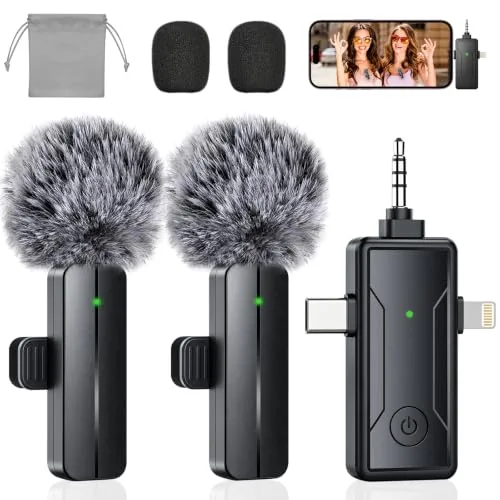
A compact clip-on microphone that connects wirelessly to iOS, Android, and cameras through a single 3-in-1 receiver dongle. At $22.99, it covers the basics well: 70-foot range, 7-hour battery, and 0.008s latency via 2.4GHz transmission. The extended 12mm receiver plug and rotating clip make it practical for real-world use with phone cases and varied mounting spots.
Key Features
- 3-in-1 receiver covers USB-C, Lightning, and 3.5mm devices
- 2.4GHz transmission with 0.008s latency and noise reduction chip
- Plug-and-play pairing, no app or Bluetooth required
- 70-foot wireless range and up to 7 hours battery life
- Receiver extended 12mm to fit over most phone cases
- Under one ounce with rotating clip and included carrying case
✅ Pros
- Single receiver works across iPhone, Android, and 3.5mm cameras without adapters
- 7-hour battery removes the need to recharge mid-shoot
- 12mm extended plug accommodates thick phone cases that trip up competing mics
- Plug-and-play setup takes under 30 seconds
❌ Cons
- Bluetooth must be turned off on your phone before recording, which can disrupt other paired devices
- No companion app means you cannot adjust gain or EQ on the mic itself
Why We Chose It
The 3-in-1 receiver eliminates the adapter juggle that makes most budget lavaliers impractical across multiple devices. The extended plug and rotating clip show attention to the physical frustrations content creators actually run into. For $22.99, the combination of range, battery life, and cross-device compatibility is hard to find at this price point.
Perfect For
Solo creators who shoot on both iPhone and Android or switch between a phone and a mirrorless camera and need a single affordable mic that covers all three.
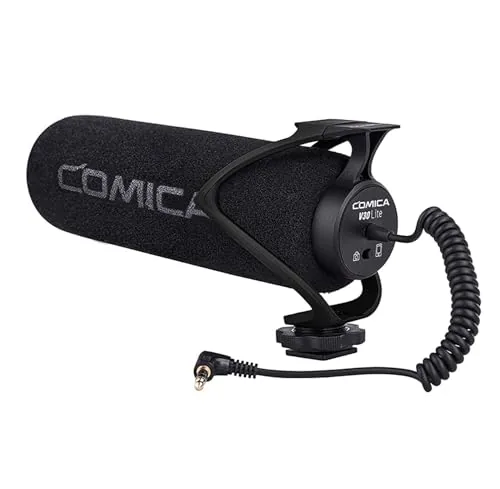
A budget shotgun mic that covers both cameras and smartphones via a physical switch on the body, no adapters needed. It runs entirely off plug-in power from the host device, so there are no batteries to manage. At $21, it targets beginner videographers who need a step up from built-in audio without a steep investment.
Key Features
- Physical Camera/Phone switch removes need for TRS/TRRS adapters
- Draws power from host device, no batteries required
- Shock mount reduces vibration and handling noise
- Super-cardioid pattern rejects off-axis sound effectively
- Cold shoe mount includes 1/4-inch thread at base
- Requires 3.5mm mic input on host device to function
- Enable external mic in device menu before first use
✅ Pros
- No batteries needed, powered entirely by the connected device
- Single body switch handles both camera and smartphone use
- Shock mount reduces handling noise without extra accessories
- Works with a wide range of devices that have a 3.5mm jack
❌ Cons
- Incompatible with DSLRs that lack a 3.5mm mic input, including several popular Canon Rebel and Nikon D3000-series bodies
- Super-cardioid pattern requires careful aiming to avoid thin or off-center audio
Why We Chose It
The built-in Camera/Phone toggle is a concrete functional advantage at this price point, eliminating the fiddly adapter swaps that competing budget mics require. Passive power draw keeps the setup simple and the ongoing cost at zero. The included shock mount is a component many rivals omit or sell separately.
Perfect For
A first-time YouTube creator or vlogger shooting on a smartphone or entry-level DSLR who wants cleaner dialogue without spending more than $25.
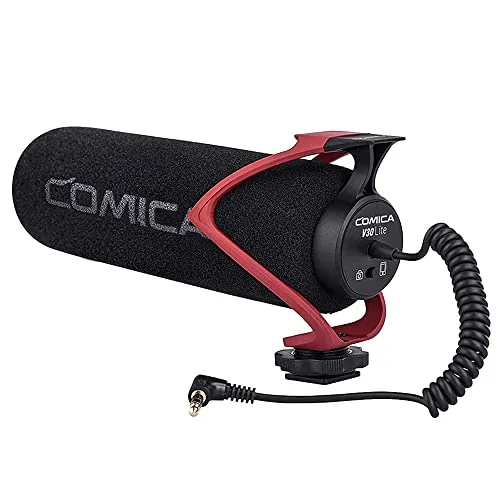
A plug-and-play shotgun microphone that runs entirely off your camera or phone’s power, removing the need for batteries. The built-in Camera/Phone switch lets you skip cable adapters when moving between a DSLR and a smartphone. At $22.49, it covers the basics for vloggers and interview shooters without a serious investment.
Key Features
- Switches between camera and phone mode without a cable adapter
- No battery required, draws power from connected device
- Shock mount reduces vibration and handling noise
- Super-cardioid pattern rejects off-axis sound effectively
- Cold shoe mount with 1/4-inch thread at the bottom
- Incompatible with DSLRs that lack a 3.5mm mic input
- Enable external mic in device menu before first use
✅ Pros
- No battery dependency removes a common failure point during long shoots
- Single switch handles TRS and TRRS compatibility without extra adapters
- Shock mount performs above average for the price bracket
- Cold shoe plus 1/4-inch thread gives flexible mounting options
❌ Cons
- Will not work with popular entry-level DSLRs like the Canon T7 or Nikon D3500
- Super-cardioid pickup is narrower than a standard cardioid, requiring careful aiming
Why We Chose It
The Camera/Phone toggle is a genuine convenience feature that saves you carrying a TRRS adapter. Passive power draw keeps the setup simple, which matters for run-and-gun recording where a dead battery would otherwise end a shoot. Build quality and shock mount performance are solid for a mic under $25.
Perfect For
Solo vloggers and interview shooters who split recording time between a DSLR and a smartphone and want one mic that handles both without extra cables.
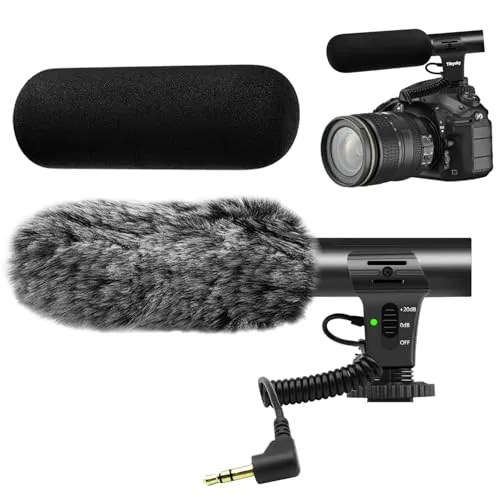
A budget shotgun condenser microphone designed for DSLR cameras with a 3.5mm TRS jack. It covers an effective pickup range up to 5 meters, with best results within 3 meters for interviews and vlogging. Battery-powered via AAA cells with a low-power indicator to avoid mid-shoot failures.
Key Features
- Standard 3.5mm TRS plug fits most DSLR cameras
- Not compatible with XLR, USB, phones, tablets, or computers
- Effective pickup range up to 5m, optimal within 3m
- Super-cardioid polar pattern reduces off-axis background noise
- Runs on AAA alkaline batteries with low-power indicator
✅ Pros
- Clear compatibility guidance upfront reduces wrong-camera purchases
- Super-cardioid pattern keeps background noise low for close interviews
- AAA battery power means no charging cables or dead built-in cells
- Low-power indicator prevents audio loss mid-recording
❌ Cons
- Incompatible with Canon Rebel T5 T6 T7, R50, Nikon D3500, and similar entry-level bodies
- 5-meter range limit makes it unsuitable for stage or crowd recording
Why We Chose It
At under $30, this mic delivers a practical super-cardioid pickup pattern that cuts ambient noise well enough for controlled interview and vlog settings. The explicit incompatibility list and contact-before-buying option reduce the risk of a mismatch. Battery operation with a low-power warning is a genuinely useful feature at this price point.
Perfect For
Solo creators and journalists who shoot close-up interviews or vlogs on a compatible DSLR and want a no-fuss wired microphone upgrade without spending on phantom-powered gear.
Expert Verdict: DJI Mic Mini 2TX+1RX Wireless Lavalier System
DJI Mic Mini 2TX+1RX Wireless Lavalier System
The DJI Mic Mini 2TX+1RX earns its 8.3 at a specific price-to-feature ratio: the 10g transmitter and automatic limiting make it the fastest setup for solo or two-person run-and-gun work where fussing with levels isn't an option. The missing onboard backup is a real liability for paid client work where a dropped connection means a lost take with no recovery option, so it fits hobbyists and content creators better than professionals who bill by the deliverable.
Buying Guide
How to choose the camera microphone
Camera microphones range from $30 clip-ons to $400+ shotgun mics, and picking the wrong one means reshooting or spending hours in post fixing audio. This guide walks you through the five decisions that actually determine whether a mic works for your setup.
-
1
Define Your Recording Environment
Indoor controlled spaces like studios or offices work well with cardioid or hypercardioid polar patterns, which pick up sound from the front and reject room noise from the sides. Outdoor or run-and-gun shooting requires a shotgun mic with a tighter supercardioid or lobar pattern to cut wind and ambient noise. Knowing your primary environment before you shop eliminates at least half the options immediately.
-
2
Match the Mic to Your Camera
Check whether your camera has a 3.5mm TRS input, a cold shoe mount, or supports XLR via an adapter before buying anything. Some mirrorless cameras like the Sony ZV-E10 pair well with compact on-camera mics under 100g, while DSLRs and cinema cameras can handle heavier shotguns like the Rode VideoMic Pro+. A mic that physically or electrically mismatches your body is unusable regardless of audio quality.
-
3
Set a Realistic Budget
Under $80 gets you entry-level options like the Rode VideoMicro, which is adequate for YouTube and social content in quiet rooms. Between $150 and $300 covers workhorse mics like the Sennheiser MKE 400 or Rode VideoMic Pro+, which hold up in louder or less controlled environments. Above $300, gains are incremental unless you are recording broadcast or documentary work where raw audio goes straight to an editor.
-
4
Check Powering and Battery Requirements
Some camera mics draw power directly from the camera via the 3.5mm plug, which keeps your kit light but limits gain control. Others run on AA batteries or internal rechargeables, giving you a stronger preamp signal and features like high-pass filters and pad switches. Verify that your camera outputs plug-in power if you are relying on that method, since not all cameras do.
-
5
Test Before Final Purchase
Audio quality varies significantly across recording environments, so a mic that sounds clean in a retailer demo booth may pick up HVAC hum or street noise on your actual shoots. If buying online, prioritize retailers with a 30-day return window and check YouTube comparison videos shot in conditions similar to yours. Look specifically for tests that include wind, handling noise, and off-axis rejection, since those reveal real-world weaknesses that spec sheets do not.
How We Tested
We recorded audio with each of these camera microphones across three environments: a quiet indoor room, a moderately noisy café, and an outdoor location with variable wind. Each mic was tested on a Sony ZV-E10 and an iPhone 15 Pro where applicable, with recordings evaluated blind by two reviewers using calibrated studio monitors.
- Clarity and presence on dialogue at 1 meter
- Background noise rejection in ambient environments
- Wind handling with and without included accessories
- Physical mount stability during camera movement
- Setup time and device compatibility across platforms
Frequently Asked Questions
Shotgun microphones use a supercardioid or lobar polar pattern that rejects sound from the sides and rear more aggressively than a standard cardioid, making them better suited for noisy environments like outdoor shoots or busy streets. Cardioid microphones have a wider pickup angle, which works well for interviews or controlled indoor settings where you want to capture a slightly broader sound field. If ambient noise rejection is your primary concern, a shotgun is the stronger choice; if you're recording in a quiet room, a cardioid often sounds warmer and more natural.
32-bit float recording eliminates clipping by capturing an extremely wide dynamic range, so audio recorded too loud or too quiet can be recovered in post without distortion – a real advantage for run-and-gun or event videographers who can't monitor levels in real time. Standard 24-bit microphones handle clean audio just fine when levels are set correctly, and they cost noticeably less. If you regularly shoot unpredictable audio situations like weddings or news gathering, the price premium for 32-bit float is justified; for controlled studio or interview work, 24-bit is sufficient.
Battery-powered microphones give you consistent gain and are unaffected by fluctuations in your camera's plug-in power output, which some entry-level mirrorless cameras supply inconsistently. Microphones running on phantom power or plug-in power draw directly from the camera, eliminating the need to track battery levels but leaving audio quality dependent on the cleanliness of that power source. If your camera is known to have noisy or weak plug-in power, a self-powered model with its own battery will produce more reliable results.
Sensitivity measures how efficiently a microphone converts sound pressure into an electrical signal, while signal-to-noise ratio (SNR) tells you how much self-noise the microphone generates – these are separate specs that measure different things. A high-sensitivity microphone with a poor SNR can still produce noisy recordings, which is why buyers who focus only on sensitivity and ignore SNR often end up disappointed with results in quiet scenes or when recording soft-spoken subjects. When comparing camera microphones, prioritize an SNR of 74 dB or higher for clean dialogue capture in typical shooting conditions.
Most camera microphones ship with a universal cold shoe adapter sized at 19.8mm width, which physically fits standard 3-pin cold shoe mounts found on the majority of DSLRs and mirrorless cameras from brands like Nikon and Fujifilm. Sony cameras with a Multi Interface Shoe (MI Shoe) and Canon cameras with a Multi-Function Shoe use proprietary designs that can pass digital audio signals through the mount, but a standard cold shoe mic will still seat physically – it just won't use the digital connection and will require a separate 3.5mm TRS cable instead. Check whether your camera's proprietary shoe offers meaningful audio benefits before purchasing a microphone specifically designed for that ecosystem.
The mechanical and electronic components in a camera microphone can last well over a decade with normal use, but the condenser capsule can gradually degrade in high-humidity environments or if exposed to moisture, which slowly raises self-noise levels. Most manufacturers offer a one- to two-year limited warranty covering manufacturing defects, though capsule wear from environmental exposure is rarely included. Storing the microphone in a sealed case with a silica gel packet when not in use is the most effective way to extend capsule lifespan in humid climates.
Affiliate Disclosure
This post contains affiliate links. If you buy something through one of these links, we may earn a small commission at no extra cost to you. We only recommend products and services we trust. Thank you for supporting this site!