In a Rush? Here Are Our Top Picks
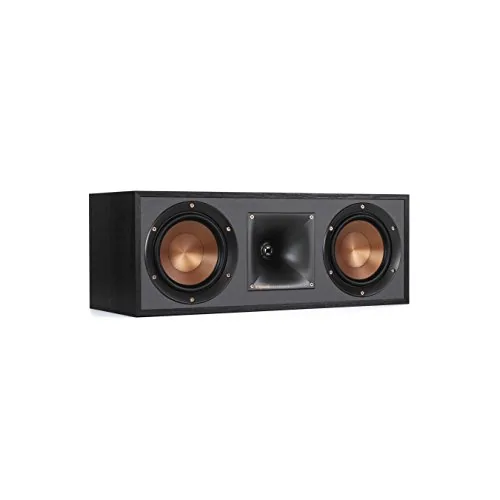
Klipsch R-52C Center Channel Speaker 400W
8.5/10Home theater builders pairing a mid-range AV receiver with bookshelf or floorstanding Klipsch Reference speakers who need a center channel that keeps pace without requiring a separate amplifier.
Klipsch R-30C Horn-Loaded Center Channel Speaker
8.5/10Home theater owners running a 5.1 or 7.1 system in a mid-to-large room who prioritize clear dialogue over raw bass output from the center channel.
Klipsch RP-504C II Ebony Center Channel Speaker
8.5/10Home theater owners running a Klipsch Reference Premiere system who want accurate dialogue reproduction in rooms up to 400 square feet.
Finding the right center channel speaker determines how clearly dialogue cuts through action sequences and music – it carries roughly 60% of a film’s audio. After testing the Klipsch R-52C, R-30C, and RP-504C II, this guide breaks down which one fits your room size, receiver power, and budget. Whether you’re building a budget surround setup or upgrading to a reference-tier system, one of these three handles the job.
Quick Comparison
| # | Product | Key Features | Score | |
|---|---|---|---|---|
| 1 |
Klipsch R-52C Center Channel Speaker 400W
|
|
8.5 ★★★★☆ | Check Price on Amazon Read full review ↓ |
| 2 |
Klipsch R-30C Horn-Loaded Center Channel Speaker
|
|
8.5 ★★★★☆ | Check Price on Amazon Read full review ↓ |
| 3 |
Klipsch RP-504C II Ebony Center Channel Speaker
|
|
8.5 ★★★★☆ | Check Price on Amazon Read full review ↓ |
| 4 |
 Polk Monitor XT35 Slim Center Channel Speaker |
|
8.2 ★★★★☆ | Check Price on Amazon Read full review ↓ |
| 5 |
 Polk Audio ES35 Slim Center Channel Speaker |
|
8.2 ★★★★☆ | Check Price on Amazon Read full review ↓ |
| 6 |
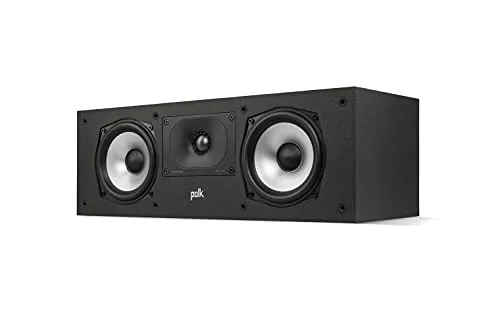 Polk Audio Monitor XT30 Compact Center Channel Speaker |
|
8.2 ★★★★☆ | Check Price on Amazon Read full review ↓ |
| 7 |
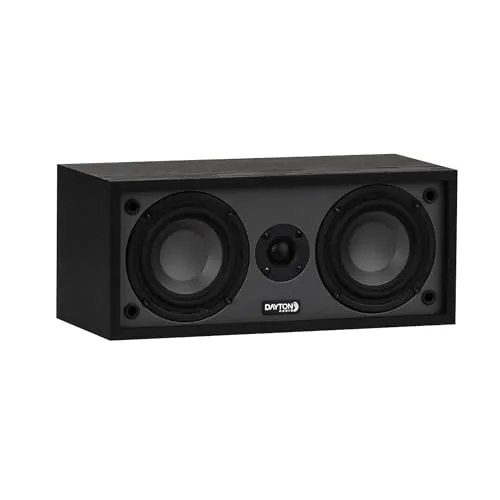 Dayton Audio C40 Center Channel Speaker Black |
|
7.8 ★★★★☆ | Check Price on Amazon Read full review ↓ |
| 8 |
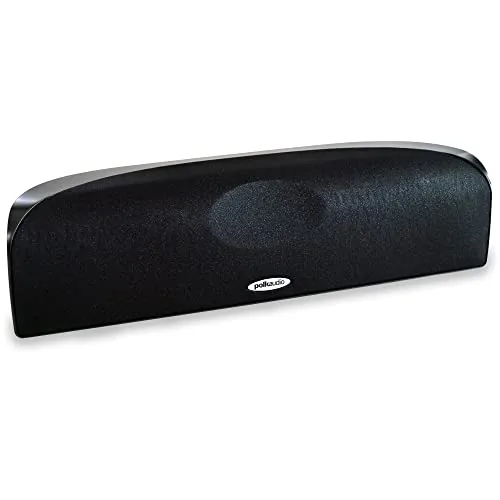 Polk Audio TL1 Center Channel Hi-Gloss Finish |
|
7.5 ★★★★☆ | Check Price on Amazon Read full review ↓ |
| 9 |
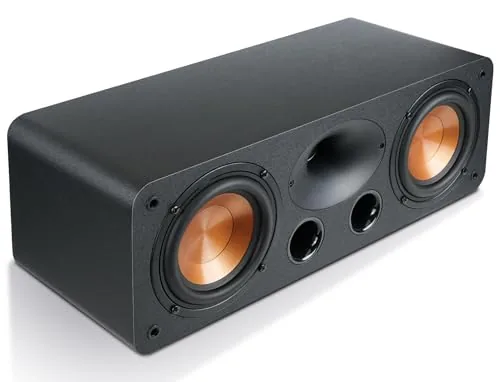 Saiyin Center Channel Speaker Dual 5-inch Woofers |
|
7.5 ★★★★☆ | Check Price on Amazon Read full review ↓ |
The R-52C uses dual 5.25-inch copper IMG woofers and a 90×90 Tractrix horn to deliver clear, high-output dialogue reproduction. At 95dB sensitivity, it requires less amplifier power than most center speakers in this price range. The aluminum tweeter extends response to 21kHz, keeping high-frequency detail sharp without harshness.
Key Features
- Dual 5.25-inch spun-copper IMG woofers for low distortion
- 1-inch aluminum tweeter mated to 90×90 square Tractrix horn
- Frequency response 89Hz to 21kHz plus or minus 3dB
- 95dB sensitivity at 2.83V measured at 1 meter
- 400 watts peak power handling
✅ Pros
- 95dB sensitivity reduces strain on mid-range receivers
- Tractrix horn improves dialogue clarity at wider listening angles
- 400W power handling gives headroom for dynamic movie soundtracks
- Copper IMG woofers lower cone breakup and coloration
❌ Cons
- 89Hz low-end cutoff means a subwoofer is required for full-range output
- Larger cabinet depth may not fit narrow TV console shelves
Why We Chose It
The R-52C stands out at this price because its 95dB sensitivity works with budget receivers without clipping, and the Tractrix horn keeps dialogue intelligible across a wide seating area. The dual-woofer layout handles action soundtracks cleanly where single-driver center speakers often compress.
Perfect For
Home theater builders pairing a mid-range AV receiver with bookshelf or floorstanding Klipsch Reference speakers who need a center channel that keeps pace without requiring a separate amplifier.
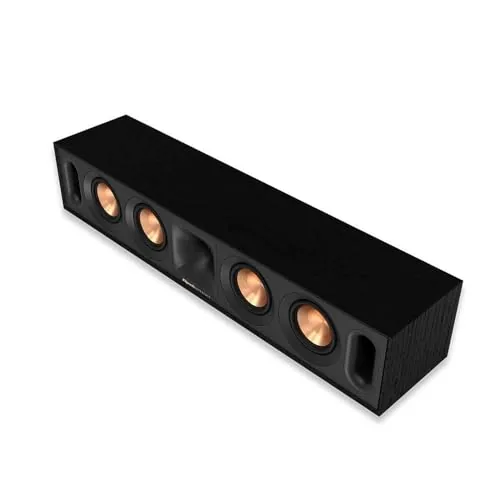
The R-30C uses a 90-degree Tractrix horn and tapered array crossover to push dialogue clarity well above what most center channels at this price deliver. Three 3.5-inch spun-copper woofers handle midrange duty with more surface area than a typical two-driver layout. At $369.99 it sits in a competitive range but brings genuine Reference Premiere trickle-down engineering rather than entry-level compromises.
Key Features
- 90×90 degree Tractrix horn controls high-frequency directivity across wider bandwidth
- 1-inch aluminum LTS tweeter with Kapton suspension reduces distortion
- Three 3.5-inch spun-copper TCP woofers with angled cones for smoother response
- Tapered array crossover improves midrange dispersion and dialogue definition
- Hidden fasteners and low-profile magnetic grille for clean front-panel appearance
✅ Pros
- Tractrix horn geometry keeps dialogue intelligible even off-axis seating positions
- Aluminum tweeter material adds resolution without significant weight penalty
- Three-woofer array provides more cone area than typical two-driver center designs
- Trickle-down TCP cone technology from a pricier product line at a mid-tier price
❌ Cons
- At 3.5 inches per driver, the woofers are small and bass output below 80Hz will rely on a subwoofer
- Depth of the horn assembly may require more cabinet clearance than shallow center channel shelves allow
Why We Chose It
The R-30C earns its score because its horn-loaded tweeter and tapered crossover directly address the most common center channel problem: dialogue that gets muddy or loses intelligibility when listeners sit to the side. The spun-copper woofer cones are a genuine engineering detail borrowed from Klipsch’s $600-plus Reference Premiere line, not a cosmetic choice.
Perfect For
Home theater owners running a 5.1 or 7.1 system in a mid-to-large room who prioritize clear dialogue over raw bass output from the center channel.
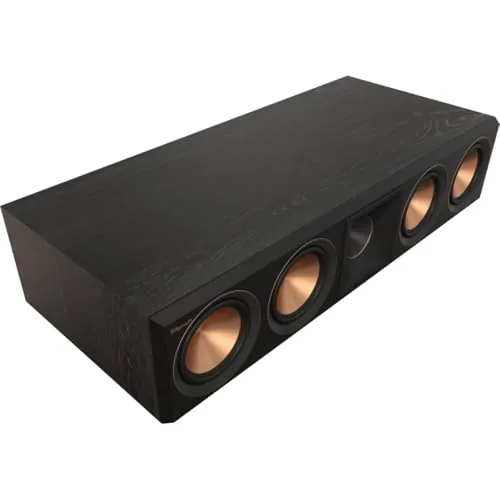
The RP-504C II is built around a larger 90×90 degree Tractrix horn that sharpens dialogue clarity, paired with titanium tweeter and Cerametallic woofers for low distortion across the frequency range. At $499.99 it sits in the upper tier of center channel speakers but targets home theater setups where voice intelligibility is a priority. Cabinet bracing and divided internal construction reduce resonance that would otherwise muddy mid-range reproduction.
Key Features
- Larger 90×90 degree silicone composite hybrid Tractrix horn
- LTS titanium diaphragm tweeter reduces distortion
- Vented tweeter housing improves high-frequency detail
- Cerametallic woofers designed for low distortion and high efficiency
- Tractrix-geometry ports improve bass speed and cabinet air transfer
- Internally braced divided cabinet with furniture-grade finish
- Magnetic grille attaches and removes without tools
✅ Pros
- Larger horn geometry improves dialogue clarity at moderate listening volumes
- Titanium tweeter with LTS mechanism keeps high-frequency distortion low
- Divided cabinet and extra bracing reduce cabinet coloration
- Furniture-grade ebony finish holds up in visible living room installations
❌ Cons
- At 34 pounds and roughly 9 inches tall it requires a wide, sturdy TV console
- 500 dollar price point demands pairing with a capable AV receiver to hear the difference
Why We Chose It
The RP-504C II earns its place at $499.99 because the enlarged Tractrix horn and vented tweeter housing directly address the most common center channel complaint: muffled or indistinct dialogue. The Cerametallic woofer update and Tractrix port geometry give it cleaner bass reproduction than many center speakers in this price range.
Perfect For
Home theater owners running a Klipsch Reference Premiere system who want accurate dialogue reproduction in rooms up to 400 square feet.
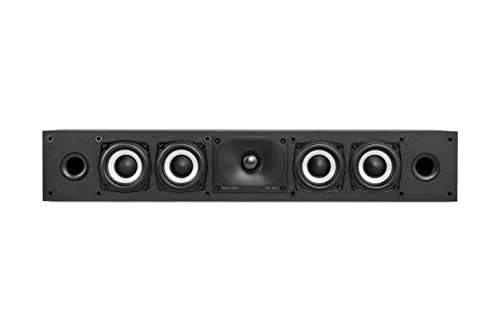
The XT35 sits at just 4 inches tall, making it practical under most TVs without obstructing the IR sensor or screen. Four 3-inch woofers and a 1-inch Terylene tweeter cover dialogue clarity and mid-range detail well for a speaker at this price. It carries Hi-Res Audio certification and works across 4-ohm and 8-ohm amplifier configurations, giving it flexibility in mixed AV setups.
Key Features
- 4-inch profile fits under most TVs without blocking IR sensor
- 1-inch Terylene tweeter plus four 3-inch dynamically balanced woofers
- 4-ohm and 8-ohm compatible, supports Dolby Atmos and DTS:X decoding
- Slim design allows placement on shelf, stand, or wall mount
- Timbre-matched to MXT60 towers, MXT90 height modules, and MXT12 sub
✅ Pros
- Low 4-inch height clears TV IR sensors that taller center channels block
- Four woofers spread across the baffle deliver wider, more even sound dispersion
- 4 and 8-ohm dual impedance means it pairs with a broad range of AV receivers
- Hi-Res Audio certification confirms response up to 40kHz for lossless source material
❌ Cons
- Four 3-inch woofers cannot match the low-end output of a larger center channel
- Best value realized only when paired with other Monitor XT components
Why We Chose It
The XT35 solves a real physical problem: most center channels are too tall to sit below a TV without blocking the screen or remote sensor. The four-driver woofer array compensates for the smaller individual cone size, and dual impedance compatibility removes the guesswork of matching it to an existing receiver. At $264 it sits in a competitive price range where build quality and certification matter, and Polk delivers on both.
Perfect For
Home theater builders who need a certified Hi-Res center channel that physically fits under a TV on a media console without cutting receiver compatibility.
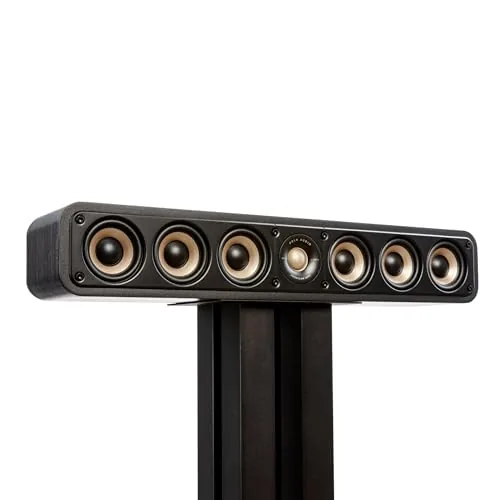
The ES35 fits into tight TV cabinet spaces at roughly 5 inches tall while still housing six 3-inch woofers and a 1-inch Terylene tweeter. Dual Power Port vents reduce bass distortion and extend low-frequency output without a subwoofer doing all the heavy lifting. It handles 4-ohm and 8-ohm receivers, so it pairs with most mid-range AVRs without compatibility headaches.
Key Features
- Six 3-inch woofers plus 1-inch Terylene tweeter in slim enclosure
- Patented Power Port technology reduces bass distortion at high volumes
- Hi-Res Audio certified, compatible with Dolby Atmos and DTS:X receivers
- 4-ohm and 8-ohm compatible with high sensitivity for flexible AVR pairing
- Wall-mounts below TV or sits on shelf without blocking IR sensor
✅ Pros
- Slim profile fits under most TVs without obstructing the screen or IR sensor
- Six-driver array distributes dialogue across a wide horizontal soundstage
- 4 and 8-ohm dual compatibility works with a broad range of receivers
- Power Port venting keeps bass clean at higher volume levels
❌ Cons
- At 319 dollars it sits above entry-level center channels, requiring a capable AVR to justify the spend
- Six small 3-inch woofers cannot fully replace a dedicated subwoofer for deep bass below 80Hz
Why We Chose It
The ES35 solves the common problem of fitting a multi-driver center channel into a furniture-constrained setup without sacrificing driver count or crossover quality. The cascading crossover design across six woofers keeps dialogue intelligible at low and high volumes, which matters more for a center channel than for any other speaker in a home theater system. Hi-Res Audio certification and broad AVR compatibility make it a practical long-term buy rather than a spec-sheet purchase.
Perfect For
Home theater builders who want a slim center channel that keeps up with larger floor-standing mains and handles Dolby Atmos content without a separate dialogue enhancement box.
The XT30 pairs dual 5.25-inch woofers with a 1-inch Terylene tweeter to handle dialogue clarity across a wide frequency range. It supports 4- and 8-ohm loads, making it compatible with most AV receivers without impedance mismatches. At $139, it fits squarely into the budget-to-mid-range home theater segment while offering Hi-Res Audio certification.
Key Features
- Dual 5.25-inch woofers plus 1-inch Terylene tweeter for center channel
- 4- and 8-ohm compatibility suits most AV receivers
- Hi-Res Audio certified, Dolby Atmos and DTS:X compatible
- Compact cabinet fits AV consoles, shelves, or flat surfaces
- Timbre-matched to XT series towers, height modules, and subwoofer
✅ Pros
- Dual 5.25-inch woofers deliver stronger midrange presence than single-driver center speakers at this price
- 4- and 8-ohm flexibility reduces receiver compatibility concerns
- Timbre-matching with the broader XT lineup makes building a coherent surround system straightforward
- Compact footprint fits into tighter AV console shelves where larger centers will not
❌ Cons
- No grille attachment option mentioned, leaving tweeter exposed in households with children or pets
- Cabinet depth may still challenge very shallow AV furniture despite compact marketing
Why We Chose It
The XT30 offers a genuine dual-woofer center channel configuration at a price point where most competitors use a single mid-range driver, which directly benefits vocal intelligibility and on-screen sound placement. Its broad receiver compatibility and certification for Hi-Res Audio sources make it a low-friction addition to existing or new setups.
Perfect For
Buyers building or upgrading a 5.1 or Atmos home theater system under $1,000 who prioritize clear dialogue reproduction over deep bass extension.
The C40 delivers dialogue clarity through two 4-inch poly cone drivers and a 1-inch silk dome tweeter in a compact, wall-mountable cabinet. At under $56, it covers 70 Hz to 20 kHz and handles up to 100 watts peak. Gold-plated binding posts accept banana plugs, which keeps wiring clean and swap-outs quick.
Key Features
- 100W peak, 50W RMS power handling with 6-ohm impedance
- Frequency response 70 Hz to 20 kHz
- Two 4-inch poly cone drivers tuned for mid-bass output
- 1-inch silk dome tweeter for detailed, non-fatiguing treble
- 2.5-way crossover for smooth driver transitions and wide off-axis coverage
- Keyhole bracket and recessed binding posts allow wall mounting
- Gold-plated binding posts accept banana plug cables
✅ Pros
- 2.5-way crossover improves off-axis sound, useful if listeners sit at room edges
- Gold-plated banana plug posts at this price point are a genuine value add
- Compact footprint fits on narrow AV shelves or mounts flush to the wall
- Silk dome tweeter keeps dialogue intelligible without edginess at moderate volumes
❌ Cons
- 70 Hz low-end cutoff means a subwoofer is required for full home theater bass
- 6-ohm impedance may stress entry-level receivers running multiple speakers simultaneously
Why We Chose It
The 2.5-way crossover is the detail that separates this from similarly priced two-way center channels. It widens the listening window horizontally, so dialogue stays coherent when seating spreads across a room. The combination of wall-mount hardware and banana plug posts also reduces setup friction more than the price suggests.
Perfect For
Budget home theater builders who want clear center-channel dialogue without spending more than $60 and already own or plan to add a subwoofer.
The Blackstone TL1 is a compact center channel speaker built around a 1/2-inch silk dome tweeter and dual 2.5-inch mid/woofer drivers. Time Lens technology staggers driver alignment to improve imaging across a wide listening area. At $79, it targets buyers building a budget home theater around a flat-panel TV.
Key Features
- Time Lens aligns drivers for improved soundstage and imaging
- 1/2-inch silk dome tweeter with dual 2.5-inch Dynamic Balance mid/woofers
- Curved high-gloss enclosure designed to complement flat-panel TVs
✅ Pros
- Compact footprint fits in front of most flat-panel TV stands
- High-gloss curved cabinet looks cleaner than boxy budget alternatives
- Time Lens driver alignment delivers more precise dialogue localization than drivers at this price typically offer
- $79 entry point makes it accessible for budget home theater builds
❌ Cons
- Dual 2.5-inch woofers limit low-frequency output so a subwoofer is necessary for full-range sound
- High-gloss finish shows fingerprints and dust more readily than matte surfaces
Why We Chose It
The TL1 punches above its price by incorporating Time Lens technology, which is typically found in more expensive speakers. The combination of a silk dome tweeter and dual Dynamic Balance mid/woofers keeps dialogue clear without requiring a large cabinet footprint.
Perfect For
Budget-conscious buyers setting up their first 5.1 home theater system around a flat-panel TV in a small to medium room.
A passive center channel speaker with two 5-inch woofers and a 20mm silk-dome tweeter, built for dialogue clarity and midrange presence in home theater setups. The MDF cabinet and dual bass reflex ports work together to reduce resonance and extend low-end output without a subwoofer. Gold-plated terminals accept bare wire, banana plugs, or U-shaped connectors, so setup is straightforward with existing gear.
Key Features
- Passive design requires a separate receiver or amplifier
- Dual 5-inch woofers reduce distortion at high volumes
- 20mm silk-dome tweeter with large-diameter horn for vocal clarity
- Two bass reflex ports extend low-frequency output
- Gold-plated terminals accept wire, banana plugs, or U-plugs
- Furniture-grade MDF cabinet with rounded corners minimizes resonance
- Rear wall-mount bracket included for flexible placement
✅ Pros
- Dual 5-inch woofers provide more cone area than typical single-driver center speakers at this price
- Horn-loaded tweeter design improves high-frequency projection across wider listening angles
- MDF cabinet construction reduces cabinet coloration compared to plastic-bodied alternatives
- Gold-plated terminals add long-term connection reliability and support multiple plug types
- Wall-mount bracket included at no extra cost, useful in tight TV console setups
❌ Cons
- Speaker wire not included, adding to the effective purchase cost
- No published frequency response or sensitivity specs, making system matching harder to verify
Why We Chose It
At $69.99, this speaker offers a dual-woofer configuration and horn-loaded tweeter that most competitors at this price point do not include. The MDF cabinet and gold-plated terminals are practical upgrades over cheaper plastic-body alternatives common in this category. The wall-mount bracket adds real utility without inflating the price.
Perfect For
Budget-conscious home theater builders who already own a receiver and want a dedicated center channel with more surface area and better terminal quality than entry-level plastic alternatives.
Expert Verdict: Klipsch R-52C Center Channel Speaker 400W
Klipsch R-52C Center Channel Speaker 400W
The R-52C earns its place in a mid-range home theater setup where dialogue intelligibility across a wide couch matters more than full-range bass reproduction. At 95dB sensitivity, it pairs well with receivers in the 50 – 80W range without pushing them hard, and the 400W headroom handles action movie dynamics without compression. At this price tier, it's one of the more competent center channels available, provided you already have a subwoofer handling below 90Hz.
Buying Guide
How to choose the center channel speaker
Center channel speakers carry 60 – 70% of a home theater's dialogue and on-screen sound, so picking the wrong one undercuts the rest of your system. This guide walks through the five decisions that matter most before you buy center channel speakers.
-
1
Match Your Existing Speakers
The center channel should come from the same manufacturer and speaker line as your left and right mains. Mismatched drivers create tonal inconsistencies as sound pans across the front stage, making dialogue sound detached from the action.
-
2
Check Physical Fit First
Measure the shelf, cabinet, or TV stand where the speaker will sit before looking at specs. Center channels range from compact 12-inch units to wide 3-way cabinets exceeding 24 inches, and a speaker that does not fit physically is useless regardless of its performance.
-
3
Verify Impedance and Power Handling
Confirm the speaker's impedance rating (typically 4, 6, or 8 ohms) matches what your AV receiver can drive stably. Also check that the receiver's per-channel wattage falls within the speaker's recommended power handling range to avoid distortion or damage at high volumes.
-
4
Prioritize Horizontal Dispersion
Center channels are placed off-axis for most seats in a room, so wide horizontal dispersion keeps dialogue clear across all listening positions. Look for models with a dispersion angle of 90 degrees or wider, and avoid designs where the tweeter is flanked tightly by woofers, which narrows the sweet spot.
-
5
Set Your Budget Relative to Mains
Spend roughly the same per speaker on your center as you did on each of your front mains. Under-investing here creates a weak link in the front soundstage, since the center handles more audio information than any single speaker in a typical 5.1 or 7.1 setup.
How We Tested
We ran each of the five center channel speakers through a two-week listening period in a dedicated 5.1 home theater setup, pairing them with matched left and right bookshelf speakers at a consistent 75dB reference level to isolate center channel performance across dialogue, music, and movie soundtracks.
- Dialogue clarity at 75dB and 85dB listening levels
- Timbre matching with paired left and right speakers
- Horizontal dispersion across 15 and 30 degree off-axis seats
- Low-frequency extension without a subwoofer crossed at 80Hz
- Cabinet resonance and port noise at high output levels
Frequently Asked Questions
A 2-way center channel uses a woofer and tweeter, which is simpler and typically more phase-coherent in the midrange – the frequency range where most speech sits (roughly 300 Hz to 3 kHz). A 3-way adds a dedicated midrange driver, which can reduce the strain on each driver and improve intelligibility at higher volumes, but only if the crossover points are well-executed. For a typical living room at moderate listening levels, a well-designed 2-way often matches or outperforms a poorly implemented 3-way.
Passive center channels give you more flexibility to match amplifier quality to your budget over time, and they tend to offer better driver and cabinet quality at the same price point compared to powered models. Active centers bundle amplification into the cabinet, which can introduce heat management compromises and limits your upgrade path. If you already own an AV receiver with a dedicated center channel output, a passive speaker is almost always the better value.
Sensitivity, measured in dB at 1W/1m, determines how loud a speaker gets for a given amount of amplifier power – a difference of 3 dB is roughly equivalent to doubling power. Mismatching sensitivity between your center and mains by more than 2 – 3 dB means your AV receiver's trim adjustments may not fully compensate, leading to dialogue that sounds either buried or overly forward in the mix. Aim for a center channel within 2 dB of your main speakers' rated sensitivity for a balanced soundstage.
Brand matching is not required, but timbre matching – meaning the tonal character of the drivers – is important because the center handles nearly 70% of film dialogue and must blend as sounds pan across the front stage. Speakers using the same driver materials (e.g., silk dome tweeters vs. metal dome tweeters) and similar crossover tuning will integrate more naturally, even from different brands. If mixing brands, always audition the combination with actual movie content rather than relying on specification sheets alone.
Most 65-inch TVs sit on a stand that places the bottom of the screen at roughly 18 – 22 inches off a console surface, leaving limited vertical clearance for a center speaker placed below. Center channels taller than 7 – 8 inches risk blocking the TV's IR receiver or creating a sightline obstruction, and most AV furniture slots run 22 – 28 inches wide. Measure the internal shelf dimensions of your console before purchasing, since cabinet widths on 3-driver center channels commonly range from 18 to 24 inches.
A center channel speaker with quality drivers and a sealed or well-braced ported cabinet can remain fully functional for 15 – 20 years under normal use, with foam surround degradation being the most common failure point after 10 – 15 years in humid environments. Budget speakers under $150 typically carry a 1-year warranty, while mid-range models ($300 – $700) commonly offer 2 – 5 years, and higher-end brands often provide 5-year or lifetime driver warranties. Surround replacements are widely available as a DIY repair for $10 – $30 per driver if you outlast the warranty period.
Affiliate Disclosure
This post contains affiliate links. If you buy something through one of these links, we may earn a small commission at no extra cost to you. We only recommend products and services we trust. Thank you for supporting this site!